Indian Defence Minister Visits Sri Lanka after 38 Years
Defence relations between India and Sri Lanka extend beyond conventional diplomacy

By Leo Nirosha Darshan
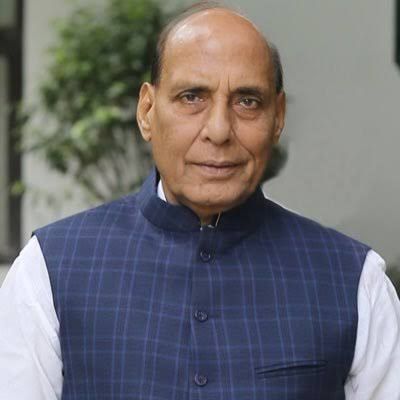
COLOMBO: With geopolitical tensions and maritime security challenges escalating in the Indian Ocean region, Indian Defence Minister Rajnath Singh arrives in Sri Lanka for an official visit. The visit—widely viewed across South Asian political and security circles as a critical milestone—is set to elevate bilateral strategic relations.
Significantly, this marks the first visit by an Indian Defence Minister to Sri Lanka in nearly four decades. The last such official visit took place in 1988, when K.C. Pant served in Prime Minister Rajiv Gandhi’s cabinet.
During his three-day stay, Minister Singh will lead high-level diplomatic talks in Colombo. He is scheduled to hold extensive consultations with President Anura Kumara Dissanayake—who holds the defence portfolio—Prime Minister Harini Amarasuriya, and Defence Ministry Secretary Air vice Marshal (Retd.) Sampath Thuyacontha.
Singh is accompanied by a high-powered delegation comprising senior officials from India’s Ministry of Defence and Ministry of External Affairs.
Sri Lanka’s Ministry of Foreign Affairs clarified that no new defence pacts will be signed during the visit, emphasizing that the primary objective is reviewing existing projects and strengthening bilateral ties. However, reports from New Delhi suggest discussions may cover potential Memorandums of Understanding (MoUs) regarding the supply of anti-aircraft guns and expanding linkages between naval and military training academies.
A Shared Security Architecture
Defence relations between India and Sri Lanka extend beyond conventional diplomacy; they are directly tied to both nations’ national security. Since the signing of the Indo-Sri Lanka Accord in 1987, both countries have maintained closely linked security interests. Sri Lanka holds a central place in India’s ‘Neighbourhood First’ policy and the ‘SAGAR’ (Security and Growth for All in the Region) doctrine.
Operational synergy between the two armed forces is routinely strengthened through joint military exercises, such as ‘SLINEX’ for the navies and ‘Mitra Shakti’ for the armies.
India provides extensive training opportunities to the Sri Lankan military, catering to approximately 750 personnel annually, and has bolstered Sri Lanka’s maritime surveillance capabilities by supplying Dornier reconnaissance aircraft. Minister Singh will review progress on the five-year defence cooperation MoU signed during Prime Minister Narendra Modi’s visit to Sri Lanka. Key priorities include expanding joint exercises, humanitarian assistance and disaster relief (HADR) operations, mutual naval port calls, and defence industrial collaboration.
China’s Footprint and India’s Strategic Concerns
China’s expanding military and economic influence in the Indian Ocean remains the chief catalyst for India’s proactive security stance along its southern maritime boundary. Chinese investments in Sri Lanka under the Belt and Road Initiative (BRI) have long drawn close scrutiny from New Delhi.
Beijing’s 99-year lease of the Hambantota Port following Sri Lanka’s debt distress fueled concerns in India regarding potential militarization. The docking of Chinese nuclear submarines and advanced research vessels—including the Yuan Wang 5 and Shi Yan 6—at Colombo and Hambantota ports heightened security anxieties in New Delhi.
Notably, diplomatic friction over Chinese vessel port calls contributed to the sudden cancellation of Minister Singh’s previously scheduled visit to Sri Lanka in September 2023.
Following sustained concerns raised by India, Sri Lanka implemented a temporary moratorium on foreign research vessels entering its territorial waters.
Against this backdrop, New Delhi views an expanded Chinese footprint in Sri Lanka’s infrastructure and security domain as a direct challenge to its national security.
Trincomalee and Regional Geopolitics
Trincomalee—home to one of the world’s finest natural harbors—straddles critical Indian Ocean sea lanes of communication. A key military outpost since World War II, India remains vigilant against China or other major powers gaining a strategic foothold in the port.
Under the 1987 framework, the Trincomalee Oil Tank Farm is being jointly redeveloped with Indian Oil Corporation (IOC) participation. India is also advancing plans for energy connectivity, including an underwater fuel pipeline and power grid interconnection between South India and Trincomalee.
A Milestone in Bilateral Relations
Taking place under Sri Lanka’s new political leadership, Minister Singh’s visit is expected to deepen defence alignment between New Delhi and Colombo. The visit follows assurances by President Dissanayake that Sri Lankan territory will not be used for activities detrimental to India’s security interests.
Amid China’s commercial and economic footprint, India remains intent on preserving its role as Sri Lanka’s primary security partner. This historical visit reinforces defence ties while signaling India’s broader strategic commitment to maintaining peace and stability in the Indian Ocean region.