Broken Dreams and Fallen Banners: The End of an Era at Nanthikadal

By Leo Nirosha Darshan
Express Newspapers
COLOMBO: In the annals of Sri Lankan history, May 2009 represents far more than a mere calendar entry. It marks the final chapter of a thirty-year armed struggle and a pivotal moment that fundamentally reshaped the destiny of a nation.
What politicians like Lalith Athulathmudali sought to achieve in the 1980s—often with strategic assistance from agencies like Mossad—reached its violent conclusion on the soils of Mullivaikkal under the government of then-President Mahinda Rajapaksa.
Since the dawn of 2009, military pressure on the Liberation Tigers of Tamil Eelam (LTTE) intensified. After losing vast swaths of the Vanni landscape, the LTTE was eventually hemmed into a tiny strip of land, just a few square kilometers, between the scrublands of Mullivaikkal and the banks of the Nanthikadal lagoon.
Despite international calls for a ceasefire, the Sri Lankan military launched its final assault under the banner of the “War on Terror.”
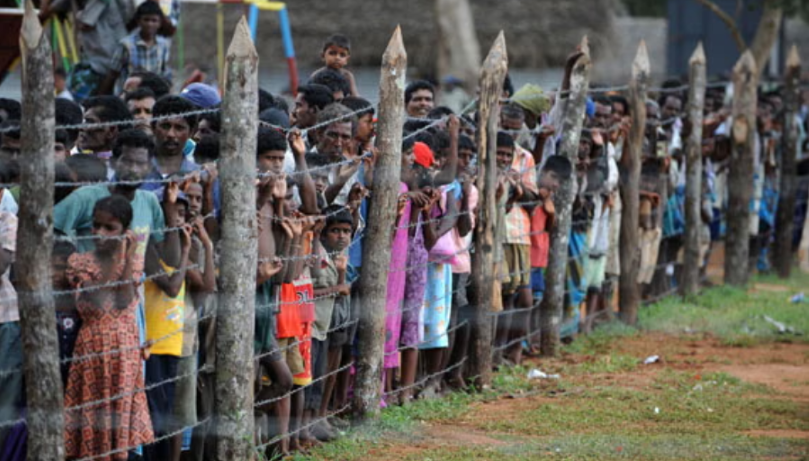
By May 17 and 18, Nanthikadal was transformed from a battlefield into a valley of death. As tens of thousands of civilians huddled in “No Fire Zones,” the thunder of heavy artillery shook the earth.
On the morning of May 19, 2009, President Mahinda Rajapaksa addressed a historic session of Parliament, declaring, “The country has been totally liberated from terrorism. We have defeated terrorism militarily.”
That same day, the military announced the discovery of the body of LTTE leader Velupillai Prabhakaran on the banks of Nanthikadal. Images of the fallen leader, showing a fatal head wound, flashed across global media. The news that the head of an organization that ran a de facto shadow state for three decades had been killed sparked shock among Tamils and celebratory fireworks in Southern Sri Lanka.
From Athulathmudali to Rajapaksa: A Strategy of Total War
The military doctrine employed by Mahinda Rajapaksa mirrored the hardline strategies pioneered by Lalith Athulathmudali in the 1980s. Just as Athulathmudali once claimed only terrorists were being targeted, the 2009 offensive was branded with a “Zero Casualty Policy.”
However, the reality of the corpses strewn along Nanthikadal, the attacks on those attempting to surrender, and the thousands who went missing told a much darker story.
While Athulathmudali looked to Israel’s Mossad for tactical aid to crush the insurgency, Rajapaksa orchestrated a “Total Annihilation” strategy by consolidating military and diplomatic support from a diverse array of global powers, including China, India, Pakistan, and Russia.
The Political Aftermath: A Changed Landscape
The announcement of Prabhakaran’s death fundamentally altered the Sri Lankan political arena. Mahinda Rajapaksa was hailed by many in the South as a “Modern Dutugemunu” (the legendary Sinhalese king), a sentiment that helped consolidate his family’s grip on power.
Conversely, the collapse of the armed struggle forced Tamil political leadership back into a purely democratic, yet weakened, path.
Lalith Athulathmudali once noted that the Tamil quest for education and rights could not be suppressed. Today, nearly 17 years after the war’s end, that thirst remains unquenched.
While the guns are silent, the allegations of war crimes and human rights violations during the final stages of the conflict continue to haunt Sri Lanka in the international theater.
Unanswered Questions and Lingering Scars
Prabhakaran may be dead and the LTTE silenced, but the fundamental political questions they raised remain unanswered by Colombo. Despite claims of normalcy in the North and East, the struggle for Tamil livelihoods continues.
Tamil organizations allege a systematic “demographic shift” as ancestral lands are seized under the guise of archaeological projects, wildlife conservation, and military necessity.
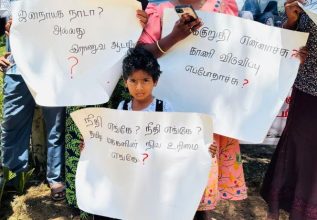
Simultaneously, the “Mothers of the Disappeared” in the North and East have passed thousands of days in continuous protest, demanding the truth about their loved ones. They remain steadfast in their belief that only an international investigation can provide justice.
The Road to Reconciliation
While Tamil political parties continue to advocate for a federal solution or, at minimum, the full implementation of the 13th Amendment, the Sinhalese political establishment remains deadlocked. Any move toward power-sharing is often branded as “betrayal” by opposition factions to garner votes.
Furthermore, while regional power India maintains strategic ties with Sri Lanka, there is a growing sense of frustration among Tamils that New Delhi is not doing enough to ensure a lasting political settlement.
The reality remains: the death of a leader or the silencing of a group did not signify the death of “political aspirations.” A new generation has grown up in the shadow of the post-war era.
For Sri Lanka to truly recover from its current economic turmoil, a sustainable political solution to the ethnic conflict is not just a moral obligation but a pragmatic necessity. Until then, the cry for justice rising from the waters of Nanthikadal will continue to resonate across the globe.