“Judges Cannot Hear Their Own Case”: Prof. G.L. Peiris Challenges
As Sri Lanka marks 225 years of its Supreme Court, the institution faces a critical threat to its integrity

By Leo Nirosha Darshan
COLOMBO: In a foundational principle of natural justice, no person—or institution—can be a judge in their own cause. Yet, the Sri Lankan government’s latest constitutional maneuvering threatens to force the judiciary into precisely this compromised position.
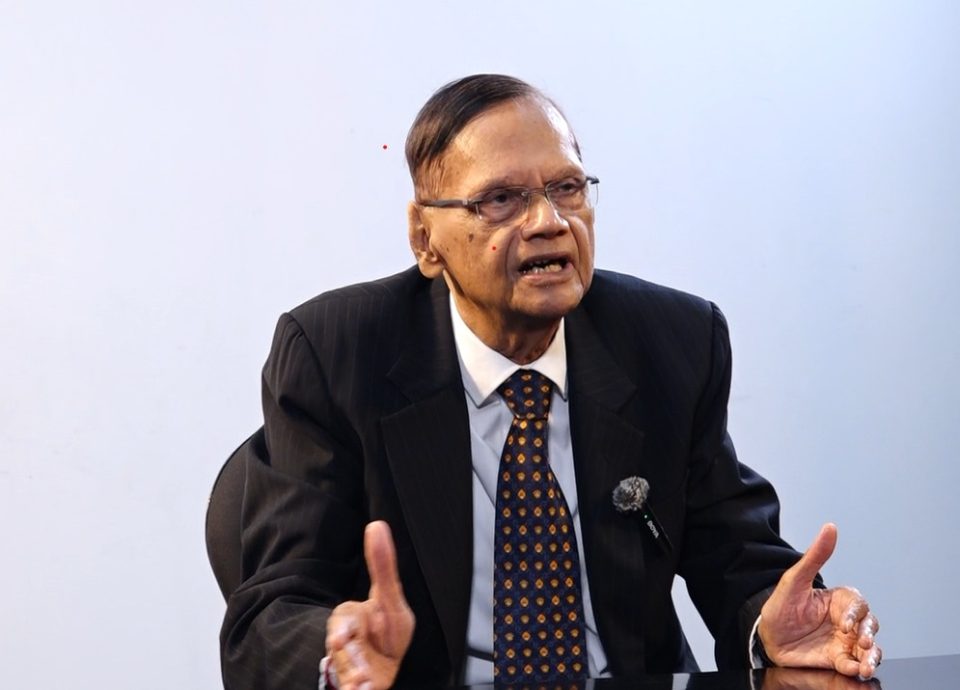
In an exclusive interview with Virakesari, Professor G.L. Peiris, a veteran constitutional scholar and former Minister of Foreign Affairs, forcefully articulated the grave implications of a proposed constitutional amendment designed to grant a two-year service extension to incumbent judges.
He warned that because the Supreme Court cannot constitutionally or ethically adjudicate a legislative measure that directly benefits its own sitting members, the ultimate verdict must be delivered in the court of public opinion through a national referendum.
“The sovereign power of the state belongs neither to the Parliament, nor to the Executive, nor to the Judiciary. It resides solely with the people. When the Executive attempts to subvert the independence of the judiciary for political expediency, the matter must be brought before the ultimate custodian of sovereignty—the people.”
A Personalized Amendment: Executive Encroachment on Judicial Independence
The controversy centers on the government’s sudden attempt to introduce a constitutional amendment extending the retirement age of judges without prior public or stakeholder consultation. While the administration claims the move aims to expedite the clearance of pending court cases , Prof. Peiris dismissed this rationale as a pretext designed to mask a far more insidious motive.
If the measure were driven by a genuine institutional need to address backlogs, Prof. Peiris argued, it would have been introduced far earlier. Over the past seven months alone, four Supreme Court justices have retired, including former Chief Justice Murdu Fernando and Justice Priyantha Fernando. None of these jurists were offered tenure extensions.
“Why was this extension not proposed before these eminent judges retired? The government’s selective, retrospective generosity is highly calculated. It is engineered to benefit specific individuals currently on the bench rather than to serve the administration of justice.”
This selective application, he asserted, violates Article 12(1) of the Sri Lankan Constitution, which guarantees equal protection under the law. While critical public sector cadres—such as specialist medical officers—face acute personnel shortages without receiving service extensions , the government has carved out an exclusive exception for the judiciary.
By dangling post-retirement extensions before sitting judges, the Executive creates a perception of patronage that undermines public trust in the judiciary’s impartiality. In constitutional law, the mere appearance of bias is as damaging as bias itself.
The Constitutional Paradox and the Imperative of a Referendum
The proposed bill creates an unprecedented constitutional impasse. Should the opposition challenge the amendment in the Supreme Court—as it intends to do —the sitting justices would be placed in the untenable position of ruling on a law that directly determines their own terms of service.
Under standard legal doctrines, a judge must recuse themselves from any matter in which they hold a direct personal or professional interest. Because the entire bench would be implicated, the judicial mechanism itself becomes paralyzed.
Prof. Peiris pointed to established legal precedents to demonstrate that judicial independence is an integral component of popular sovereignty. In the landmark case A.V.N. Perera v. Attorney General, Supreme Court Justice Vijith K. Malalgoda explicitly affirmed that the independence of the judiciary is an indivisible element of the people’s sovereignty.
Consequently, a simple two-thirds majority in Parliament is legally insufficient to alter the basic structure of the Constitution regarding judicial independence. Because such a move fundamentally alters the architecture of state power, it demands the direct consent of the electorate via a national referendum.
“If the government wishes to adjust the retirement age of judges, it must be done transparently and applicable strictly to future appointments. Extending the terms of sitting judges under the guise of legal reforms directly compromises judicial independence and requires the explicit approval of the sovereign public through a referendum.”
Systematic Subversion of Democratic Governance
The attempt to alter judicial tenure is part of a broader pattern of democratic backsliding under the current administration. A broad opposition coalition has emerged not as a traditional political alliance, but as a unified defense mechanism against executive overreach and threats to judicial autonomy.
A parallel example of this non-democratic trajectory is the prolonged postponement of Provincial Council elections. Despite holding no constitutional mandate to delay polls, the government continues to offer bureaucratic excuses to avoid facing the electorate.
Currently, all Provincial Councils operate without elected representatives, leaving power concentrated in the hands of un-elected Presidential Governors who disburse public funds without democratic oversight or accountability.
“To suspend elections under the guise of technical or legal deficiencies is to destroy democracy itself. Without regular, free, and fair elections, any talk of democratic governance is a farce. The government is delaying elections simply because it fears the public’s verdict.”
A Call to the International Community
As Sri Lanka marks 225 years of its Supreme Court, the institution faces a critical threat to its integrity. The government’s attempt to manipulate judicial tenure, delay elections, and bypass constitutional norms represents a systematic dismantling of democratic checks and balances.
When internal judicial remedies are paralyzed by design , the global community, international legal bodies, and human rights watchdogs must pay close attention. Sri Lanka’s struggle is no longer merely a domestic political dispute; it is a battle for the rule of law, the independence of the bench, and the fundamental sovereignty of the people.