China’s 15th Five-Year Plan and the Shifting Strategic Landscape of South Asia
The most critical shift in the 15th Five-Year Plan is not geographical, but technological

By Leo Nirosha Darshan
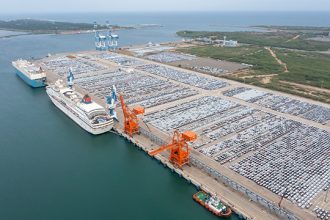
COLOMBO: According to World Bank reports, China has extended nearly $48 billion in loans to South Asian nations. Pakistan, Sri Lanka, and Bangladesh hold record levels of debt to Beijing. In 2024, China became Pakistan’s largest creditor, with loans totaling $29 billion. Between 2006 and 2022, Sri Lanka borrowed over $13.2 billion from Chinese state banks for infrastructure projects, most notably the Hambantota Port. Due to a shortfall in expected revenue, the Sri Lankan government took measures in 2017 to lease the Hambantota Port to a Chinese firm for 99 years.
A Strategic Roadmap Beyond GDP
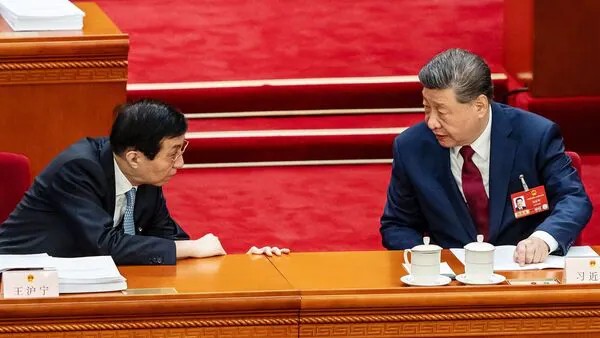
When China’s National People’s Congress (NPC) and the Chinese People’s Political Consultative Conference (CPPCC)—collectively known as the “Two Sessions”—convened in early March 2026, global attention was fixed on immediate GDP targets and trade tensions with Washington. However, the most significant outcome of these sessions was the formal ratification of the 15th Five-Year Plan (2026–2030).
This 141-page document does more than dictate China’s domestic economic trajectory; it serves as a strategic blueprint for deepening Beijing’s footprint across the developing world, particularly in South Asia. Under the leadership of Xi Jinping, these documents have pivoted away from hyper-growth toward technological self-reliance, national security, and state-led economic guidance. The 15th Five-Year Plan formalizes this shift on a massive scale, the effects of which South Asia will feel over the next five years through engagements that go far beyond traditional infrastructure loans.
The Economic Footprint
To understand the direction of the 15th Five-Year Plan in South Asia, one must look at China’s current standing. In 2024, trade between China and South Asia reached nearly $200 billion, doubling over the past decade with an average annual growth rate of 6.3%. The trade distribution highlights China’s dominance:
- India: $100 billion
- Bangladesh: $27 billion
- Pakistan: $23 billion
- Sri Lanka: $5 billion
- Nepal: $1.5 billion
- Maldives: $1 billion
China is now the largest trading partner for every South Asian nation except Bhutan. The investment landscape is equally striking. While the Belt and Road Initiative (BRI) reached a global scale of $213.5 billion by 2025, its application within South Asia has shifted. For instance, while BRI engagement in Pakistan saw a 77% decrease in 2025, it grew by a staggering 1,590% in Sri Lanka—highlighted by Sinopec’s $3.7 billion agreement to build an oil refinery. This slowdown in Pakistan is not a retreat; rather, it signals Beijing’s move away from massive infrastructure debt toward energy investments and “soft” engagements that are harder to monitor.
The Digital Silk Road
The most critical shift in the 15th Five-Year Plan is not geographical, but technological. In this document, references to Artificial Intelligence (AI) outnumber integrated circuits by a ratio of 13 to 1. A new strategic framework, “Model-Chip-Cloud-Application,” has been introduced.
This implies that Chinese tech giants will provide South Asian governments with AI infrastructure, “smart” governance systems, and digital connectivity. By doing so, China’s technical standards will be embedded at the foundational level. Under the Digital Silk Road, companies like Huawei and ZTE are already supporting Bangladesh’s 5G and cloud computing ambitions.
Between 2026 and 2030, Beijing plans to formalize data standards, ensuring that port clusters and logistics hubs operate on Chinese AI and data stacks. Since China already holds operational stakes in Indian Ocean ports, transitioning these to Chinese AI infrastructure grants a level of control that transcends mere physical ownership.
An Unstated Strategic Logic
Analysts suggest Beijing is using the 15th Five-Year Plan to bolster support for its Global Governance Initiative and Global Development Initiative among developing nations. Excluding India, South Asian nations are largely unable to resist this logic. Their infrastructure needs are immense, yet the World Bank and Western lenders often move slowly with stringent conditions.
In contrast, Beijing’s offers are fast, cost-effective, and framed under the banner of “Southern Solidarity.” Furthermore, the Chinese Renminbi (RMB) is set to transition from a trade currency to an investment currency. When integrated with AI infrastructure, China’s financial, technological, and diplomatic influence will consolidate into a single, unified system.
The 15th Five-Year Plan signals the maturation of China’s South Asian strategy. It has evolved beyond simple lending into a sophisticated, tech-heavy system that is difficult to untangle. For Dhaka, Colombo, Kathmandu, and Islamabad, the question is no longer whether to engage with China—that is an inevitability. Instead, the challenge lies in whether they can build the capacity to set their own terms before the next five years create a new generation of technological and financial dependency. Current evidence suggests that most are not yet prepared for this shift.