Iran-Israel-U.S. Conflict: How American Strategy is Shifting in the Indo-Pacific
If the U.S. breaks its word to its Indo-Pacific allies, it will be the one opening the door for China to take over Asia

By Leo Nirosha Darshan
COLOMBO: The growing conflict in the Middle East between Iran, Israel, and the United States is more than a regional fight; it is shaking global politics. For decades, the U.S. has treated the Indo-Pacific as its top security priority. However, the current move of advanced American weapons from Asia to the Middle East has created a deep sense of fear among Asian allies.
For a long time, Seoul saw the U.S. troops in South Korea as a shield against China. But Washington’s policy of “Strategic Flexibility” is now a problem for South Korea. To stop Iranian missile attacks in the Middle East, the U.S. has started moving air defense gear away from the Korean Peninsula.
Specifically, Patriot missile systems, guided bomb kits, and long-range missile systems (MGM-140 ATACMS) have been sent to the conflict zone. Most worrying are reports that parts of the THAAD (Terminal High Altitude Area Defense) system, built to hit missiles at high altitudes, have also been moved.
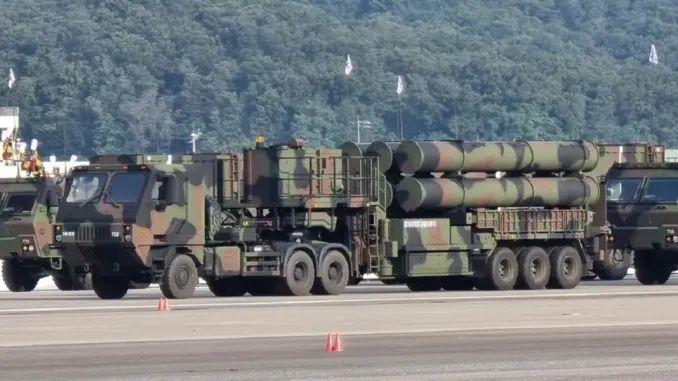
South Korean President Lee Jae-myung said, “We cannot fully accept this decision,” while admitting he does not have the power to stop U.S. military moves governed by international deals. South Korea cannot currently stop missiles flying higher than 100 kilometers on its own. Their own defense systems, the L-SAM and SM3 missiles, will not be ready until the early 2030s, leaving the country at risk until then.
Doubts Over Japanese Sovereignty
In Japan, people generally believe U.S. bases are there only for Japan’s safety. However, American warships usually based in Yokosuka are now in the Arabian Sea. This has caused an uproar in Japanese politics.
Japanese opposition leader Ogawa Junya hit out at the move, saying, “We never agreed to let bases on Japanese soil be used for missile strikes in the Middle East.” The argument that using Japanese land for a war in another region breaks Japan’s peace-focused constitution is gaining ground.
The main fear in Asia is that China and North Korea will take advantage of the U.S. being tied down in the Middle East. With a third of the U.S. Navy moved away, the question is: Could the U.S. fight back immediately if China attacked Taiwan? Meanwhile, with South Korea’s air defenses down, Kim Jong Un may start more missile tests or border threats.
U.S. experts like Elbridge Colby say the U.S. must stay “laser-focused” on the Indo-Pacific. But as the saying goes, “actions speak louder than words,” and moving the weapons sends a different signal.
The U.S. weapon supply is already low because of the war in Ukraine and aid to Israel. If the U.S. fights Iran directly, will it have enough missiles and ammo left? Also, will the U.S. economy be strong enough after the war to help its Asian friends? These questions have no answers yet.
The Impact of U.S. Home Politics
With Donald Trump’s style and the “America First” idea getting popular again, it is unlikely the American public will want to spend more money or lives on another war. If the U.S. gets stuck in a long Middle East war, the “will” to protect Asia might disappear.
Studies on Alliance Dynamics show that when a superpower runs low on resources, its allies start looking for their own way to stay safe. South Korea and Japan are in that spot now. The days of relying only on the U.S. are ending; these countries are now forced to build up their own armies.
The fire in the Middle East is starting to burn Asia’s safety net. The Iran-Israel fight is not just between two countries; it is changing the world’s safety priorities. If the U.S. breaks its word to its Indo-Pacific allies, it will be the one opening the door for China to take over Asia. The future of the region depends on how the U.S. uses its limited resources and how quickly Asian nations can learn to stand on their own.