Sri Lanka Set to Exit IMF Agreement as President Dissanayake Rejects Austerity; Economists Warn of Severe Risks

By Leo Nirosha Darshan
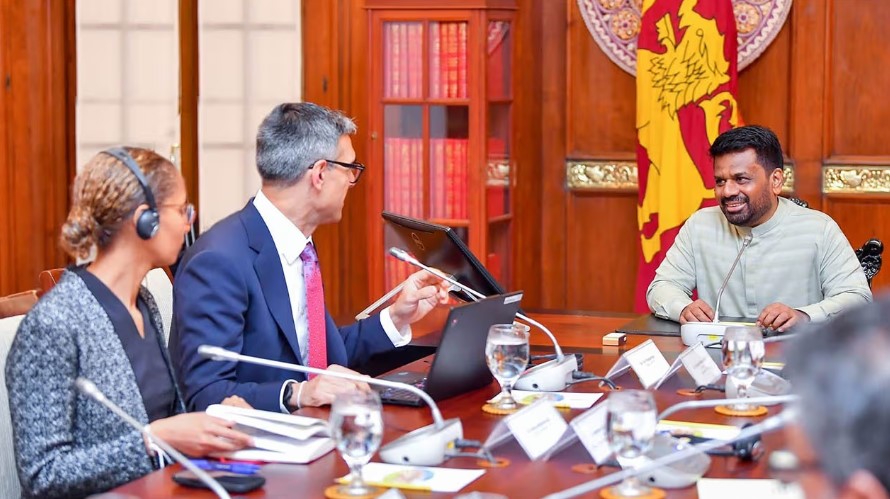
COLOMBO — Sri Lanka is preparing to pull out of its agreement with the International Monetary Fund (IMF) when the current Extended Fund Facility (EFF) program period concludes in March. The decision follows President Anura Kumara Dissanayake’s firm rejection of new austerity measures proposed by the Washington-based lender, reliable political sources confirmed.
The IMF had put forward two major proposals to continue its fiscal consolidation framework: reducing or completely eliminating existing fuel subsidies, and expanding the tax net to bring rural, low-income populations into the income tax threshold.
President Dissanayake rejected both demands, arguing that such measures would inflict severe financial hardship on working-class families already reeling from the country’s prolonged economic crisis.
The strategic pivot comes after a confidential internal survey commissioned by the government to assess public sentiment as it marks two years in office. While the report confirmed Dissanayake remains the country’s most popular individual leader, it revealed a sharp contraction in his base among low-income voters.
Nationally, support among working-class voters—which stood between 40 to 50 percent during the peak of the ruling National People’s Power (NPP) popularity—has dropped to 23 percent.
Opposition leader Sajith Premadasa, head of the Samagi Jana Balawegaya (SJB), has capitalized on this shift, establishing himself as the primary political challenger. Following high-level consultations between cabinet ministers and Janatha Vimukthi Peramuna (JVP) leadership at party headquarters in Pelawatte, the government resolved to let the IMF deal expire in March, free up state funds, and introduce an interim relief budget by mid-year ahead of snap Provincial Council elections.
Economic Impacts: Freedom vs. High-Stakes Financial Risk
While the government views exiting the IMF program as a necessary move to regain fiscal sovereignty and provide direct relief, economists and international market analysts warn that a premature or unmanaged break from the multilateral lender carries profound risks for Sri Lanka’s fragile economic recovery.
The immediate economic fallout centers around market confidence and foreign debt restructuring. The 48-month IMF facility, secured in 2023, served as the primary anchor for restoring international credibility, stabilizing the Sri Lankan Rupee, and building foreign exchange reserves.
Walking away from the framework could derail ongoing debt repayment agreements with bilateral creditors and international sovereign bondholders, who conditioned their debt haircuts on IMF program compliance.
Furthermore, abandoning revenue-mobilization targets and reintroducing unbudgeted energy subsidies risk reigniting domestic inflation and widening the fiscal deficit.
Analysts caution that without an IMF stamp of approval, external borrowing costs could skyrocket, foreign direct investment could stall, and sovereign credit ratings could face downgraded pressure.
Conversely, government strategists argue that the treasury currently holds sufficient liquidity to maneuver without multilateral bailouts. By exiting the rigid agreement, the administration aims to bypass restrictive monetary ceilings, lower the tax burden on vulnerable households, and stimulate domestic demand through public spending.
Whether this policy shift triggers an economic resurgence or exposes the island nation to a secondary balance-of-payments crisis will depend entirely on how the government manages state expenditure once the IMF safety net is removed.