By Lee Sang-ki
Former President of Asia Journalists Association Publisher of The AsiaN
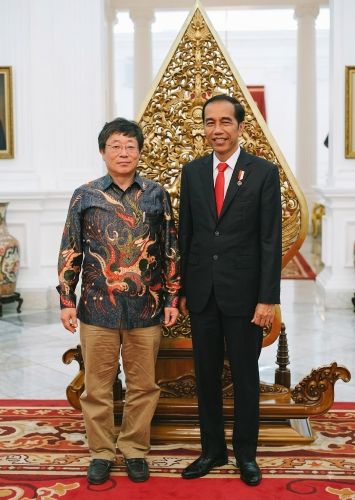
SEOUL: On the evening of May 2, 2016, I met Indonesian President Joko Widodo at the Presidential Palace in Jakarta. The meeting had been scheduled for 30 minutes, beginning at 6:15 p.m. Eddy Suprapto, then senior vice president of the Asia Journalists Association and a longtime acquaintance of President Jokowi, had arranged the meeting and joined us. Our conversation went well beyond the allotted time, ending sometime after 7 p.m.
As we rose to leave, President Jokowi apologized to me. He was sorry that he could not invite me to dinner.
The reason was unexpected. He already had a dinner engagement with opposition lawmakers. He told me that he often had dinner with opposition politicians and talked with them.
It was not the first time I had heard this. Eddy had told me on several occasions that Jokowi frequently met opposition lawmakers over meals and listened to what they had to say. Still, hearing it directly from the president himself left a different impression.
At the time, Jokowi had good reason to reach across the aisle. When he took office in 2014, his governing coalition controlled less than 40 percent of the seats in parliament. It was difficult to govern effectively without cooperation from the opposition. Later, parties including PAN, PPP and Golkar joined the government camp, and by 2016 Jokowi’s coalition had grown into a solid parliamentary majority.
Of course, the entire process cannot simply be described as admirable “cooperation.” Jokowi shared power and government posts as he brought opposition parties into his coalition, and there was criticism that his government had influenced divisions within opposition parties.
But one thing was clear: Jokowi never made refusing to meet his opponents a political principle. He met them, ate with them, persuaded them and, when necessary, joined hands with them.
There were also people who had supported Jokowi closely even before he became president. They included journalist Eddy Suprapto, presidential special adviser Muhammad Yamin, and Teten Masduki, a key Jokowi ally who served as his chief of staff. According to Eddy, they were among those who backed Jokowi early as he moved from the governorship of Jakarta toward a presidential bid. Yamin later became a central figure in a pro-Jokowi organization. When Yamin died in 2019, Jokowi personally visited to pay his respects.
Two weeks after my meeting in Jakarta, on May 17, 2016, President Jokowi visited Ajou University during his state visit to Korea. Representing the Asia Journalists Association, I presented him with the AJA Award 2016.
Jokowi then joined Kim Dong-yeon, then president of Ajou University, for a talk concert attended by university students and members of the Indonesian community in Korea. During the hour-long event, Jokowi repeatedly emphasized that by going into the field and speaking directly with people, leaders can understand their difficulties and find solutions.
Jokowi won reelection in 2019. He then appointed Prabowo Subianto, his greatest political rival and the man he had faced in two presidential elections, as defense minister. In a sense, it demonstrated that politics sometimes means joining hands today with yesterday’s enemy.
That does not mean I intend to romanticize the latter years of Jokowi’s presidency. Near the end of his term, his eldest son, Gibran Rakabuming Raka, became Prabowo’s running mate and was elected vice president. Combined with a controversial Constitutional Court ruling over Gibran’s eligibility, this brought fierce criticism that Jokowi was building a “political dynasty.” Assessments of his democratic legacy remain sharply divided.
Even so, the words I heard at the Presidential Palace in Jakarta ten years ago — “I have dinner with opposition lawmakers” — remain vivid in my memory.
In South Korea, Lee Jae-myung, the politician and lawyer who has been serving as the 14th president of the country since 2025, has played golf with senior opposition lawmakers, including Joo Ho-young and Park Deok-heum of the People Power Party, in June.
Last month, he had a golf gathering with opposition lawmakers including Kim Tae-ho. The presidential office has explained that these meetings were intended to hear voices from the other side. Constitutional reform and regional issues were reportedly among the subjects discussed.
Political reactions have been mixed. The Rebuilding Korea Party said that it did not oppose efforts to promote bipartisan cooperation in themselves, but criticized the golf meeting with People Power Party lawmakers while accountability for the December 3 crisis and reform efforts were still under way, saying it had caused “deep disappointment.”
Some within the People Power Party have also expressed concern that rather than engaging in formal dialogue with the opposition leadership, the president may be meeting individual senior lawmakers in an attempt to divide the party. Others in the opposition, however, argue that golf itself need not become a political target and that efforts by a president to listen to opposing voices can be viewed positively.
Some of these criticisms deserve attention. When a president meets opposition lawmakers privately, the line between “communication” and “backroom politics” can depend on whom he meets, what is discussed, and how those meetings relate to formal negotiations between the government and opposition.
If an issue as fundamental as constitutional reform appears to be discussed only on a golf course, it is understandable that the public would raise questions. As Jokowi’s experience also demonstrates, if “cooperation” becomes a way to neutralize the opposition or simply divide the spoils of power, it is far removed from healthy democracy.
But that does not mean the very fact that a president plays golf with opposition lawmakers should itself be condemned.
What matters is not whether they played golf, but why they met, what they discussed, and whether their meeting contributed to smoother public politics and governance. Perhaps Korean politics needs more places where politicians can speak openly about matters that are difficult to discuss at formal meetings.
Lawmakers should be able to argue fiercely in the National Assembly and still sit down to eat together. They should be able to spend four or five hours walking a golf course and listening to what the other side really thinks — and then return the next day to debate fiercely again. That is the kind of National Assembly I would like to see.
Bipartisan cooperation does not mean eliminating differences of opinion. Nor does it mean turning the opposition into an ally of the governing party. Politics means recognizing that we are different and still meeting, listening and persuading.
I am not suggesting that Korea should simply imitate Jokowi’s politics. His politics clearly had both light and shadow. But there is no reason to reject the political art of willingly sitting across the table from people on the other side, sharing a meal and talking.
Politics is not only about turning an enemy into a friend. Being able to sit down, share a meal and talk even with those who think differently — that, too, is politics.
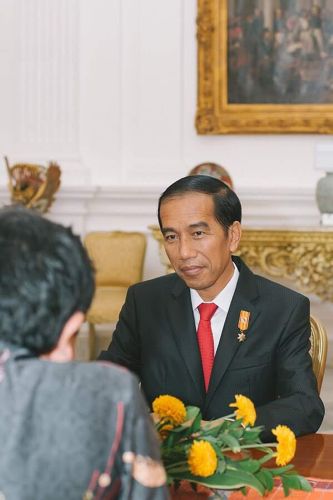
on May 2, 2016
Ten years later, I still think about why Jokowi apologized to me that evening of May 2, 2016.
I have no lingering disappointment that I did not have dinner with the president. What has stayed with me instead is the fact that the people he left to meet were opposition lawmakers.
In the National Assembly, politicians should meet and debate fiercely. If they ultimately disagree, they can confront each other again. But they should still be able to sit down together the next day.
Korean politics could use a few more dinner tables — and golf courses — like that.