Pakistan: Satirical Criticism through Political Caricature; Unmasking Economic Hypocrisy


By Nasir Aijaz
The AsiaN Representative
ISLAMABAD: Political caricature has long served as a mirror to society, distilling complex political dynamics into sharp visual satires that cut straight to public sentiments. In developing nations navigating structural adjustment programs, caricatures often capture what press releases and official communiqués leave unsaid.
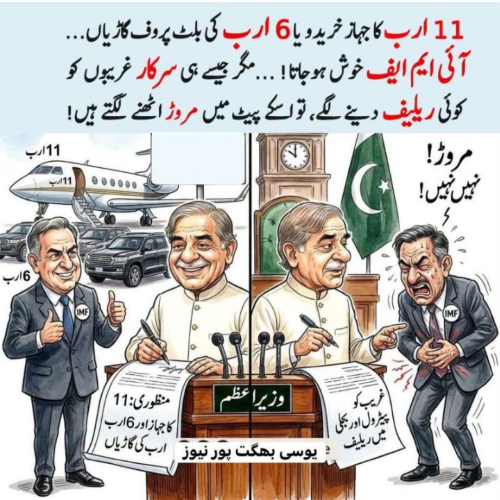
A widely shared viral cartoon featuring Pakistan’s leadership alongside an IMF official offers a biting critique of state priorities and economic governance. This political cartoon employs a classic side-by-side narrative structure to contrast the treatment of elite privileges against public relief.
The caricature paints a vivid picture of the deep frustration felt by ordinary citizens in Pakistan. It uses a clever, two-panel setup to contrast how government spending is treated depending on who benefits.
On the left side of the cartoon, the scene shows the Prime Minister at his desk, cheerfully signing off on billions of rupees for luxury purchases—including a massive eleven billion airplane and six billion worth of bulletproof vehicles.
Standing beside him is a representative from the International Monetary Fund (IMF), grinning broadly and giving enthusiastic thumbs-up. The message is clear and biting: when the ruling elite spends vast sums on their own comfort and security, international lenders raise no objections and offer quiet approval.
The story shifts dramatically on the right side of the image. The Prime Minister attempts to sign a different document, this time one aimed at providing price relief on basic necessities like petrol and electricity for the struggling public.
Instantly, the IMF official doubles over in extreme pain, clutching his stomach and crying out in agony. The cartoon humorously suggests that the mere thought of giving relief to poor citizens causes the IMF to break out in severe stomach cramps.
Through this sharp satire, the artist captures a painful reality felt by millions. While ordinary people face endless tax hikes, rising utility bills, and the removal of essential subsidies under strict bailout conditions, political leaders continue to enjoy lavish perks without interference.
By turning complex economic policies into a story about stomach aches and rubber-stamped luxury, the caricature gives voice to the public’s anger over an unfair system that demands sacrifices from the poor while shielding the powerful.
Caricatures like this one serve as vital political commentary. By reducing high-level financial arrangements down to a visceral reaction—a stomach ache brought on by social relief—the artist captures the tension between international loan conditions and the everyday survival of citizens.
Until economic reform programs balance fiscal prudence with social protection and administrative austerity, political satire will continue to be the voice of the populace.