Thirteenth National Election and Referendum in Bangladesh on February 12

By Bhanu Ranjan Chakraborty
DHAKA: The thirteenth national assembly election and referendum are going to be held on February 12 in Bangladesh under the interim government. The Election Commission has already completed all preparations for the voting. Now the voters are waiting to go to the polling stations and exercise their right to vote.
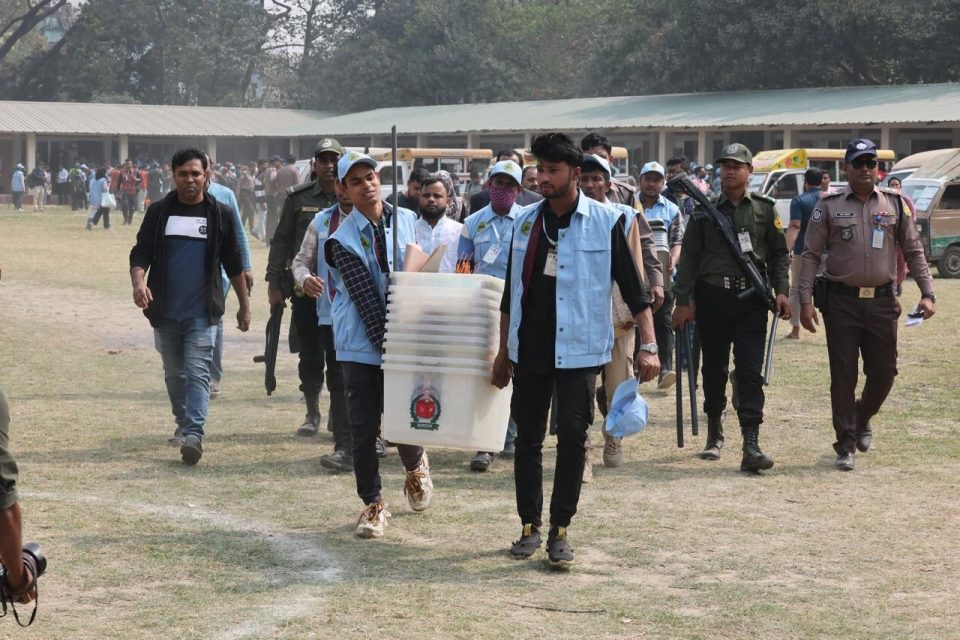
Election Commission sources said that the ballot papers for the national assembly election and referendum have already reached all the parliamentary constituencies of the country.
The largest number of law enforcement forces in the history of Bangladesh have been deployed to ensure security in the elections.
As part of the security measures, the army will be on the field for a total of seven days before and after the elections, and the Ansar force will be on duty for eight days. In addition, 1,050 executive magistrates are being deployed to perform election duties, who will be on the field from February 8 to 14.
According to political analysts, this time, preparations for the national election have been made without the participation of the Awami League, the party that was ousted in the mass uprising. In the previous three controversial elections, in 2014 and 2024, BNP (Bangladesh Nationalist Party) and Bangladesh Jamaat-e-Islami did not participate, resulting in one-sided elections.
Critics believe that the upcoming elections will not be held with the participation of all parties. The political activities of the ousted party Awami League are banned by executive order. The BNP and Jamaat-e-Islami, the forces supporting the mass uprising, are mainly participating in these elections.
However, the leaders of the two alliances competing in the national election this time believe that an inclusive, participatory election will be possible only if all levels of voters, legitimate parties and candidates participate. The two alliances led by BNP and Jamaat believe that February 12 will be a credible and acceptable election. However, the Jatiya Party doubts this. Analysts believe that since the Awami League is not present, there will be a competition between these two alliances.
42,761 polling centres in 64 districts for 300 parliamentary constituencies
Votes will be cast across 42,761 polling centres in 64 districts for 300 parliamentary constituencies, according to the Election Commission of Bangladesh (ECB). A total of 51 political parties are participating in this year’s election.
A total of 2,034 candidates are contesting, including 275 independent candidates. BNP has fielded the most candidates among the political parties. The number of candidates contesting the election with the party’s symbol of a sheaf of rice has reached 291.
In addition, the second highest number of 258 candidates from the Islamic Movement of Bangladesh is contesting with the hand fan symbol. 229 candidates from Jamaat E Islami are contesting with the scale symbol. In addition, 198 candidates are contesting with the Jatiya Party’s plow symbol. On the other hand, the Jatiya Nagorik Party (NCP), a student-led party, is contesting with the ‘Shapla Kali’ symbol in an electoral alliance with Jamaat E Islami.
Number of voters
According to EC sources, the total number of voters in the 13th National Parliament election and referendum is 127,711,793. Of these, 64,825,361 are male voters, 62,885,200 are female voters, and 1,232 are transgender voters. Voting will be held at a total of 42,779 polling stations in 300 parliamentary constituencies across the country.
Observers
The Election Commission said that 55,454 observers from 81 domestic registered organizations will be on duty this time. In addition, about 500 foreign observers will also observe the election.
Returning home
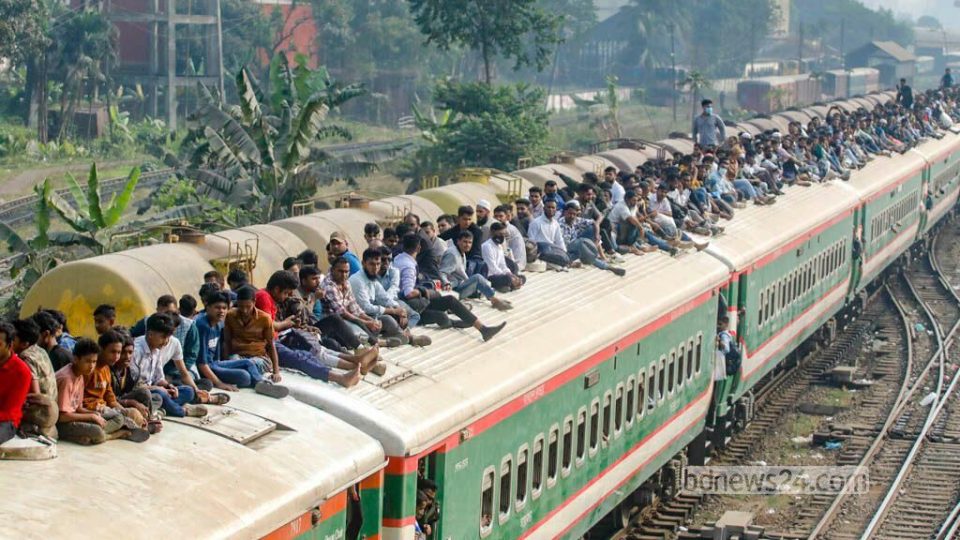
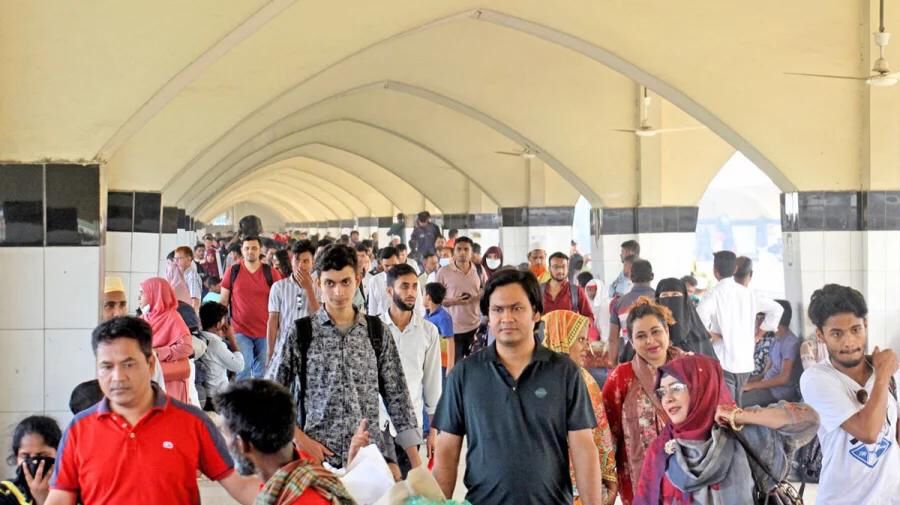
Meanwhile, as a two-day holiday was declared in factories in the capital Dhaka and surrounding districts on the occasion of the election, a large number of working people have started returning to their villages to vote with the atmosphere of a four-day holiday.
In addition, government and private officials and employees have been given a four-day holiday.
Due to this, there are reports of extreme traffic jams on the roads entering and exiting the capital Dhaka. There is no room for the passengers in buses, trains and launches due to the crowd of people heading home. This has caused hardship to the passengers heading home.