By Ahmed Saleh
Columnist, Al Ayam
MANAMA: More than a week ago, an incident unfolded that resonates far beyond Bahrain. It is a familiar pattern across the Gulf that resurfaces with unsettling regularity and where shallow thinking, inflamed sentiment, and a regressive strain of tribal chauvinism reveal themselves in public discourse, as if history had failed to move forward.
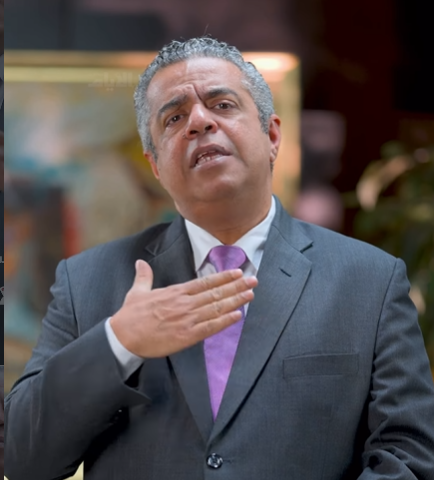
On an Iraqi television program, our colleague Jaafar Salman found himself the target of an all-too-predictable performance. A fellow guest sought to diminish him by disparaging his country. More troubling was the role of the host, who did not merely fail to contain the exchange but, in effect, enabled it, rationalizing the insult while resisting Jaafar’s measured defense. In that moment, the contrast was stark: Jaafar rose to the occasion; the program did not.
Salman has, over time, established himself as more than a media commentator. He represents a model increasingly rare in the region’s televised debates: a political analyst grounded in experience, sharpened by intellectual evolution, and unafraid of candor. His strength lies not only in what he says, but also in how he says it with clarity, composure, and a disciplined sense of purpose. It is precisely this combination that has given him resonance in a crowded and often noisy media landscape.
But the episode itself was never really about one man. It exposed a deeper and more persistent affliction: a rhetorical arrogance that leans on the glories of ancient civilizations to belittle others. This discourse, recycled across crises and geographies, rests on a fragile premise: that historical inheritance confers contemporary superiority.
There is, of course, no dispute over the grandeur of ancient civilizations. Mesopotamia, the Nile Valley, and the Phoenician world represent foundational chapters in human history. Their contributions to governance, writing, agriculture, and trade are beyond question. They belong not to one nation alone, but to the shared legacy of humanity.
Yet history, properly understood, resists such simplistic appropriation. These civilizations flourished where geography permitted along rivers that sustained life, enabled agriculture, and fostered early state formation. They rose, evolved, and ultimately receded, leaving behind traces that we now visit as heritage, not as living claims to superiority.
What followed was not continuity, but transformation. Waves of migration, conquest, and cultural exchange reshaped these regions repeatedly. New societies emerged, rose to prominence, and declined in turn. This is not an exception to history; it is its defining pattern.
To take pride in the past is human. To weaponize it against others is something else entirely. The modern individual did not build Babylon, nor raise the pyramids, nor chart the Phoenician trade routes. To claim those achievements as a basis for present-day condescension is not an expression of identity—it is an evasion of reality.
Equally important is what such narratives ignore. Not all societies were born beside rivers or endowed with abundant resources. Many emerged in harsher environments, where survival itself required ingenuity and resilience. These societies, too, built cultures, systems, and even kingdoms—some of which, recent research suggests, may rank among the oldest in human history.
The fixation on ancient prestige also overlooks a more immediate truth: the modern political map of the Arab world is largely a product of the post–World War I order. The populations within it are the result of centuries, often recent centuries, of movement and intermingling. Migration is not an anomaly; it is the rule.
Against this backdrop, the notion of superiority rooted in distant antiquity becomes not only untenable, but anachronistic. In the twenty-first century, such attitudes are not markers of pride; they are symptoms of intellectual stagnation.
Access to knowledge has expanded, literacy has improved, and global awareness has deepened. The persistence of this rhetoric, therefore, reflects not ignorance alone, but a refusal to evolve.
It is also professionally indefensible. Media platforms that claim to engage serious issues cannot simultaneously indulge in the diminishment of nations or peoples based on histories their participants neither shaped nor fully understand. This is particularly glaring when the targets of such rhetoric are states actively building modern, functional, and forward-looking societies.
The global landscape offers a useful contrast. In Southeast Asia, Malaysia and Indonesia do not define themselves against Singapore’s size. In Europe, Monaco and Liechtenstein are not objects of derision or territorial ambition, despite their scale and perhaps because of their success. Strength, in mature systems, is not measured by the ability to belittle the smaller, but by the capacity to coexist without insecurity.

Which raises the essential question: how should such rhetoric be met?
Should nations be expected to internalize these narratives of diminishment? To accept them as legitimate critiques? Or to suspend their own progress in deference to a selectively invoked past?
The answer is self-evident. Progress does not wait for the approval of those who are captive to history. Nor does dignity require validation from those who confuse inheritance with achievement.
True civilization is not measured by antiquity alone. It is measured by the quality of life it offers, the values it upholds, and the inclusiveness it practices. It is reflected in education systems that empower, in laws that protect dignity, and in societies capable of embracing diversity without fear.
In this respect, the Gulf experience deserves to be understood on its own terms. Its transformation has not been accidental, nor merely resource-driven. It has involved deliberate investment in people, institutions, and a value framework that balances tradition with modernity.
History matters. But it is a foundation, not a destination.
Nations that advance are those that draw from the past without becoming imprisoned by it, those that treat history as a source of insight, not as a shield for stagnation. When the past is invoked excessively, it often reveals less about what was achieved than about what is lacking in the present.
And that, perhaps, is the illusion Jaafar Salman confronted—not on behalf of himself alone, but on behalf of a broader and more necessary idea: that dignity in the present cannot be negotiated by myths of the past.