Death Toll In Nepal Floods and Landslides Rises To 597; Over 2,000 Missing
177 Indians, 90 Americans, 34 Australians, 33 British, 25 Canadians and 100 Chinese among the missing

By Bhanu Ranjan Chakraborty with Bishnu Gautam from Kathmandu, Nepal
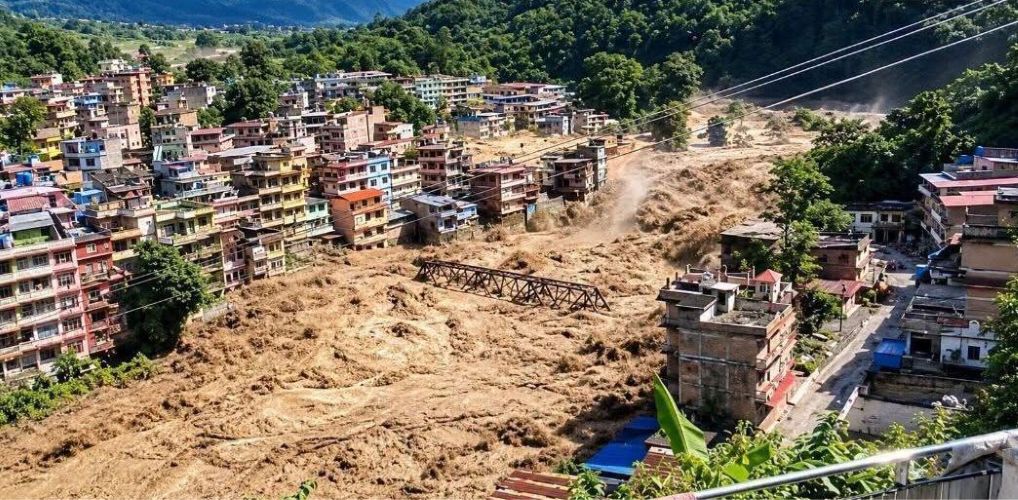
DHAKA: The death toll in Nepal’s flash floods and landslides caused by a glacier avalanche in the Himalayas rose to 597 on Friday (August 28) night. More than 2,000 people, including 517 foreigners, are still missing. Among them are 933 workers and employees of Nepal’s power project and 78 security personnel. Nepal’s National Disaster Risk Reduction and Management Authority gave this information on Friday.
This unprecedented natural disaster struck the Nepal-Tibet border on the morning of August 26 (Wednesday). The National Disaster Risk Reduction and Management Authority said that rescuers are continuously searching for survivors of this terrible incident.
So far, 3,742 people have been rescued. About 15,000 security personnel have been deployed for the rescue operation.
According to the Nepal Tourism Department, 668 foreign tourists from 34 countries are among the missing. Among them are 177 Indians, 90 Americans, 34 Australians, 33 British, 25 Canadians and 100 Chinese.
However, rescue operations have been a major challenge as roads and bridges in the remote mountainous region have been severely damaged. It is reported that 350 workers trapped in the tunnel of the Upper Trishuli Hydropower Project have been rescued alive.
Cause of the flash flood: While an earthquake was initially thought to be the cause of the flash flood on the Nepal-Tibet border, authorities are now saying that it was triggered by a landslide.
The United States Geological Survey (USGS) recorded a tremor of magnitude 4 or higher near a mountain peak called Langtang Lirung in the Himalayan mountains on the border. However, the tremor was not an earthquake. The agency says the tremor was caused by the collapse of a glacier with a volume of more than 500,000 cubic meters.
Geologists, analyzing satellite images before and after the incident, say that this glacier landslide caused the devastating floods on August 26. Officials from the Nepal Meteorological and Hydrological Department told the media that a huge amount of ice collapsed from the mountain, bringing down huge amounts of rocks, sand and silt.
Glaciers in the region are melting rapidly due to climate change. However, scientists said it is not yet possible to say whether climate change played a role in the incident.
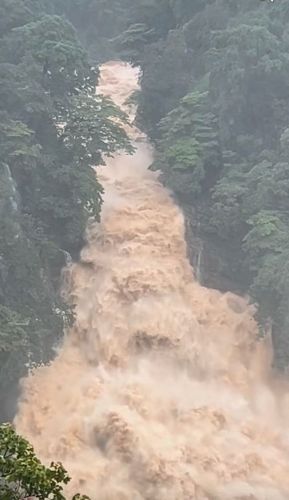
Damage: The devastating floods caused widespread destruction of homes and buildings in a wide area of Nepal. The floods damaged 15 hydroelectric projects, stopping the production of 431 megawatts of electricity.
Many houses, roads, hydroelectric projects and the important Rasuagadhi Friendship Bridge connecting Nepal and China were washed away by the flood. Several villages were completely buried under the mud.
Emergency aid: It is known that the United Nations is sending $2 million, the United States $500,000 and Australia $3.6 million in emergency aid to Nepal to deal with this terrible situation. In addition, the EU has launched its satellite system and the World Health Organization has sent medicine.
Risk of severe flooding again in the new lake: The National Disaster Risk Reduction and Management Authority said that the risk of severe flooding has again arisen in the downstream area as a lake formed by the blocking of the Koshi River on the Nepal-Tibet border.
Why were there so many tourists in the flood-affected area:
The flooded area is important for two highland lakes sacred to Hindus, Buddhists and Jains. One is Mansarovar near Mount Kailash in Tibet, and the other is Gosaikunda Lake in Nepal’s Rasua district.
Every year, thousands of tourists visit Mansarovar via Nepal. At this time of the year, especially Indian tourists, come to visit Mansarovar and take a holy dip in Gosaikunda. Tourism officials said that tourists usually come here during this time as the full moon is considered auspicious.
Condolences: Various countries have expressed their condolences and sympathy over the loss of lives in this terrible natural disaster in Nepal.