
Pakistan: The Paradox of Ghost School
Internationally Acclaimed Movie ‘Ghost School’ Faces Censorship in Sindh Province

By Nasir Aijaz
The AsiaN Representative
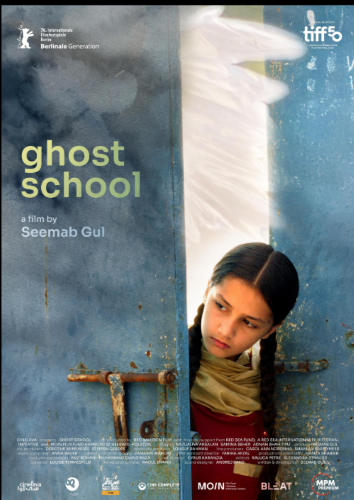
ISLAMABAD: ‘Ghost School’ is the debut feature film of Pakistani-British filmmaker Seemab Gul, who wrote and directed the 88-minute Urdu-language drama. Co-produced across Pakistan, Germany, and Saudi Arabia, the story centers on Rabia, a ten-year-old girl determined to uncover why her village’s only school suddenly closed.
While locals attribute the closure to supernatural hauntings, Rabia’s search uncovers the starker, human realities: institutional decay, systemic neglect, and the deep-seated barriers restricting rural girls from receiving the education.
The phrase ‘Ghost Schools’ is used for such schools that exist only on paper or are completely non-functional.
Pakistan is known for such Ghost Schools, but the issue has widely been debated mostly in Sindh province for decades, where un-official estimates for ghost schools range between 5,200 and 11,000, with some media reports and activist estimates reaching as high as 15,000.
Sindh Education Department Survey (2022) reported that nearly 11,000 schools were abandoned or totally non-functional. An earlier Supreme Court-mandated commission identified about 4,500 non-functional schools and over 2,181 schools that existed only on paper. Various human rights and media reports estimate the number of active ghost or abandoned structures to be around 5,200 to 7,000.
The film earned widespread recognition on the international festival circuit. It held its World Premiere at the Toronto International Film Festival (TIFF) in September 2025 within the prestigious Discovery program, subsequently screened at the Red Sea International Film Festival, and held its European premiere at the 2026 Berlin International Film Festival (Berlinale) in the Generation Kplus section. International distribution rights were acquired by French sales company MPM Premium, solidifying Ghost School as a major accomplishment for contemporary Pakistani cinema.
Despite this worldwide success, Ghost School encountered direct suppression in its home province. The Sindh Board of Film Censors refused to issue a clearance certificate, effectively banning the film from theatrical exhibition across Sindh. Adding to the arbitrariness of the ban, the censor board failed to provide the filmmaker with a formal, clear explanation for withholding certification.
Refusing to accept the silent ban, the filmmakers took the matter to the Sindh High Court. On August 21, 2026, the High Court intervened, directing the Sindh Board of Film Censors to conduct a proper hearing with the filmmakers and issue a reasoned, transparent decision.
By suppressing a sensitive narrative about educational rights, the Sindh Censor Board’s decision underscores a troubling pattern of institutional overreach. Ghost School now stands as a powerful symbol of the tension in Pakistani cinema between international critical freedom and local state censorship.


