By Bhanu Ranjan Chakraborty
DHAKA: In the parliamentary election held in Bangladesh on February 12, 2026, the Bangladesh Nationalist Party (BNP) won a majority of seats and went on to form the next government. The newly elected members of parliament were sworn in on February 17, and the oath-taking ceremony of the new government’s Prime Minister, Tarique Rahman, was also held on the same day.
Tarique Rahman, 60, is the eldest son of former President Ziaur Rahman and former Prime Minister Khaleda Zia, and a key leader of the Bangladesh Nationalist Party (BNP). After studying at the University of Dhaka, he entered politics and has lived in London since 2008 while directing the party from abroad. He was previously convicted in corruption and criminal cases, though BNP has described them as politically motivated. Following BNP’s election victory, he was widely seen as a leading contender for prime minister.
The election was held under the leadership of the interim government led by Chief Advisor Dr. Muhammad Yunus. Fifty political parties in Bangladesh, including BNP and Jamaat, contested the election. 2,034 candidates contested in it. The number of women candidates has increased significantly in this 300-seat election, especially in the Bangladesh Nationalist Party (BNP). However, Jamaat-e-Islami did not field any women candidates. On the other hand, Awami League could not participate in this election because the activities of this party were banned.
1. Key characteristics of the election results:
Unemployment: Unemployment is a major problem in the economy of Bangladesh. According to a report by the Bangladesh Bureau of Statistics, 87% of unemployed youth in Bangladesh were educated in 2024. Another study found that 55% of Bangladeshi youth want to leave the country due to unemployment. Unemployment was one of the main reasons behind the July Revolution of 2024. During the election campaign, the BNP promised to create 10 million new jobs.
Corruption: In 2024, Bangladesh was ranked 151st out of 180 countries in Transparency International’s Corruption Perceptions Index. Corruption was a major issue during the election campaign.
Extortion: Extortion increased significantly in the country in the post-July Revolution period. Several major political parties faced severe criticism for allegations of extortion.
Proportional representation: Proportional representation (PR) emerged as an important issue among political parties during the election campaign. The existing First-past-the-post (FPTP) electoral system has been criticized as a key driver of political deadlock. The Jatiya Nagorik Party, Bangladesh Jamaat-e-Islami, Communist Party of Bangladesh and several leading smaller parties have taken a strong stand against the system, while BNP remains a supporter of FPTP.
Minority vote bank: Due to the absence of Awami League in the 2026 elections, parties such as BNP and Jamaat-e-Islami have actively campaigned to draw the attention of the minority (Specially Hindu community) voters. BNP has promised to form special tribunals and security cells to prevent communal violence against religious minorities. BNP and Jamaat-e-Islami had also been using tactics to win votes from supporters of Awami League.
Referendum: Alongside the 13th National Assembly elections on February 12, 2026, a constitutional referendum was held to decide whether to implement a new constitution based on the July National Charter. The voter turnout was approximately 60.26 percent, and a majority of voters cast “Yes” votes, approving the constitutional amendments.
The July National Charter, proposed following the mass civic and student movements of 2024, is a comprehensive package of constitutional and institutional reforms. It includes the introduction of a bicameral parliament with proportional representation for the upper house, term limits for the prime minister, strengthening of judicial independence, increased representation for women and minority groups, and enhanced local governance and power decentralization. With the approval of the referendum, these constitutional reforms are set to bring significant changes to Bangladesh’s political and administrative structure. However, some opposition groups have raised concerns about procedural legitimacy, leaving ongoing legal and political challenges to be addressed.
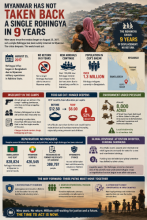
Challenges: Analysts say that overcoming the law and order situation that has arisen due to various reasons including mob terrorism after the fall of the Awami League government is a big challenge for the new government. Proving that the state or government has the capacity to do this will also be a big challenge. They say that besides the Awami League issue, improving relations with India is a big challenge. In addition, taking a strong stance on the Rohingya issue by handling global pressure is another challenge for the new government.
2. Outlook ahead — how the results may affect domestic politics and foreign policy:
In terms of Bangladesh’s foreign policy, the results of the 2026 elections will affect the issue of maintaining deep strategic relations with India. In addition, analysts believe that diplomatic tensions with Western countries over democratic governance and human rights may persist.
Impact on domestic politics: Political analysts believe that the election results may strengthen the position of the party winning the majority of seats. On the other hand, dissatisfaction with the elections by some parties indicates increased instability. This may disrupt the democratic system.
Impact on foreign policy: Analysts believe that the new government can further strengthen strategic, economic and security relations with relevant countries by following the “Look East” policy along with an India-centric foreign policy.
International observers believe that there may be disagreements with Western countries (such as the United States, the European Union) on human rights and democracy issues regarding the acceptability of the elections.
Analysts believe that Bangladesh will maintain economic relations with China and geopolitical and nuclear power relations with Russia for its development needs. Politicians also believe that this election results will also send an important message in determining the future of Bangladesh’s relations with neighbouring India, China and Pakistan.

3. Muhammad Yunus’s next steps and political direction:
Chief Advisor Dr. Muhammad Yunus has said that he will hand over responsibility to the elected government and return to his own work. In a televised address to the nation on February 10, he said, “Once the election is over, the elected government will quickly assume responsibility. And we will return to our own work.”
Earlier, Dr. Yunus shared his plans for the post-election period during a meeting with Aki Abe, wife of former Japanese Prime Minister Shinzo Abe. He said that after the election, he will mainly focus on three issues. These are the development of digital healthcare, the creation of young entrepreneurs and the Three Zero initiative. The press wing of the Chief Advisor made these statements at a press briefing in the capital Dhaka on January 11.
4. What kind of measures may be taken regarding Hasina, who is currently in exile:
After the 2024 student-mass people movement, Sheikh Hasina took refuge in Delhi, India. The interim government has banned the activities of her party, Awami League, in Bangladesh. Multiple murder and corruption cases have been filed against her by the International Criminal Court. Sheikh Hasina has already been sentenced to various terms, including death, in some cases. The interim government has requested the Indian government to return her. However, India has not yet given a positive response to this issue.
Meanwhile, at a post-election press conference in Dhaka on February 14, a journalist asked the head of the winning party, Tarique Rahman, about returning former Prime Minister Sheikh Hasina, who had taken refuge in India, to Bangladesh. In response, the BNP chairman said that it depends on the legal process.
Later, the question was again asked, considering that there are many supporters of the Awami League among the people of Bangladesh, what is the plan to solve the problem? In response, Tarique Rahman said, “The solution will be by ensuring the rule of law.”
In response to another question about whether the verdict or decision of the International Criminal Court will be reconsidered, BNP Standing Committee member Amir Khasru Mahmud Chowdhury said, “This is a matter for the judiciary.”