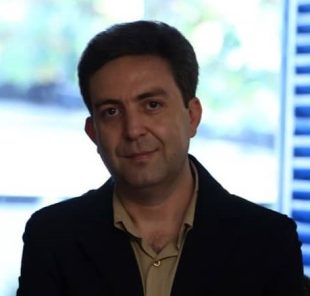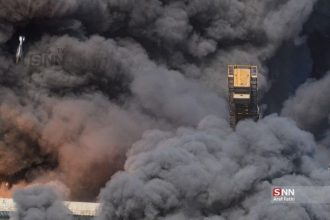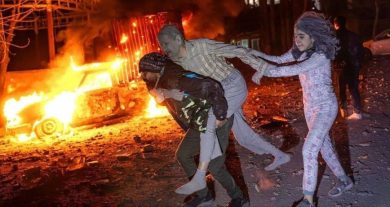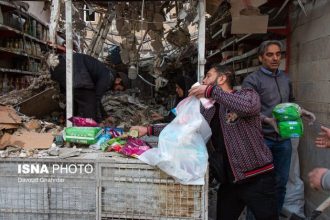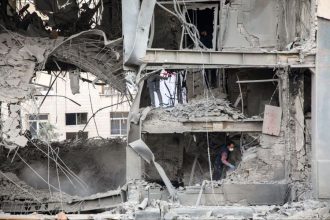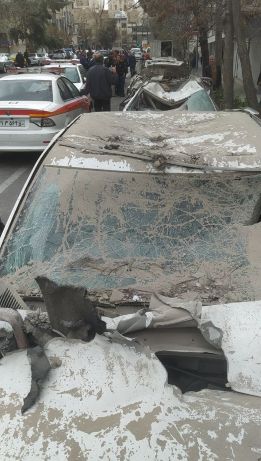
(Photo: Alireza Bahrami)
By Alireza Bahrami,
Correspondent for AsiaN
TEHRAN: While a week has passed since the Israeli and US attacks on Iran and Iran’s defensive-offensive response that embroiled Arab countries in the war, the challenge of anger-reason has reached its peak.
Foreign media believe that some aspects of this war were not foreseen. Of course, the United States and Israel have more advanced weapons, but what analysts believe has prevented the war from being one-sided in their favor is that Iran uses cheap and numerous drones and missiles. But the defense that the other side uses and sometimes destroys is very expensive. An unequal deal on both sides.
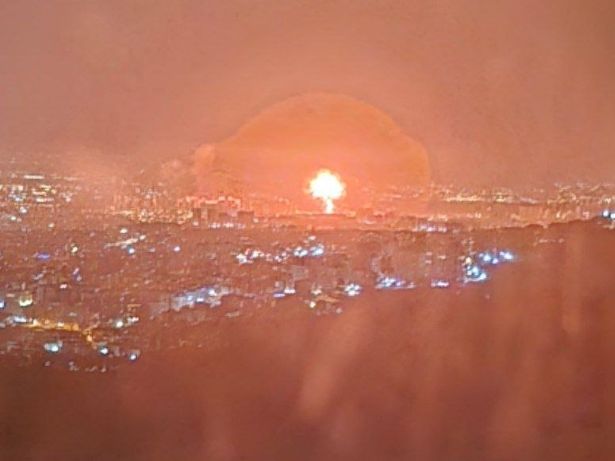
Perhaps this trend caused the United States, whose anger is evident in the recent statements of its president, to use the maximum power of its air fleet on Saturday morning. They carried out multi-stage attacks on Tehran’s National Airport with B2 stealth aircraft.
In addition to the three phases of the attack from 2 to 7 a.m. local time, the explosion of fuel tanks kept people in the surrounding densely populated towns awake until the morning. Meanwhile, images released in the hours that followed created the impression that the attackers were using special bombs; with explosions similar to bombs of mass destruction!
This is the violent face of war, which can become more visible as it continues. A Persian proverb says, “You don’t give sweets during a fight!”
The news conveys only one feeling: this continuation of violence caused by anger has no end, and whichever side deals a bigger blow, the other side plans the next blow more severely.
In such circumstances, experienced and balanced politicians can help the situation. At 11 a.m. on Saturday, Tehran time, Iranian President Pezeshkyan released a video message on national television. In this message, he thanked the people for their support, but it was clear from his words that he intended to define Iran’s foreign policy towards Iran’s land and sea neighbors.
After the Iranian Foreign Minister, he is the highest Iranian official to apologize to neighboring countries for firing missiles and drones. The attack on Arab countries south of Iran is a criticism that has been leveled at Iran in recent days. Iran has responded by saying that it attacked the geographical area that was the origin of the attack on Iran (referring to the numerous US military bases in the region, according to military-economic agreements with Arab countries).
Pezeshkyan said today that the Leadership Council (the temporary replacement for the Iranian leader who was assassinated at the beginning of the war, consisting of the president, the head of the judiciary, and a religious figure who is a lawyer) agreed last night that no more attacks will be carried out anywhere in neighboring countries, except for specific sources of fire on Iran.
Pezeshkyan continued with another message to neighboring countries, which seems to be addressed to neighbors with land borders in the north and west of Iran. He requested that ethnic separatist groups not be allowed to attack Iran on land; and that they not become playthings for the purposes of Netanyahu and Trump.
Of course, he revealed: When our leader and military commanders were assassinated at the beginning of the war, the army, with its own judgment, did what it thought was right.
This statement can be considered an implicit acceptance of some miscalculations in the firing. Saudi Arabia also asked Iran not to make miscalculations following some firings in the past few hours at points in this country.
Today’s speech by the Iranian President created hope for a reduction in tensions. Because during war, military commanders are constantly making threats.
Iran’s controlled attacks have seriously affected the psychological peace of the people and the economy of countries such as Bahrain, Qatar, Kuwait and the United Arab Emirates, although they have not suffered serious casualties in this war. A situation that is not desirable for anyone.
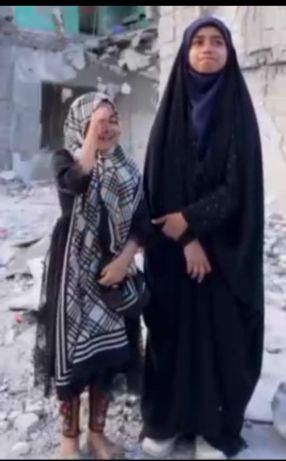
But according to the latest official figures, by the end of Thursday, more than 1,200 Iranians had been killed in the war, most of them civilians, as more than 3,000 homes had been destroyed. According to these figures, 30 percent of the dead were children and teenagers, as only 168 people were killed in the attack on a girls’ primary school in southern Iran, an incident that had international repercussions. Seventeen people were also killed in a small town near Tehran while shopping at a bakery, or some others at a roadside gas station as they were leaving Tehran.
In a fight, sweets are not given as gifts, and the monster of war sacrifices defenseless people.
In this chaos, humanity becomes more important. We see our journalist colleagues who, when visiting destroyed houses, sometimes step out of their work roles and act as relief workers, in khaki and bloodstained clothes.
As I type these words, Tehran has been attacked several more times. In one of the attacks, the building next to the psychiatric hospital was destroyed. I think of the psychiatric patients in the hospital and their condition after the terrible sound of the explosion.
The sooner the war ends, the less humanity suffers.