By Ali Bahrami
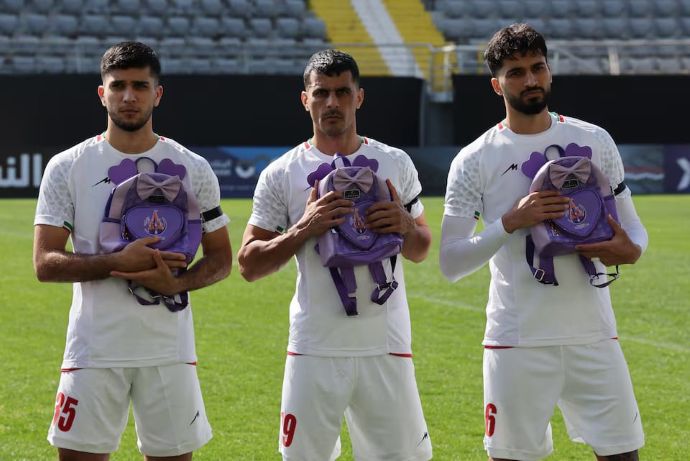
TEHRAN: Iranian players from the World Cup-qualified team carried pink school backpacks to the opening ceremony of a match. The symbolic gesture prompted the FIFA president to travel to the venue, break his silence and take a clear stance.
The Iranian national football team is due to travel to the United States in less than three months to compete in the 2026 World Cup, a matter that has become increasingly complicated since the US and Israeli military attacks on Iran since February 28.
But the FIFA president’s statement on Tuesday helped to improve the outlook.
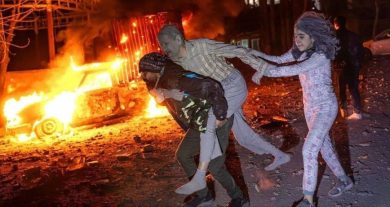
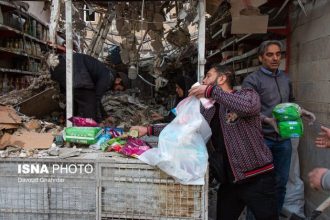
In the second week of the war, Iranian stadiums were targeted by Israeli and US missile attacks and bombings. The attackers claimed that these sites were being used for military activities (deployment of military forces). The most prominent sports venue was the 12,000-seat Azadi Stadium.
This stadium was part of a complex built for the 1974 Asian Games. Many national and international competitions, especially in volleyball, wrestling, futsal, karate and taekwondo, were held in this stadium, and many athletes from Iran, Asia and the world had fond memories of it.
The war also killed amateur athletes or grassroots teams in Iran. It created serious problems for Iranian athletes to participate in foreign tournaments. The only Iranian athlete who was supposed to make his third consecutive appearance in these competitions at the Winter Paralympic Games was absent due to flight cancellations.
The sidelines of the Iranian women’s national football team’s participation in the Australian tournament, which made a lot of news, made it difficult and almost impossible for other Iranian teams to participate.
But the situation of the World Cup is very different. A mega-event in an international sport and organization that claims that governments should not interfere in it.
Initially, the idea was raised that, given the war between the United States and Iran, Iran’s group stage games would be moved from the United States to Mexico; The country, along with Canada, is the other host of the 2026 World Cup. The President of Mexico also announced his agreement, but FIFA’s quick response was: it is not possible because the tickets for the matches have been sold. It was a disappointing response. Is the money for the tickets the only thing that matters?
Shortly after, President Trump made a comment that complicated the matter. Known for his double-talk, he said: “We welcome the Iranian team, but I don’t think it’s appropriate for them to be there; for their own security.”
Iranian government officials had a different proposal: take the hosting from the United States; because a country that attacks other countries does not deserve to host.
On the other hand, the schedule for the final stage of the Asian Club Championship in the West Asian region was announced. Host: Saudi Arabia. One of the teams present in this stage: Tractor from Iran.
Saudi Arabia is an ally of the United States in this war, and Iran is attacking Saudi Arabia with missiles and drones under the pretext of the presence of US bases.
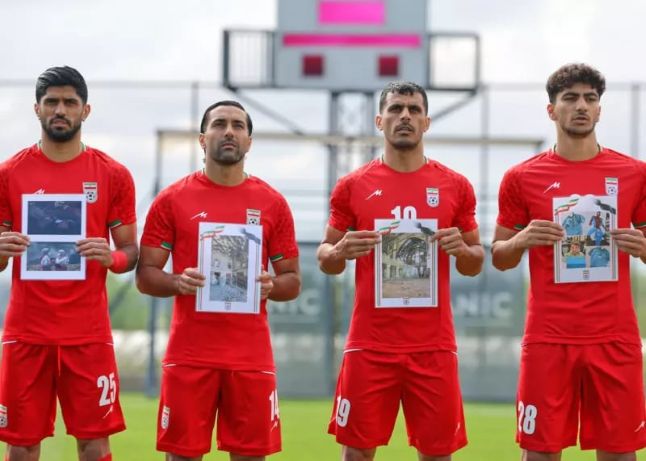
with photos of victims of the US and Israeli attacks
After the Asian Football Confederation (AFC) announced a request to change the venue of the games, the Iranian Ministry of Sports issued a statement banning the presence of Iranian sports teams in the warring countries.
This news again raised doubts about the participation of the Iranian national football team in the World Cup.
There was also discussion about the possibility of replacing the United Arab Emirates football team (another US ally in the war, which was targeted by Iran).
On the one hand, the Iranian team was the second team to be confirmed to participate in the World Cup, whilw on the other hand, the good relationship between FIFA President Infantino and President Trump, as well as his silence, presented FIFA with a serious challenge, considering its principles and regulations.
The situation remained unclear until the Iranian team was due to travel to Turkey for a pre-scheduled training camp. A 30-hour road trip for friendlies against Nigeria and Costa Rica.
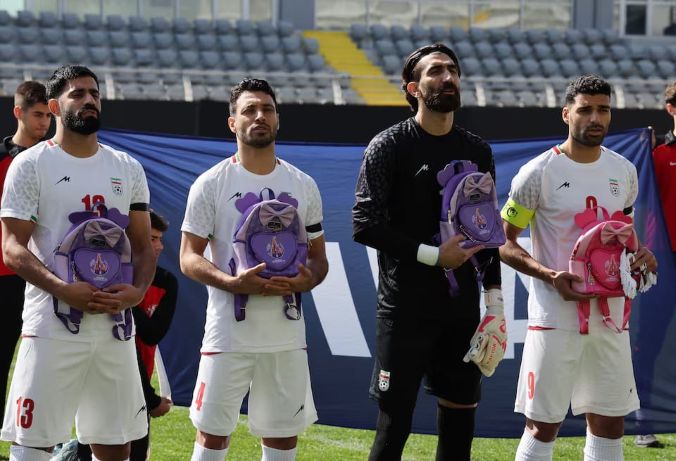
In the first match on March 27, when the Iranian players entered the pitch, the bench players gave them girls’ school bags to hold in a symbolic gesture during a ceremony before the match against Nigeria.
The pink bags were a reference to the girls from Minab School, a city in southern Iran where two consecutive US missile strikes on a primary school killed 170 students and teachers.
The Iranian footballers’ action was covered in international media.