
Kyrgyzstan and China: The Beginning of a New “Golden Period”
Kyrgyzstan is striving to transform its position from a peripheral factor into an advantage

By Kuban Abdymen,
Centralasianlight, Kyrgyzstan
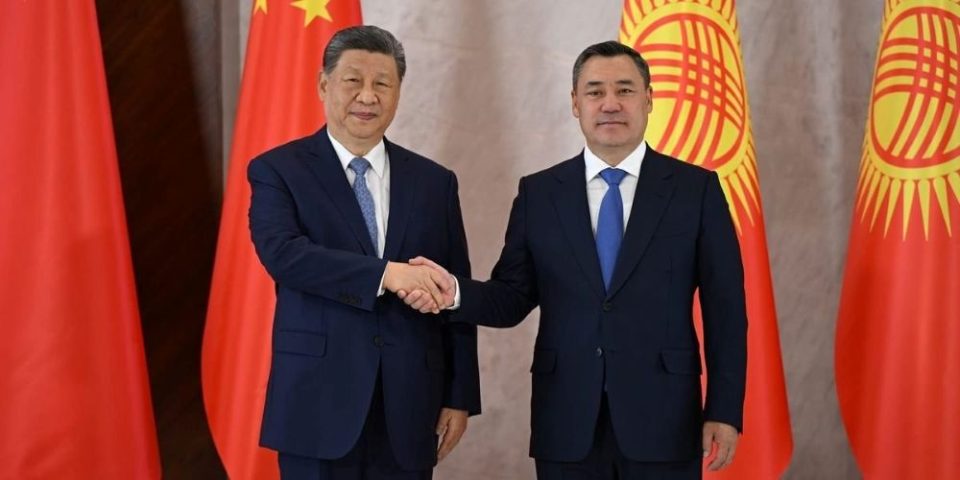
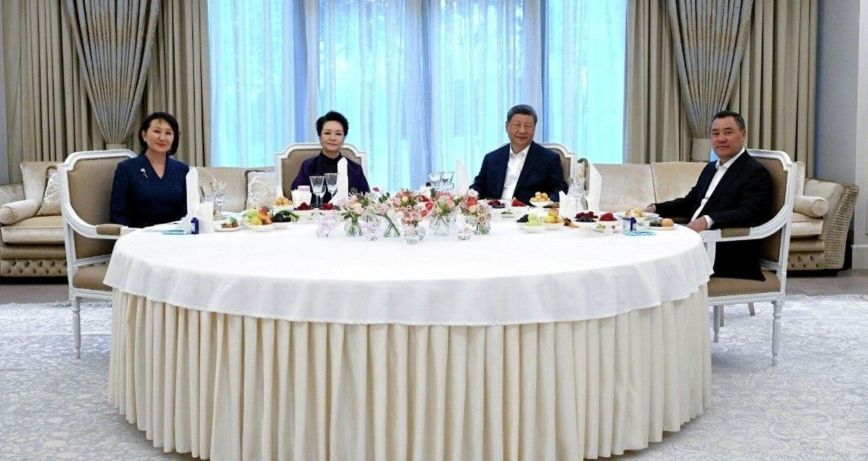
BISHKEK: Chinese President Xi Jinping’s state visit to Kyrgyzstan was more than just further confirmation of the close relations between the two neighboring countries. Talks with President Sadyr Japarov and the package of agreements signed attest to the transition of the Kyrgyz-Chinese partnership to a new stage—from political trust to deeper economic and infrastructural interconnectedness.
Symbolically, the visit took place during the celebration of the 35th anniversary of Kyrgyzstan’s independence. During the talks, Japarov declared that cooperation between the two countries had entered a “new golden period.”
This statement became the key political signal of the meeting. It reflects not only the high level of relations but also Bishkek’s expectations for the next stage of cooperation with Beijing.
A Treaty that Sets a Long-Term Perspective
The key outcome of the talks was the signing of the Treaty of Eternal Good-Neighborliness, Friendship, and Cooperation between Kyrgyzstan and China, as well as the Joint Declaration on the High-Quality Development of a Comprehensive Strategic Partnership in the New Era.
For Kyrgyzstan, the significance of these documents extends beyond diplomatic protocol. They cement the long-term political foundation of relations, which over the years of independence have evolved from good-neighborliness to a comprehensive strategic partnership.
Now this political closeness is taking on a more concrete economic dimension.
In total, the parties signed 32 bilateral documents, covering transport, border cooperation, investment, industry, agriculture, e-commerce, science and technology, the digital economy, and other areas.
The breadth of the package is indicative: cooperation is gradually moving beyond being solely intergovernmental and infrastructure-based, expanding into new technological and economic spheres.
Bedel and the New Geography of Trade
Transportation and border infrastructure remain one of the most important areas.
The parties signed documents on the development of the Bedel border crossing, the construction of a road border bridge across the Uzongu-Kuush River, and cooperation in managing border crossings.
This is of strategic importance for Kyrgyzstan. Geographically located between China and the rest of Central Asia, Kyrgyzstan is striving to transform its position from a peripheral factor into an advantage. In this context, the China-Kyrgyzstan-Uzbekistan railway holds a special place. Its implementation could create a new transportation route between China and the markets of Central Asia, and in the longer term, change the region’s transport configuration.
For Beijing, Kyrgyzstan is becoming an important link in expanding land links with Central Asia. For Bishkek, developing transit infrastructure is an opportunity to increase logistics revenues, attract investment, and strengthen its economic significance in the region.
This is why the development of the Bedel border crossing, the modernization of existing border crossings, and the construction of the railway have significance far beyond bilateral relations.
From Chinese goods to joint production
The economic aspect of this new phase of partnership is no less important.
The signed documents provide for the development of investment cooperation, industrial cooperation, agriculture, e-commerce, and scientific and technical ties. Artificial intelligence, the digital economy, and technology are increasingly featured on the agenda.
This addresses one of Kyrgyzstan’s key objectives: to transition from a model in which the country primarily imports Chinese products to one that involves greater participation in production chains. Chinese capital and technology can facilitate the creation of joint ventures, the development of the processing industry and agriculture, and the expansion of Kyrgyzstan’s export potential.
However, a key question arises: how effectively will Bishkek be able to convert political trust with Beijing into added value creation within its own economy?
What lies behind the “golden period”?
The “golden period” formula is important primarily as a political promise.
The parties have moved from the already achieved level of strategic partnership to the practical implementation of larger-scale projects. After relations were elevated to the level of a comprehensive strategic partnership in a new era in 2023, the current visit demonstrates a desire to translate this status into concrete mechanisms.
For China, this means strengthening a long-term partnership with a neighboring state in a strategically important region. For Kyrgyzstan, it means access to Chinese investment, technology, markets, and transport infrastructure.
But the “golden period” will not be judged by diplomatic language or the number of signed agreements. Its real indicators will be new roads and checkpoints, increased trade and exports, investment in manufacturing, jobs, and technology projects.
A New Phase of Relations
Xi Jinping’s visit to Bishkek demonstrated that Kyrgyz-Chinese relations are gradually moving from a stage of political rapprochement to a stage of practical interconnectedness.
The Treaty of Eternal Good-Neighborliness forms a long-term political foundation. The Joint Declaration sets the strategic direction. And the 32 signed documents translate these intentions into sectoral agreements.
For Kyrgyzstan, this is both an opportunity and a challenge. The opportunity is to take a more prominent place in the regional trade and transport system and attract capital and technology. The challenge is to ensure that major projects bring long-term economic benefits to the country itself.
Therefore, the main outcome of the visit lies not so much in the signed documents as in the space opened up for their implementation.
If the agreements lead to increased trade, transit development, the creation of industries, and the introduction of new technologies, the current stage can truly be called a breakthrough towards higher-quality relations. For Bishkek, the most important part now begins: turning the high level of political relations with Beijing into measurable economic results.


