By Bhanu Ranjan Chakraborty
DHAKA: The Bangladesh Nationalist Party (BNP) government, which won a landslide victory in the national elections in Bangladesh in last February, completed two months in office on April 18.
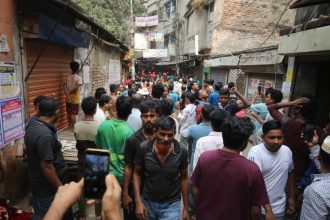
During these two months, the government had to face several challenges, including maintaining law and order. One of these was the challenge of improving relations with neighbouring countries.
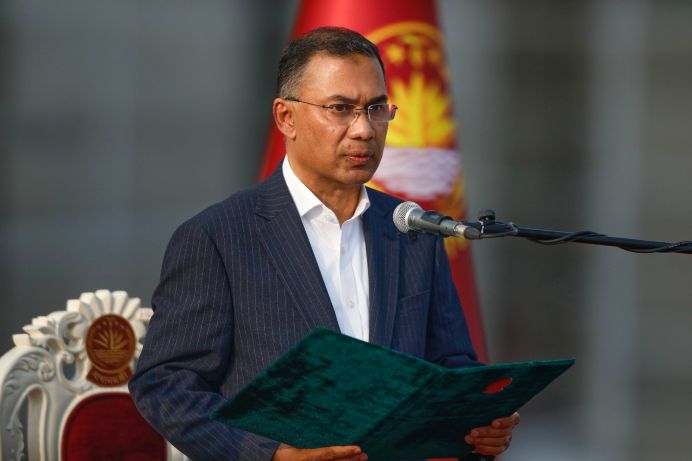
The 13th National Assembly elections were held in Bangladesh on February 12, 2026, about 18 months after the student-public uprising. In this election, the BNP formed a government under the leadership of party chairman Tarique Rahman with a landslide victory.
Analysts are wondering how Bangladesh’s relations with India will improve in this changed political situation and what impact it will have on relations with Pakistan and China. In 2024, the then Awami League government fell in the face of the student-public movement.
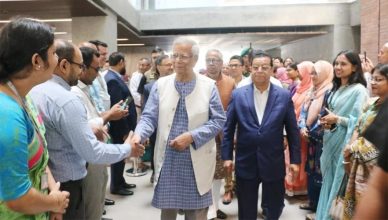
At that time, the interim government formed under the leadership of Nobel laureate economist Dr. Muhammad Yunus governed the country for about 18 months.
According to observers, the main competition in the February 12 election was between the BNP and Jamaat-e-Islami. The Awami League was not allowed to participate in the election. The party’s president and former Prime Minister Sheikh Hasina is currently in India. In such a context, analysts believe that a major change is being observed in Bangladesh’s foreign policy.
India wants to improve relations
According to analysts, before the election, during the tenure of Dr. Yunus’ government, relations with India were historically low, but the warmth with Pakistan increased and the strategic relationship with China deepened.
However, after the election, a new dimension was added to Bangladesh’s relations with India. In the current political reality, these relations are improving rapidly. International analyst and senior journalist Manowar Hossain said that Bangladesh should maintain working relations with India, Pakistan and China in its own interests.
To continue this relationship, the new BNP-led government should also continue the concept that Dr. Yunus took as a position.
Meanwhile, India has indicated after the election that it wants to maintain an effective relationship with the new government of Bangladesh.
After the death of former BNP chairperson Begum Khaleda Zia in December, Indian Prime Minister Narendra Modi sent a condolence message, and later a condolence resolution was adopted in the Indian Parliament. Indian Lok Sabha Speaker Om Birla was present at the swearing-in ceremony of the BNP cabinet. He handed over Narendra Modi’s letter inviting Prime Minister Tarique Rahman to visit India with his family. All these developments indicate that a transition is taking place in Bangladesh-India relations.
Hossain believes that India is Bangladesh’s largest trading partner in Asia. From April 2023 to March 2024, India exported about $11.1 billion worth of goods to Bangladesh.
At the same time, India imported about $1.8 billion worth of goods from Bangladesh. According to him, the new government of Bangladesh must take initiatives to reduce the trade deficit. Exports of goods to India must increase. In this regard, the government must improve trade policies.
According to analysts, India finds the new government led by the BNP acceptable. India has always said that the country is in favor of a democratic, stable and inclusive Bangladesh.
International analyst and senior journalist M Shafiqul Karim said that Bangladesh’s relations with India are mainly about commodity imports and exports.
Since the country is close, imports and exports can be done quickly. The country can be reached in case of urgent need. People-to-people relations should increase to increase bilateral relations between the two neighboring countries. In this case, he suggested continuing visa operations between the two countries.
Pakistan wants strategic relations
Analysts believe that Pakistan’s relations with Bangladesh have warmed up significantly after the July mass movement. According to them, the interim government was keen to strengthen economic relations with Pakistan. Following such an attitude, direct trade between the two countries resumed in February 2025. Direct Dhaka-Karachi flights also resumed after 14 years.
Hossain believes that Bangladesh should continue good relations with neighboring countries including India and Pakistan to increase import-export opportunities.
And if there is a deficit, relations should be built there. However, if any country wants to use Bangladesh to increase tensions in its rival country, the government should keep a careful eye on it.
China wants stability
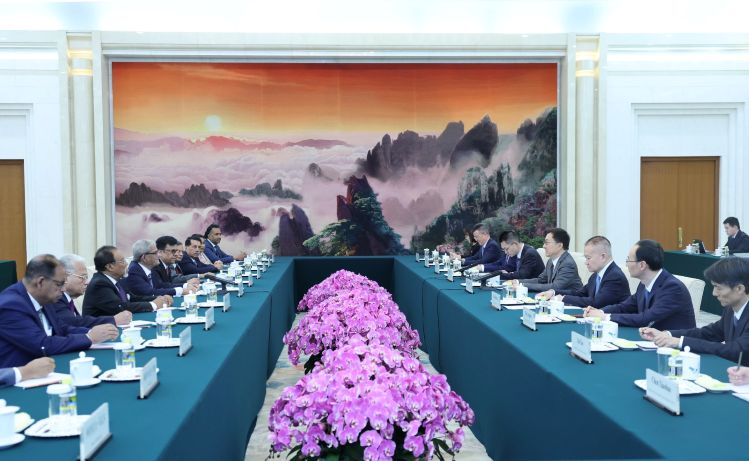
According to analysts, China’s influence in South Asia has increased in recent years. As part of this, Beijing is actively working to strengthen economic relations with Bangladesh. Diplomatic relations between Bangladesh and China have been established since 1975.
Regardless of which party is in power, Beijing has continued its policy of maintaining good relations with Dhaka. China has also promised to help the Cox’s Bazar area to cope with the pressure of Rohingya refugees who have taken refuge in Bangladesh.
According to Hossain, political stability in Dhaka is very important to Beijing, because China has a large amount of investment in Bangladesh. Currently, imports from China are increasing.
However, China is keeping an eye on whether India dominates Bangladesh. According to Karim, Bangladesh should continue to maintain a balanced relationship with China.
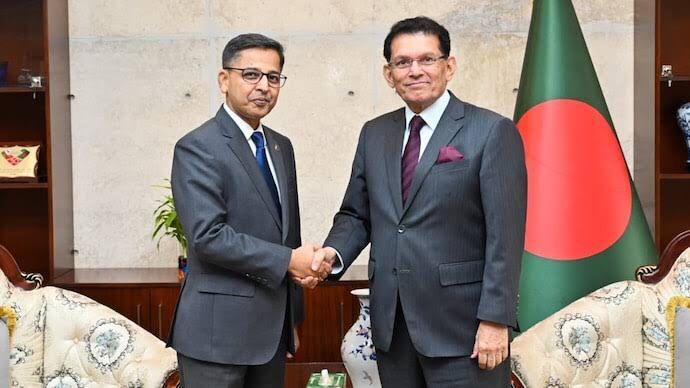
Hossain said that China wants to move forward with a long-term trade policy rather than global politics. However, analysts believe that the efforts of the ambassadors of India, China and Pakistan to improve relations with the new government are worth seeing.
Conclusion
According to analysts, February election will not only change power, but will also determine the direction of Bangladesh’s regional diplomacy. India wants to rebuild relations, Pakistan wants to take advantage, and China wants to maintain stability and continue to expand its influence.
As a result, analysts believe that the new government of Bangladesh will have to move forward by maintaining a balance with these three forces in addition to domestic politics.