From Hope to Hostility: The Middle East’s Fragile Calm Shattered. Again.

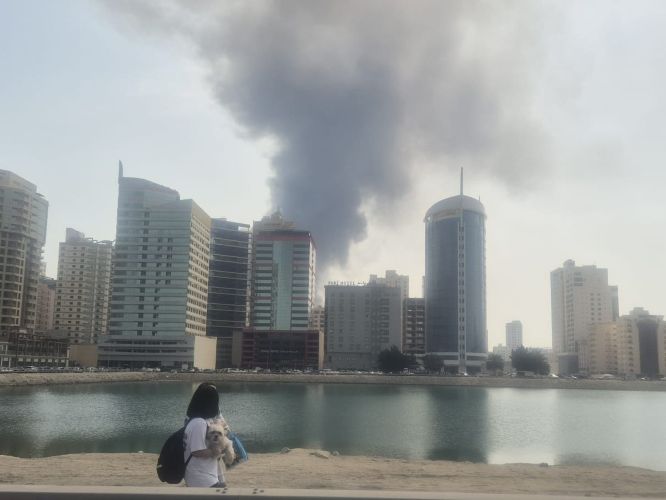
launched by Iran on Bahrain – Picture: Samira Danouni)
By Habib Toumi
MANAMA: Another war in the Middle East began on Feb. 28, adding yet another chapter to a region’s long history of armed conflict, shattered hopes and deferred peace.
U.S. President Donald Trump launched a joint military action with Israel after negotiations over Iran’s nuclear ambitions failed to meet his expectations.
This war ominously threatens to upend Middle East, international and domestic affairs.
For decades, cycles of confrontation have deprived peoples in the Gulf and Middle East of the stability required to build and keep prosperous economies, strong institutions and secure futures. Each new escalation underscores how fragile stability can be and how elusive a durable peace remains.
In recent weeks, there had been cautious optimism that a diplomatic track between Iran and the United States might help defuse tensions.
Many across the region, exhausted by protracted wars and chronic instability, hoped that negotiations between the two countries would gradually replace brinkmanship, and that dialogue would succeed where force had miserably failed. The prospect of a negotiated settlement, however incremental, offered a rare glimmer of strategic restraint.
Instead, events took a starkly different turn. In the early hours of Saturday Feb. 28, the U.S. and Israel launched strikes against targets inside Iran, triggering a rapid and dangerous escalation. In response, missiles were fired toward several Gulf states, widening the geographic scope of the confrontation and heightening fears of a broader regional war.
Bahrain, Kuwait, Qatar, the United Arab Emirates and Jordan – states that have not initiated hostilities against Iran – found themselves in the crosshairs, targeted by authorities in Tehran for hosting U.S. military facilities on their soil. Their exposure illustrates a troubling feature of modern geopolitics in which countries can become battlegrounds not by choice, but by virtue of alliances and geography.
As in every war, beyond strategy and statecraft lies the human dimension, which is too often reduced to sheer numbers and dramatic headlines.
Families in the region were jolted awake by sirens in the early hours of the morning, looking for answers, scrambling for shelter as uncertainty dominates.
Amid the confusion, families sought to reassure their older and younger members, even though they were silently calculating the risks of each passing minute.
In cities and towns across the region, anxiety becomes a constant companion. The routine daily routines, the regular rhythms of work and family life were abruptly disrupted.
Authorities reassured people, providing them with guidance and instructions to ensure their safety. Flights across were canceled and airports were closed.
Bahrain said that schools would remain closed next week and students would resort to online learning, a practice perfected during the coronavirus drama. Physical office work would be reduced by 70%, as employees will have to work online from home.
Shelters were set up in school across the country and people were encouraged to head there to ensure they are in a safer environment.
The sight of lines of people boarding buses to be driven to the shelters was rather unusual. Severa people opted to walk to the designated places situated not far from their dwellings. Some carried their young children or favorite pets alongside their bags.
The psychological toll caused by the inexorable erosion of a sense of safety was as enduring and as persistent as the physical damage. For young generations in the region who have known little but instability, each new conflict reinforces a troubling normalcy of crisis.
This widening confrontation is threatening shipping lanes, energy markets and civilian infrastructure, but above all it is threatens lives, livelihoods and the fragile hope that tomorrow might be calmer than today.
Peace in the Middle East remains not just a political goal and a diplomatic aspiration, but also a human necessity.
The successive escalations have demonstrated that military action, however forceful, does not resolve the underlying political fractures that fuel recurring conflict.
Without sustained diplomacy and credible security arrangements, such deplorable cycles of retaliation are likely to persist. The people in the region deserve more than soothing talk and temporary ceasefires; they deserve peace and stability grounded in dialogue rather than deterrence and in hope rather than fear.