By Sawsan Fraidoon
Media & Communications Specialist
MANAMA: When Ambassador Ahmed Al Saati reflects on his ten years in Moscow, he does not recount figures or agreements as much as he revisits the journey itself, both the challenges and transformations, having served as his country’s representative in one of the world’s most complex political arenas.
From the editor’s desk to the ambassador’s chair, he carried with him the tools of a journalist: attentive listening, reading the details, and building trust. He later discovered that these skills lie at the very heart of diplomatic work. For him, journalism and diplomacy meet at a single point: understanding, dialogue, and building bridges between people.
In the heart of Moscow, amid the stark whiteness of winter and temperatures dropping below zero, Ahmed Al Saati, Ambassador of the Kingdom of Bahrain to the Russian Federation, began a diplomatic experience he had never expected.
From a career in media and journalism to serving as a member of parliament, Al Saati found himself facing a new challenge through a royal appointment, becoming his country’s ambassador to one of the most influential nations in the world, moving from the warmth of Bahrain to the bitter cold of Russia.
Al Saati had spent three decades working in media, moving between print journalism and television broadcasting, which honed his analytical and communication skills. His transition into parliamentary work during the parliamentary elections marked an unexpected turning point, placing him in the midst of political negotiation, crisis management, and legislative drafting.
From journalism to parliament: the first political turn
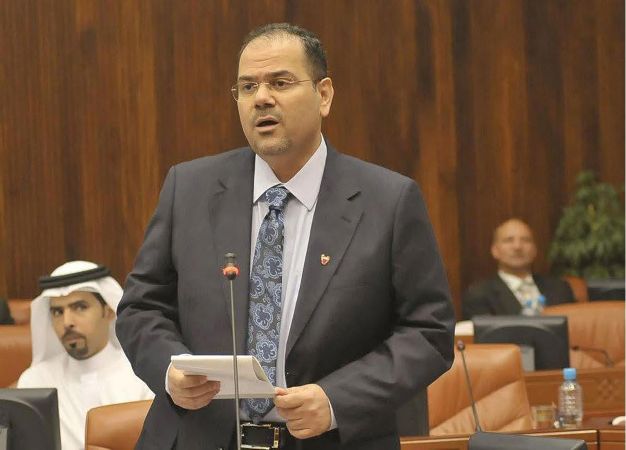
In 2011, Al Saati found himself at a new crossroads and chose to leave the observer’s seat to join the ranks of decision-makers. He ran in the parliamentary elections driven by national duty, at a sensitive time when Bahrain was facing unprecedented internal challenges. “I feared we might lose Bahrain,” he says, a phrase that encapsulates the depth of concern that propelled him toward that step.
During his parliamentary tenure, Al Saati confronted sensitive political, economic, and social issues. Parliament at the time was undergoing difficult circumstances, marked by internal tensions and mass resignations, which compelled him to exert significant effort to preserve the stability of the legislative system.
“Working in parliament was a major challenge, because balancing competing interests and managing crises requires great wisdom and patience,” he explains. Despite the difficulties, he contributed to a number of laws that strengthened the national economy and protected citizens’ rights.
His role in parliament was not a conventional one. He founded the “Bahrain” parliamentary bloc, bringing together members from diverse orientations and backgrounds, out of a belief that the nation can only be built through partnership.
His voice was moderate, oriented toward de-escalation and dialogue, and he helped pass legislation aimed at restoring confidence, strengthening the economy, and safeguarding citizens’ rights.
Though the experience was arduous, it taught him much about crisis management, understanding the balances of the state, and reconciling opposing interests—skills that later formed the core of his diplomatic persona.
When a phone call changed the course of his life
Al Saati had not imagined leaving Bahrain anytime soon, nor representing it on the international stage. But major surprises sometimes come in the form of brief phone calls.
“I was in the car when I received a call informing me of my appointment as Ambassador Extraordinary and Plenipotentiary of Bahrain to the Russian Federation. I sat silently for ten minutes. I wondered: Why Russia? And how would I leave Bahrain?” The surprise was twofold: an unexpected decision and an even more unexpected destination. Russia, for him, was a distant country, geographically, culturally, and psychologically, and it had never been part of his professional aspirations.
Yet he did not hesitate. With the humility of a student rather than the rigidity of a veteran, he began reading everything he could about the duties of ambassadors, about Russia, its culture, history, and its relations with the region. Together with his family, he also enrolled in an intensive Russian language course before arriving in Moscow in September 2015.
Moscow’s cold: an unceremonious welcome
Al Saati arrived in the Russian capital with his family to open the first page of a new chapter. But the opening page was not easy. He was met by the Russian winter—early and unforgiving. “The clothes we brought from Bahrain were completely unsuitable. The cold was harsher than we had ever imagined.”
Yet the cold was only the beginning. The language, culture, daily behaviors—everything was new and jarring. Even the colors of the streets and the general mood of people felt unfamiliar. But one piece of advice from His Majesty the King was the key: “Don’t sit in the office; go to the people.”
Diplomacy without protocol
Guided by this royal advice, Al Saati began weaving his first relationships with Russians. He did not confine himself to official ceremonies; instead, he went into the streets, villages, associations, and popular festivals, building a network of human relationships from the ground up. “I started from the bottom, not the top,” he says.
He entered villages, visited people in their homes, shared meals with them, and took part in their occasions. Despite the language barrier, he managed to create genuine human connections. He used interpreters and mobile applications, but the most important tools were a smile and good intentions.
“Russians may seem reserved at first, but if you take one step toward them, they take ten toward you. I discovered that behind those stern faces are warm hearts that value sincerity and human principles similar to ours: respect for family, reverence for elders, family gatherings, and even faith,” he says.
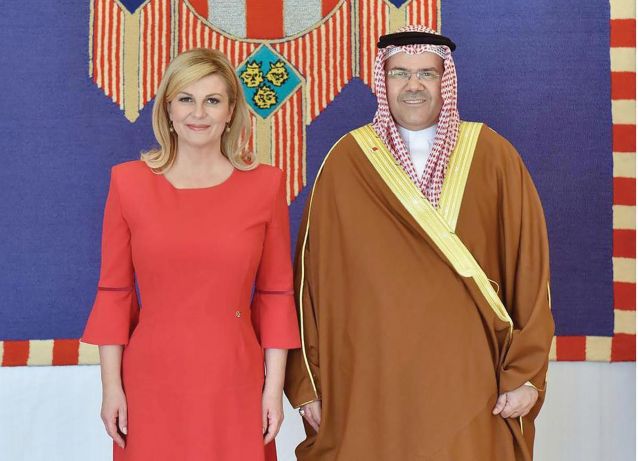
after he was accredited as Bahrain’s non-resident Ambassador to Croatia.
Soft power: Bahrain in the heart of Moscow
From the outset, the ambassador realized that what Bahraini-Russian relations lacked was mutual familiarity. Drawing on his media background, he understood that communication does not occur solely through political meetings, but also through culture and the arts. He therefore activated Bahrain’s “soft power” in Moscow, organizing cultural exhibitions and musical concerts, hosting Bahraini artists, and highlighting Bahrain’s civilization—introducing Russians to its history and the charm of its Eastern hospitality.
These activities were not merely protocol events; they were genuine bridges between the two cultures. “Russians love history and legends, and they found in Bahrain a story they had never heard before,” he says. Thus, culture became a solid bridge crossed not only by ambassadors, but by peoples, and Bahrain’s name became known and respected in Russian circles.
The Russia–Ukraine War: a test of diplomatic resilience
In 2022, the Russia–Ukraine war broke out, plunging Russia into unprecedented international isolation. Sanctions were imposed, flights were suspended, financial transfers were frozen, and the Bahraini embassy, like others, found itself in a stifling international isolation.
Al Saati found himself in an extraordinary situation, responsible for protecting embassy staff and Bahraini citizens without conventional tools. “We had to transport salaries in cash in suitcases every three months. It was exhausting and one of the most difficult experiences I have faced administratively and psychologically, but it was necessary.”
He confronted these circumstances with resilience, strengthening communication with Bahraini residents by creating WhatsApp groups and following up on their personal, educational, and health needs. “It wasn’t easy, but we succeeded in protecting our citizens, and this was a direct royal directive.”
The Order of Friendship: an unexpected honor
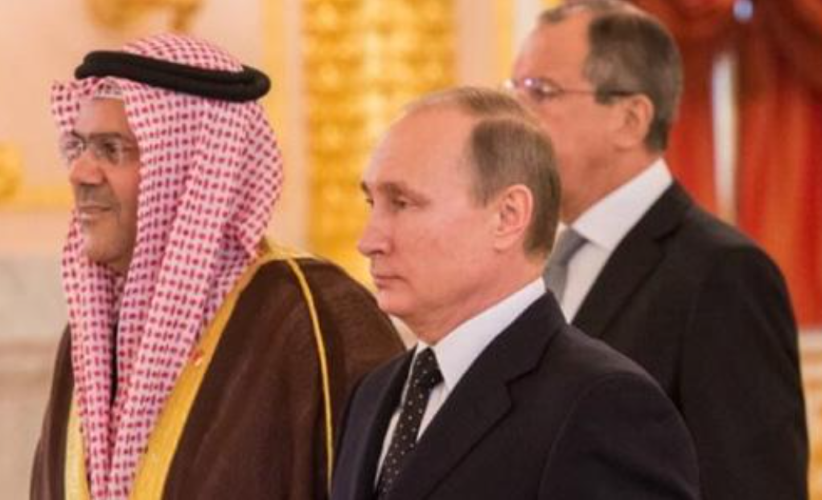
In December 2023, Ambassador Al Saati received the “Order of Friendship,” the highest honor awarded to foreign diplomats in Russia, bestowed by President Vladimir Putin, reflecting his success in building strong relationships not only with the Russian leadership, but also with society and the people. “I learned about it from the official gazette. No one informed me. I received a congratulatory message from a friend who sent me a photo of the decree.”
Al Saati knows well that the medal was not for him personally alone, but a tribute to Bahraini diplomacy under the leadership of the King of Bahrain. “I am merely an executor of the leadership’s directives,” he says modestly.
The honor was not merely symbolic. Bahrain’s name became synonymous with trust in official Russian circles, and procedures for Bahraini citizens began to be completed with exceptional speed.
The silent pain
Despite the successes he achieved in Russia, Al Saati could not hold back his tears when asked whether a high position and its privileges could compensate a person for their homeland. In a moment of sincere emotion, he likened his longing for Bahrain to the loss of his late mother, based on his belief that the homeland, for a person, is akin to a mother in its symbolism and depth of attachment.
He adds: “The experience of living abroad was a true test of patience and the ability to adapt to feelings of longing and distance from family and homeland. Whenever the weight of exile grows heavier, I recall my mother’s words, as she always urged me to fulfill my national duty, and that gives me the motivation to continue.”
After more than a decade in Moscow, Ambassador Al Saati feels that Bahrain has never left him. At this stage, he is focused on selecting economic and commercial opportunities that benefit Bahrain amid changing global conditions. Relations between the two countries are no longer limited to politics; they have expanded into multiple areas, from health to education to technology.
Although he has stepped away from journalism, the journalist’s spirit still resides within the Bahraini ambassador. Journalists seek the truth; diplomats strive to bring viewpoints closer together. Thus, Al Saati has found in his new post an extension of his journey, still asking questions, investigating, and building bridges between Bahrain and the world. “Sometimes I look for details unrelated to my work, simply because there is a journalist inside me,” he says with a smile.
Yet he has learned how to rein in that curiosity, how to be a diplomat first. Perhaps this blend of knowledge, human sensitivity, and political experience is what enabled him to succeed in his mission with simple tools, a small team, and a great spirit.