
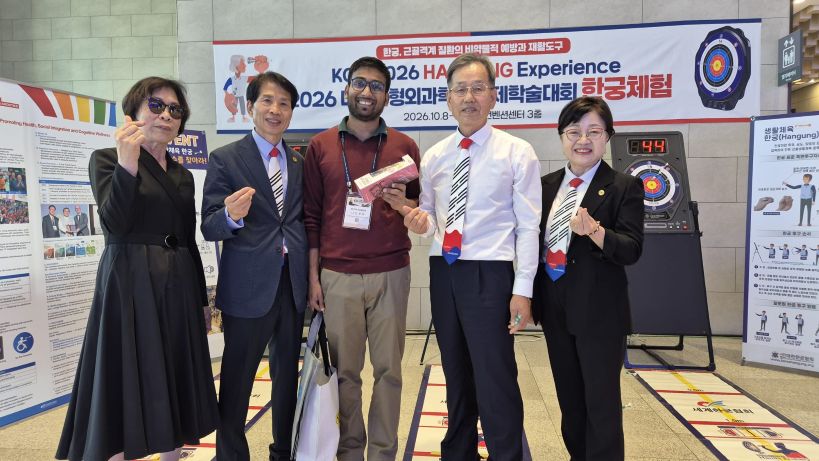
By Seok-jae Kang
Vice President, Asia Journalists Association
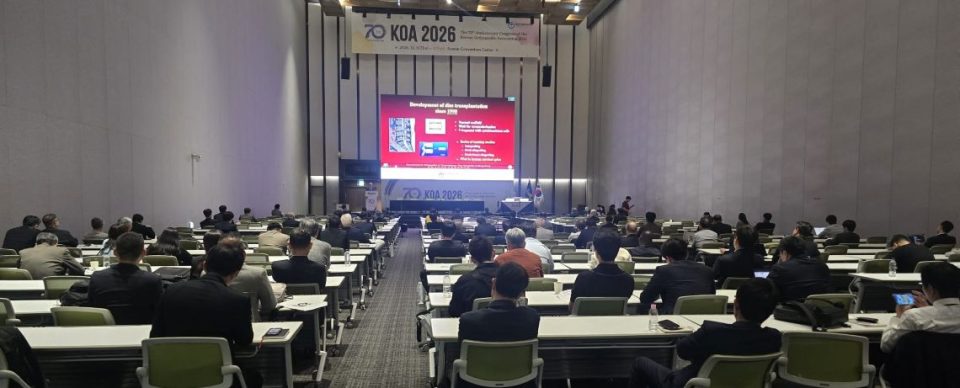
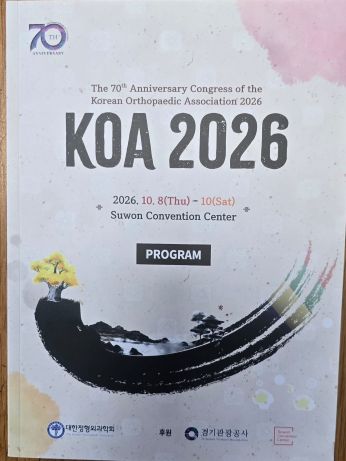
SUWON, KOREA: The 70th Anniversary Congress of the Korean Orthopaedic Association 2026 (KOA 2026) officially opened on October 8 at the Suwon Convention Center in Suwon, gathering about 2,800 orthopedic surgeons from 28 countries.
During the three-day international congress running through October 10, a special Hangung experience booth set up on the third floor attracted significant attention from participating orthopedic specialists.
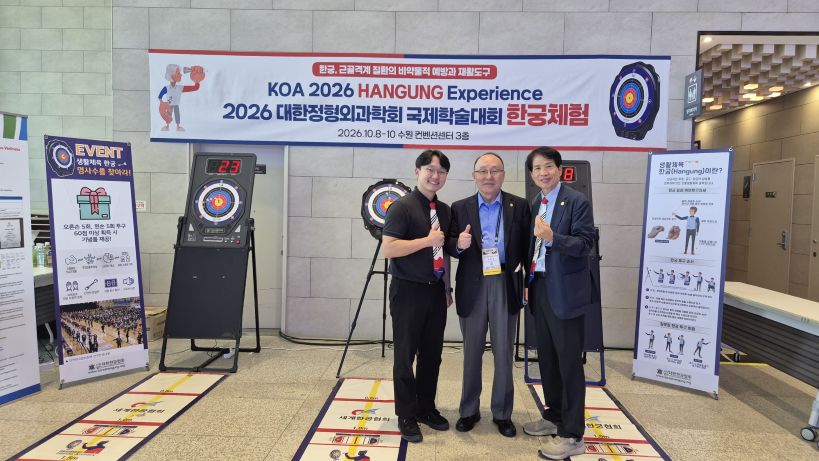
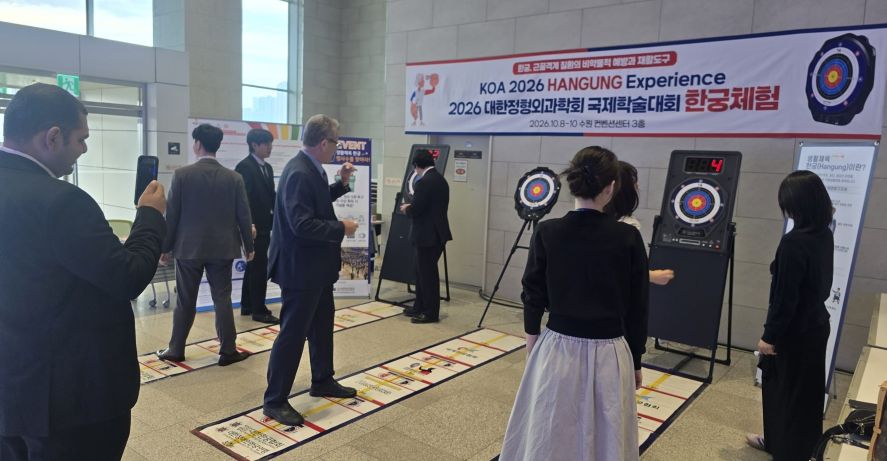
Operating under the theme “Hangung: A Non-Pharmacological Tool for Prevention and Rehabilitation of Musculoskeletal Disorders,” the booth allowed orthopedic surgeons to throw Hangung pins at electronic targets, directly experiencing the biomechanical principles of Hangung and its potential application in rehabilitation.
On the opening day, medical specialists from countries including Egypt, Nepal, Australia, Vietnam, India, Malaysia, China, Palestine, Thailand, and the United States visited the booth. Kang Seok-jae, vice president of the World Hangung Association and vice president of the Asia Journalist Association, introduced Hangung and explained its pitching techniques in English for foreigners.
The booth operations were supported by key leaders and officials, including Heo Do-won, a board member of the World Hangung Association, Heo Do-hwi, a board member, Korea Hangung Association, Seo Young-soon, president, the Seoul Songpa Hangung Association, Seo Yang-soon,an auditor of the Korea Hangung Association, Sung Eui-soon, president the Seoul Jongno Hangung Association, Lee Chul-soo, an auditor of the Seoul Jongno Hangung Association, and instructor Cho Hwa-ja.
Dr. Nitin Kumar, an orthopedic surgeon from India who visited the booth, shared his thoughts:
“As a sport for all originating in Korea that utilizes both hands, Hangung seems highly beneficial for preventing dementia and musculoskeletal diseases. I hope to attend the Hangung competition to be held in Kolkata, India, in early December this year.”
Participants who scored high points during the Hangung experience were presented with commemorative tumblers sponsored by the Korea Culture Foundation.
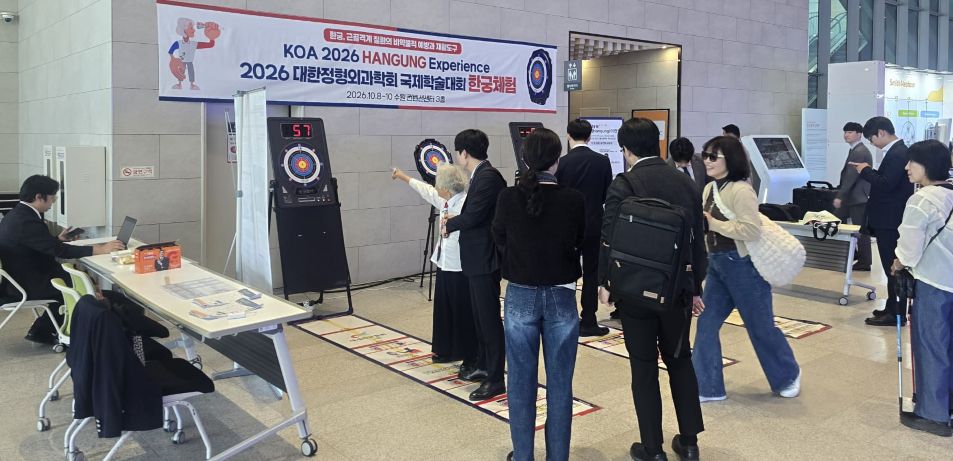
Distinguished Professor Emeritus Yoo Myung-Chul of Kyung Hee University, a former president of the Korean Orthopaedic Association, also visited the Hangung booth. On the first day of the congress, Dr. Yoo delivered a presentation on behalf of Korea, addressing the topic: “Celebrating the 70th Anniversary of the Korean Orthopaedic Association: What Should We Do for the Next 100 Years?”
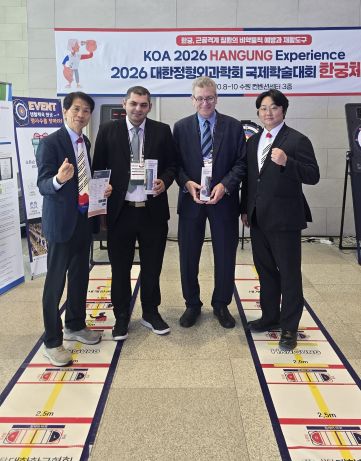
All presentations at KOA 2026 are conducted in English across the meeting rooms and exhibition halls on the 3rd and 4th floors of the Suwon Convention Center. The annual KOA congress was elevated to an international academic conference 10 years ago.
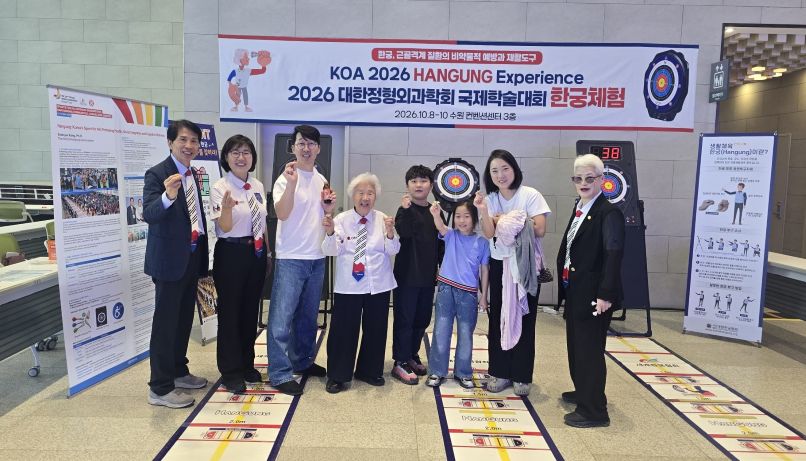
Created in Korea, Hangung is a modern sport for all combining the advantages of traditional Korean pitch-pot, or Tuho, traditional archery, or Gukgung, and Western archery. Players throw safe, 4-gram magnetic pins alternating 5 times with the left hand and 5 times with the right hand. Rules penalize throwing with flared shoulders or raised heels, naturally encouraging proper pitching posture and balanced weight distribution. Requiring symmetrical body movements alongside aiming and score calculation, it is recognized as an exercise that engages both physical and cognitive functions simultaneously.Domestic research studies have highlighted the health benefits of Hangung.
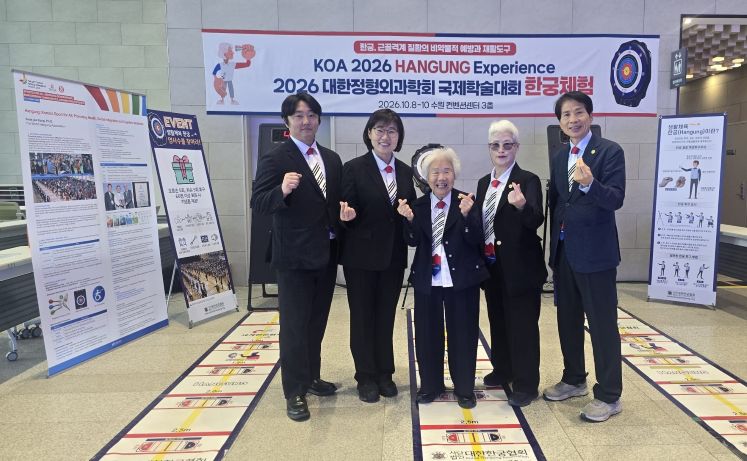
A 2016 study (Kwon Bong-an) on elderly women aged 70 and older with shoulder pain demonstrated that combining Hangung with rehabilitation exercises resulted in greater range of motion (ROM), increased muscle activity, and significantly higher pain reduction compared to exercise therapy alone.
A 2023 study (Kim Young-mi) involving elderly women over 12 weeks showed increased muscle mass, improved upper limb strength, and reduced depression score.


