The Overheated Network: How Climate Change and Weather Extremes Decouple Biodiversity
Climate change is a fundamental threat to Earth's living network

By Dr. Hassan Humeida
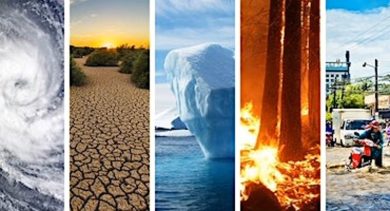
KIEL, GERMANY: Life on Earth resembles a highly complex clockwork mechanism. Over millions of years, plants, animals, and microorganisms have adapted to one another, shaping a stable equilibrium. Today, however, man-made climate change and intensifying weather extremes are acting like a sledgehammer on this sensitive structure.
As temperatures hit record highs and droughts or flash floods dictate the rhythm, it is not just the weather that is spinning out of control—the very foundation of global biodiversity is fracturing.
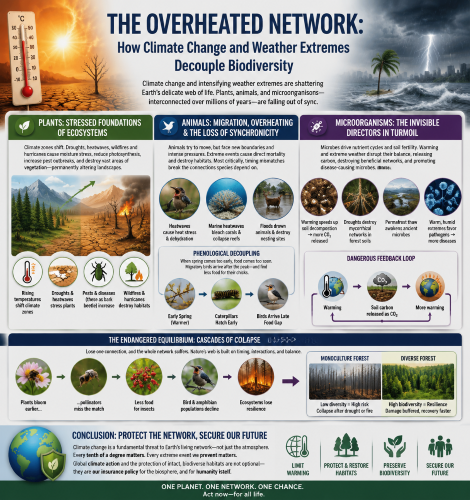
Plants: Stressed Foundations of Ecosystems: Plants are the bedrock of almost all terrestrial habitats. As primary producers, they convert sunlight into energy, providing both food and habitat. Yet, climate change hits them on two fronts: through gradual warming and abrupt extreme events.
Due to global warming, climate zones are shifting rapidly toward the poles or into higher mountain elevations. Many plant species, particularly long-lived trees, cannot keep pace with the speed of this migration. Added to this are mega-droughts and heatwaves.
These cause acute moisture stress in plants, reduce photosynthetic capacity, and leave forests vulnerable to pest infestations, such as the bark beetle. Furthermore, when extreme weather events like wildfires or hurricanes destroy millions of hectares of vegetation, it doesn’t just kill off individual organisms—it permanently alters entire landscapes.
Animals: Migration, Overheating, and the Loss of Synchronicity: Animals are more mobile in reacting to change, but they quickly run into insurmountable boundaries. Many species attempt to escape the heat by shifting their geographic ranges. This leads to entirely new compositions of species communities, triggering unpredictable competition for food and territory.
The impacts of extreme weather on fauna are particularly devastating:
- Heatwaves cause severe heat stress and dehydration in birds and mammals.
- Marine Heatwaves trigger catastrophic coral bleaching, causing the oceans’ most biodiverse ecosystems to collapse.
- Floods drown ground-dwelling animals and wipe out critical nesting sites.
The most critical issue, however, is phenological decoupling—the loss of temporal synchronicity. Many birds time their breeding season precisely to match the spring peak of caterpillar populations. If spring warms up too quickly, the caterpillars hatch weeks early. By the time migratory birds arrive, they can no longer find enough food for their chicks. The network of mutual dependencies snaps.
Microorganisms: The Invisible Directors in Turmoil: In the shadow of the visible natural world lies the realm of microorganisms. Bacteria, fungi, and single-celled organisms govern Earth’s nutrient cycles, decomposing organic material and making soil fertile. They respond with extreme sensitivity to fluctuations in temperature and moisture.
Warming accelerates microbial decomposition in the soil. While this sounds harmless, it causes organically bound carbon in the ground to be released more rapidly into the atmosphere as CO2—a dangerous feedback loop. Moreover, weather extremes shift the balance within the microcosm: the thawing of permafrost awakens millennia-old microbes, while prolonged droughts destroy the beneficial mycorrhizal networks (the symbiosis between fungi and plant roots) in forest soils. Concurrently, warm and humid extreme conditions favor the spread of pathogenic (disease-causing) fungi and bacteria, leading to mass infections of weakened plants and animals.
The Endangered Equilibrium: Cascades of Collapse: The greatest threat to biodiversity does not lie in the extinction of a single species, but in the domino effect. If one puzzle piece falls away, the entire system begins to totter. When plants bloom earlier due to drought before their specific insect pollinators have hatched, both the reproduction of the plant and the food supply of the insects suffer. If insects decline, populations of birds and amphibians collapse.
Through the loss of biological diversity, nature loses its resilience—its capacity to recover from shocks like extreme weather. A species-poor, monoculture forest burns to the ground entirely after a drought; a biodiverse mixed forest cushions the damage through more resilient species.
Conclusion: Climate change is not an isolated physical problem of the atmosphere; it is a fundamental threat to Earth’s living network. Every tenth of a degree of warming and every prevented extreme weather event determines whether our planet’s ecosystems will remain functional. Global climate protection and the consistent preservation of intact, biodiverse habitats are therefore not mere acts of nature conservation—they are an insurance policy for the biosphere, and ultimately, for humanity itself.