The Dilemma in Colombo: Sri Lanka’s New Government Faces the Reality of Chinese Capital

By Leo Nirosha Darshan
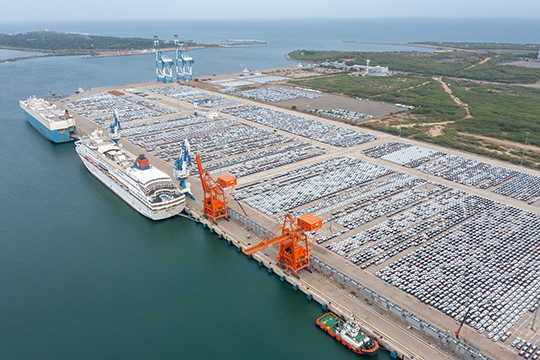
COLOMBO: In 2017, crippled by a mounting debt crisis, Sri Lanka handed over operational control of the strategically vital Hambantota Port to a Chinese state-owned enterprise on a 99-year lease. Nearly a decade later, the politics surrounding Chinese investments in the island nation have come full circle.
The National People’s Power (NPP) government, which swept to power on a wave of fierce criticism against economic mismanagement and non-transparent foreign deals, now finds itself confronting the exact same structural dependency on Chinese capital that shackled its predecessors.
However, today’s tension extends beyond the familiar rhetoric of a “debt-trap narrative” or geopolitical rivalry. The core issue for Colombo is whether it can renegotiate the terms of its economic and political relationship with Beijing without derailing an already fragile economic recovery.
The Burden of Inherited Dilemmas
Upon taking office, Sri Lanka’s new leadership sought to review several controversial foreign investment frameworks signed by previous administrations, specifically those linked to Chinese infrastructure financing. This included scrutinizing tax concessions, regulatory holidays, energy agreements, and governance mechanisms attached to mega-projects like the Colombo Port City and Hambantota.
The aftermath of the 2022 economic collapse fundamentally altered public perception. For many Sri Lankans, foreign-funded infrastructure had become synonymous with corruption, opaque procurement, and threats to national sovereignty. Due to their scale and visibility, Chinese-backed projects became the lightning rod for this discontent.
Yet, Sri Lanka’s economic reality remains stark. The country urgently requires foreign capital; external debt remains substantial, foreign exchange reserves are delicate, and growth is heavily reliant on investment inflows. Beijing remains one of the few players willing and able to finance large-scale infrastructure and industrial projects.
This paradox explains why an administration that campaigned on reviewing old deals moved swiftly in January 2025 to fast-track an agreement with China’s Sinopec for a proposed $3.7 billion oil refinery in Hambantota, hailed by local officials as one of the largest foreign direct investments in the country’s history.
Flashpoints of Friction: Port City and Hambantota
No project carries more symbolic weight than the Hambantota International Port. While academics debate whether the asset lease was a calculated debt trap or the result of domestic fiscal mismanagement, its political fallout within Sri Lanka is undeniable. It stands as a permanent symbol of compromised sovereignty and strategic dependency.
The new government has inherited this political baggage. Domestic demands for stricter oversight of Chinese-controlled strategic assets remain loud, tapping into broader anxieties surrounding the economic crash. Even discussions about revising tax concessions for the Colombo Port City, a multi-billion-dollar financial hub managed under a distinct regulatory framework, are tied to public frustration over bearing unequal fiscal burdens during austerity measures.
Under post-IMF restructuring, Colombo has attempted to tighten incentive structures and claw back certain tax exemptions within the Port City framework. However, rolling back sweeteners risks discouraging the very investors Sri Lanka needs.
The island’s recovery strategy still hinges on positioning itself as a maritime and financial hub in the Indian Ocean – an ambition where Chinese-built infrastructure remains foundational.
Consequently, successive governments temper their campaign-trail rhetoric once confronted with the governance reality: domestic politics may feed on anti-foreign sentiment, but governance requires capital.
Economic Depth Over Naval Anxiety
Much of the international discourse surrounding Sri Lanka and China focuses narrowly on geopolitics—specifically Beijing’s maritime footprint in the Indian Ocean. While Hambantota’s proximity to global shipping lanes naturally triggers security anxieties in New Delhi and Washington, Beijing’s actual leverage today is structural rather than purely military.
China’s influence endures because it is deeply embedded in Sri Lanka’s real economy—spanning logistics, energy, construction, and long-term development finance. Chinese firms remain actively engaged in expanding industrial zones and emerging energy projects.
Colombo is not seeking a rupture with Beijing; it is seeking a recalibration. The challenge is that Beijing has little structural incentive to fundamentally alter agreements that already secure its long-term commercial and strategic interests.
Ultimately, Colombo is trapped in a delicate balancing act. It requires Chinese capital while needing to signal to its electorate that it has not capitulated to foreign influence. It seeks sovereign flexibility without spooking international markets.
This dilemma reflects a broader challenge faced by smaller nations navigating superpower rivalries amidst domestic economic vulnerability. For Sri Lanka, the debate is no longer just about ports or loans—it is about who dictates the terms of the island’s economic future.