
By Habib Toumi
MANAMA: Amid the brutal war gripping the Middle East, and as tensions intensify, concern is mounting over a growing class of “pseudo-experts” who are transforming crises into content and confusion into personal fame.
This noticeable phenomenon has taken hold well beyond the current hot zone to spread across the world media landscape.
Self-proclaimed “strategists,” “military experts,” and “political analysts” have surged into the spotlight, often armed with little more than inflated titles and speculative narratives.
In an environment charged with uncertainty and public anxiety, their dramatic predictions that are frequently detached from reality find fertile ground.
These figures thrive on attention economics. Digital algorithms reward emotionally charged, polarizing content, turning provocative speculation into viral success.
In a matter of minutes, a bold but unfounded claim can reach millions, far outpacing carefully verified reporting.
The implications are serious. In a world already grappling with security tensions and open conflicts, such voices risk becoming unwitting tools of psychological warfare.
Whether driven by personal ambition or external influence, they contribute to a climate of confusion, erode trust in institutions, and strain national unity.
Confronting this trend requires more than official statements. It calls for strengthening what can be described as “media immunity”, a collective awareness among audiences to question sources, demand evidence, and prioritize credibility over virality.
Ultimately, the responsibility is shared. Governments must provide transparent information. Media institutions must enforce professional standards. And the public must remain vigilant.
Because in times of crisis, truth is not just a principle. It is a line of defense.
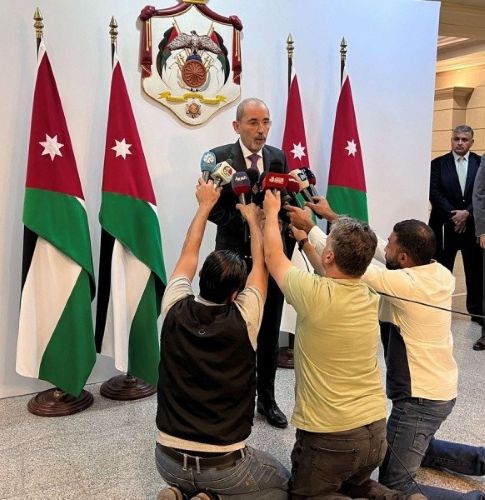
In Jordan, Minister of Government Communication and Digital Media Mohammad Al Momani drew a clear line between free expression and harmful misinformation.
“Rumors, particularly in times of crisis, cannot be considered a form of free speech,” he said, warning that they distort public awareness and mislead society at critical moments.
He stressed that modern disinformation is carefully engineered and no longer spreads randomly, amplified by sophisticated digital tools and algorithms.
False narratives now travel faster, wider, and with greater impact than ever before, which places an even greater burden on media institutions to uphold rigorous standards of verification and to rely on credible, official sources.
In his strong statement, Al Momani cautioned against giving platforms to so-called experts whose credentials and analyses do not withstand scrutiny.
“A guest’s claim to expertise does not absolve the media outlet of responsibility,” he said. “Hosting such voices is not neutral and it can actively damage the credibility of the institution.”
He underscored that professional media must act as the first line of defense against misinformation, not a conduit for it. In times of immediate crisis, the cost of amplifying misleading analysis is not just reputational as it can destabilize public confidence and undermine social cohesion.
The warning reflects a broader recognition: the current moment demands not just reporting, but responsibility.


