
From Political Changes to Economic Growth, from Wars to Disasters: Asia’s Defining Year 2025 (IV)

The year 2025 in Asia was shaped by impressive economic performances, historic turning points, lingering tensions between neighbors, high-stakes elections, waves of protest, the change of governments, cautious diplomatic breakthroughs among certain states, and relentless natural disasters with deep scars for peoples and countries.
THE AsiaN, founded on Asia Journalist Association’s network of journalists, is highlighting through articles written by its members the major issues that defined 2025 across Asia’s regions and countries. – Editor’s note”.
Pakistan in 2025: Core Dynamics Shaping the Year and Its Aftermath
By Nasir Aijaz
THE AsiaN Representative, Pakistan
ISLAMABAD: Pakistan in 2025 has navigated a dense web of pressures -political volatility, economic strain, security threats, and social tensions- shaped by shifting regional and global dynamics. The year has unfolded not as a sequence of isolated crises but as a convergence of interlocking forces: constitutional and judicial flashpoints, the military’s expanding role in domestic affairs, persistent insurgencies, and macroeconomic fragility under IMF conditionality.
Climate vulnerability, gender and minority rights, and the evolving influence of external powers have further shaped policy choices and public sentiment. The defining story of 2025, therefore, has been less about a single dramatic rupture than about a sustained pattern of pressure that has influenced governance, markets, and daily life, with implications extending well into 2026.
Crisis of Legitimacy and the Struggle for Political Authority
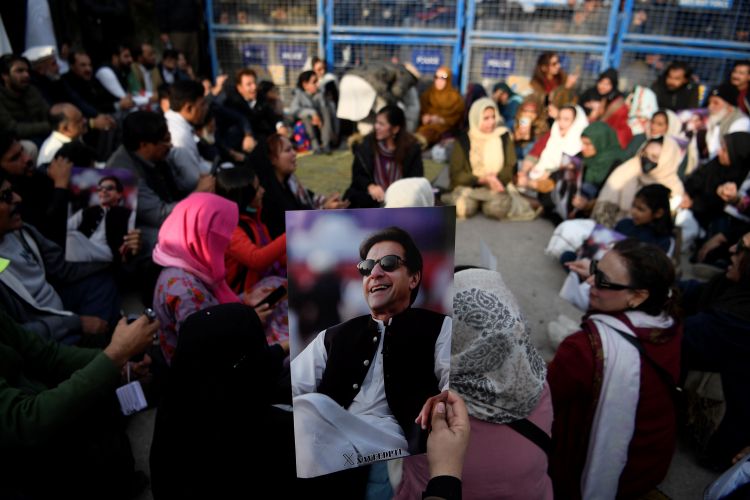
The year opened amid a reckoning over governance and political legitimacy. Imran Khan’s imprisonment and disputes over the fitness of governing arrangements ignited demonstrations, parliamentary maneuvering, and a series of consequential judicial rulings.
These developments fed into a central national question: who truly represents the public will, and how should authority be exercised within a federation that is deeply diverse yet highly centralized in practice? The courts emerged as critical arbiters of executive power, while the military’s role- ranging from mediation to informal oversight -became increasingly visible in political decision-making.
This produced an atmosphere of institutional ambivalence: key actors appeared at times as stabilizers and, at others, as sources of uncertainty, depending on political pressures and competing interests.
This uncertainty fed into a second persistent pressure: the recurring risk of caretaker governments, snap elections, or constitutional crises that undermined policy continuity and investor confidence. Governance volatility affected not only financial markets and fiscal planning but also the credibility of reform programs tied to Pakistan’s IMF commitments, including energy subsidy reform and structural adjustment.
When political authority appeared unsettled, the state’s capacity to implement reforms weakened. Public trust eroded as cycles of protest and countermeasures intensified, while external lenders closely monitored political brinkmanship when negotiating loans and conditions.
Economic Fragility Under IMF Conditionality
Against this political backdrop, economic fragility pressed in on multiple fronts. Inflation remained stubborn, currency depreciation continued, and the balance of payments struggled to stabilize.
The IMF program promised medium-term stabilization but imposed short-term hardship through fiscal tightening and subsidy reforms. For households, the impact was immediate in the rising cost of food, fuel, and essential goods. Businesses faced higher operating costs and delayed investment decisions. Youth unemployment rose, the informal economy expanded, and social protection systems came under strain.
The macroeconomic narrative -external vulnerability, policy uncertainty, and reform-induced adjustment- translated directly into social stress and political calculation. Decisions on taxation, energy pricing, and public spending carried long-term distributional consequences that would shape poverty and mobility well beyond 2025.
Security Threats, Insurgency, and Regional Constraints
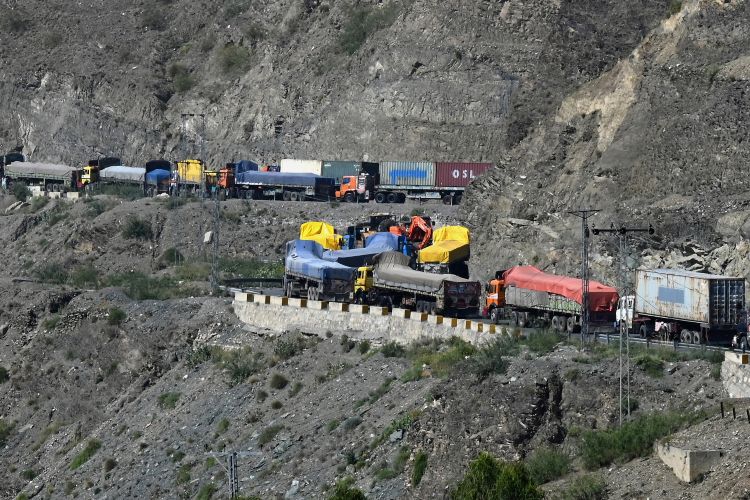
Security threats further complicated the year. Persistent violence linked to Tehreek-e-Taliban Pakistan (TTP) and Baloch insurgent groups continued to disrupt both civilian life and economic activity. Counterinsurgency operations, intelligence-driven campaigns, and provincial security dilemmas dominated national security planning.
Attacks on infrastructure, trade routes, energy projects, and investment corridors undermined confidence and heightened perceptions of risk. These security pressures intersected with political fragmentation and regional rivalries, constraining diplomatic flexibility with neighboring states.
The pattern suggested that while the intensity of violence might fluctuate, security threats were likely to persist into 2026 unless accompanied by comprehensive governance, development, and political reconciliation efforts.
Climate Risk, Water Stress, and Human Vulnerability
Climate vulnerability added another layer of urgency and risk. Floods, droughts, and water scarcity -driven by monsoon volatility, glacial melt, and aging infrastructure- posed immediate threats to livelihoods and long-term stability. Water management emerged as a central governance challenge, especially given agriculture’s heavy dependence on reliable supply.
Climate shocks intensified poverty and migration pressures, particularly in rural areas, and sharpened inter-provincial tensions over water allocation and land rights. The geopolitical dimension of transboundary water management added further complexity to Pakistan’s climate adaptation agenda.
External powers continued to shape Pakistan’s strategic environment throughout 2025. The United States, China, and Gulf states remained central actors in security cooperation, infrastructure investment, energy diplomacy, and financial assistance. Pakistan’s balancing act between competing partners influenced access to capital, technology transfer, and defense procurement.
The risks of overreliance on any single external partner -and of misalignment between long-term industrial, security, and economic goals- remained persistent concerns. Rather than a sudden realignment, 2025 reflected a gradual recalibration toward diversified partnerships while maintaining strategic cooperation in trade, investment, and defense.
Governance Deficits, Social Rights, and the Road to 2026
Social inclusion and rights issues added a deeply human dimension to the year’s challenges. Women, children, and religious minorities continued to face protection gaps, violence, and unequal access to education and healthcare.
Debates over reform, legal enforcement, and social norms reflected broader struggles over governance capacity and cultural change. International scrutiny and aid conditionality, often tied to rights performance, influenced both development partnerships and policy framing. These problems, rooted in structural inequalities, are unlikely to dissipate quickly without sustained institutional reform and effective enforcement.
Governance weaknesses and concerns over elite capture remained a persistent undercurrent. Corruption, opaque policymaking, and weak accountability mechanisms eroded public trust and hindered public service delivery. The economic cost was visible in higher transaction costs, reduced tax compliance, and weakened reform capacity. Without credible anti-corruption measures, transparent procurement systems, and stronger oversight institutions, these vulnerabilities threatened to remain a defining feature of Pakistan’s political economy.
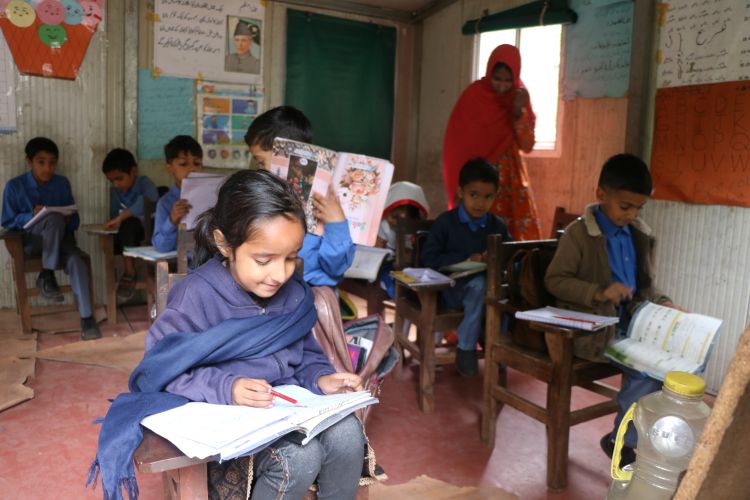
Education and human development gaps intersected with every other major challenge. Learning losses, gender disparities, and regional inequalities constrained long-term productivity and social mobility.
The education deficit reinforced existing fault lines in society, with lasting economic and social consequences. Without sustained investment and targeted reform, these gaps are likely to persist into the next generation.
Water, energy, and infrastructure shortages gave Pakistan’s fragility a tangible physical dimension. Energy outages, transmission losses, and deteriorating infrastructure weighed on industrial output and household reliability.
Inefficiencies in irrigation systems and urban water supply added to the strain. While public investment and procurement reform could yield incremental gains, the structural nature of these bottlenecks suggested that they would remain high priorities into 2026.
Taken together, the trajectory into 2026 resembled a continuum rather than a turning point. The pressures visible in 2025 -political instability, economic vulnerability, security threats, climate risk, and social tensions- are likely to persist unless matched by significant policy breakthroughs or favorable shifts in the external environment.
A plausible scenario for 2026 includes partial macroeconomic stabilization if IMF-backed reforms gain traction, alongside continued security and governance frictions. Climate adaptation and social rights debates will remain central, amplified by both domestic pressures and international engagement.
The policy imperative is clear, if difficult. Pakistan must pursue credible and transparent governance reforms to curb elite capture, strengthen anti-corruption institutions, modernize procurement, and institutionalize policy impact assessments. Inclusive social policies -protecting women, minorities, and children- must be paired with enforceable legal safeguards.
A pragmatic stabilization strategy embracing IMF conditionality, targeted subsidy reform, and strengthened social safety nets is essential to restore macroeconomic balance while shielding vulnerable groups. Climate adaptation and water management must accelerate through flood protection, irrigation efficiency, reservoir management, and early-warning systems, supported by regional water diplomacy.
Security policy requires an integrated counterinsurgency strategy balanced with development, civilian oversight, and human rights protections. Finally, foreign policy must continue to diversify partnerships while maintaining coherent strategic cooperation in trade, investment, and defense to avoid overdependence on any single external power.


