The Scorching Earth: How Climate Change Fuels Heatwaves
Global heatwaves lead to gigantic wildfires, destroy harvests, cause higher sea levels

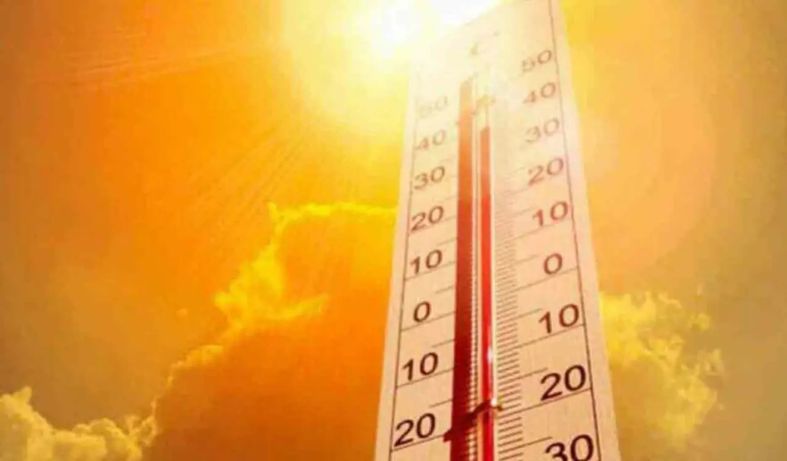
By Dr. Hassan Humeida
Kiel, Germany: Summer no longer feels the way it used to. What was once considered a long-awaited vacation season now increasingly brings extremes: weeks of drought, parched soils, and record temperatures that push both humans and nature to their limits. Heatwaves are the most tangible face of global climate change-worldwide, in Europe, and right on our doorstep in Germany.
The Cause: The Overheated Engine: The reason for the increasing heat is physically clear: the man-made greenhouse effect. By burning fossil fuels such as coal, oil, and gas, as well as through large-scale deforestation, we are accumulating greenhouse gases-above all carbon dioxide (CO2) and methane-in the atmosphere.
These gases act like an invisible greenhouse roof: they allow short-wave solar radiation in, but prevent the Earth’s long-wave heat radiation from escaping back into space. The result is global warming, which energetically charges the entire climate system. More energy in the system means more extreme weather outbreaks.
The Consequences: From Global Crises to Local Hotspots: The impacts of this warming are visible worldwide, but they hit Europe particularly hard.
Worldwide: Global heatwaves lead to gigantic wildfires (as seen in Canada or Australia), destroy harvests, and cause sea levels to rise relentlessly due to melting poles.
Europe: According to climate data, our continent is warming nearly twice as fast as the global average. One of the reasons is the weakening of the jet stream-the planetary wind belt that drives our weather. When the jet stream becomes sluggish, high-pressure systems stall in place for weeks. This results in blocking weather patterns that turn Southern Europe into a desert and Central Europe into a sauna.
Germany: The consequences are unmistakable here as well. Days with temperatures exceeding 30°C (“hot days”) have nearly tripled in recent decades. Due to concrete, urban centers like the Ruhr region or Berlin transform into heat islands that barely cool down at night. This puts a heavy strain on the healthcare system: thousands of heat-related deaths among the elderly and those with pre-existing conditions are the tragic toll of modern summers. Furthermore, our forests are suffering, and rivers like the Rhine carry such extremely low water levels in late summer that inland shipping comes to a standstill.
The Future: Two Paths: What the world will look like in the year 2050 or 2100 is being decided right now. Science distinguishes between two main scenarios:
The Optimal Scenario: If the global community succeeds in drastically reducing emissions and keeping close to the 1.5-degree target of the Paris Agreement, the climate will stabilize at a challenging but manageable level. While heatwaves will be more frequent than they are today, they will remain manageable for our infrastructure.
The “Business-as-Usual” Scenario: If we continue down our current path, we face a warming of 3°C or more by the end of the century. For Germany, this would mean summers with regular peak temperatures exceeding 45°C, dried-out landscapes, and large-scale crop failures.
Conclusion: Climate change is no longer an abstract problem of the future-it is happening in the here and now. Heatwaves are our planet’s loudest alarm. To ensure a future worth living, we must turn two dials at the same time: rigorous climate protection (emission reduction) and climate adaptation.
For Germany, the latter specifically means: designing greener cities, planting vegetation on facades, and creating shaded oases to defy the heat of tomorrow.
e-Mail: hassan_humeida@yahoo.de