Santhanaselvam Krishnan Another Innocent Life Gone
How many more innocent lives will pay for a war they did not start?

By Habib Toumi
MANAMA: On most days, lives like Santhanaselvam Krishnan’s pass quietly, without headlines or notice.
He was not a public figure. Not a soldier. Not a man whose decisions shaped events or whose name carried weight in political circles. He was, simply, a worker in Kuwait, one of thousands who leave their country each year in search of something better elsewhere. A steadier income. A more secure future. A chance to support the people who depend on them.
In the Gulf countries – Bahrain, Kuwait, Oman, Qatar, Saudi Arabia and the United Arab Emirates -, that story is a familiar one. It is lived every day in construction sites, workshops, offices, and streets. It is the story of effort, routine, and quiet perseverance. The workers’ lives are defined not by politics or war, but by responsibility, dignity, and hope. It is the story of men like Krishnan.
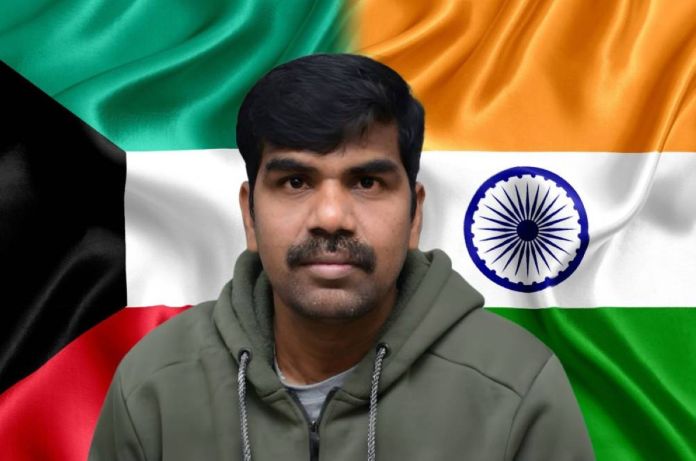
He was an Indian national from the state of Tamil Nadu who died in an Iranian drone attack that targeted a service building at a power generation and water desalination plant on Sunday in Kuwait. He was 37.
He had plans, as all people do. Plans measured not in grand ambitions, but in steady progress: work completed, money sent home, a future slowly taking shape, happier living conditions for his family back home. His life, like so many others, was built on routine and responsibility. There was dignity in that. There was purpose.
And then, in an instant, it was gone.
And it is a story that was never meant to end like this.
He was not part of any conflict. He did not play any role in the decisions that led to escalation. Yet when the strike came, it did not distinguish. It did not ask who he was or what he believed. It simply arrived and took his life with it.
This is the reality of modern conflict, often hidden behind strategic language and political framing. War does not remain confined to those who wage it. It spills outward, beyond its intended targets, into the lives of those who have no connection to it at all.
In times of conflict, the world often speaks in abstractions. Missiles are launched. Targets are struck. Damage is assessed. Numbers are reported. We are told of strikes and damage assessments. These are clean, distant terms that strip events of their human weight. The individual, the people whose life existed beyond the moment of impact disappear in this language.
Krishnan’s death is a reminder of how fragile the boundary between safety and danger can become when conflict escalates. For those who come seeking stability, the expectation is simple: Hard work will be rewarded with security, effort will lead to continuity, and life will move forward.
But conflict has a way of breaking those expectations without warning. And when it does, the consequences are deeply human.
Behind every strike is a chain of decisions. Behind every escalation is a calculation. But at the end of that chain, there are individual and irreplaceable lives that are often invisible to those making the choices. Krishnan, like other innocent people across the Gulf, should not have been part of this story.
In the Gulf, diversity is not an abstract concept; it is a lived reality. The region is home to a diverse population drawn from across the world, people who contribute both to its economy and to its social fabric. They are not outsiders in any meaningful sense. They are part of the rhythm of daily life. When one of them is lost, it is not an abstract event. It is a rupture.
Krishnan’s life was unfolding along a different path, one defined by work and responsibility rather than conflict and consequence. Yet he has become part of it nonetheless.
That is what makes his death so difficult to accept. It forces questions that cannot be answered by strategy or justification: Why him? What did he do to deserve this fate, far away from home?
There is no clear answer. No explanation that can restore what was lost. Only the recognition that in war, innocence is no protection, and distance is no guarantee of safety.
Santhanaselvam Krishnan was not meant to die in a conflict that was never his. But he did.
Perhaps the least that can be done is to remember that he was here. That he lived, worked, and hoped for something more. That his life was not a statistic, but a story that deserves to continue.
And that is precisely why his name and other innocent people who died in this brutal war should never be forgotten.