
Sands of Sindh, Soil of Japan: A Tale of Two Ancient Warrior Traditions

By Nasir Aijaz,
The AsiaN Representative
ISLAMABAD: A couple of days back, the morning air in Osaka carried a distinct scent of cultural fusion as the Pakistan Japan Association Kansai prepared for an exchange that would bridge five thousand miles of history.
In a grand hall within the heart of the Kansai region, the Global Pakistan Osaka Cultural Festival unfolded not merely as a celebration of heritage, but as a living dialogue between two of the world’s most ancient warrior traditions.
The atmosphere was charged with an unusual energy, where the rhythmic chants of Sindh met the disciplined silence of Japanese tradition, drawing a diverse crowd of Pakistani expatriates and local Japanese citizens eager to witness a historic physical encounter.
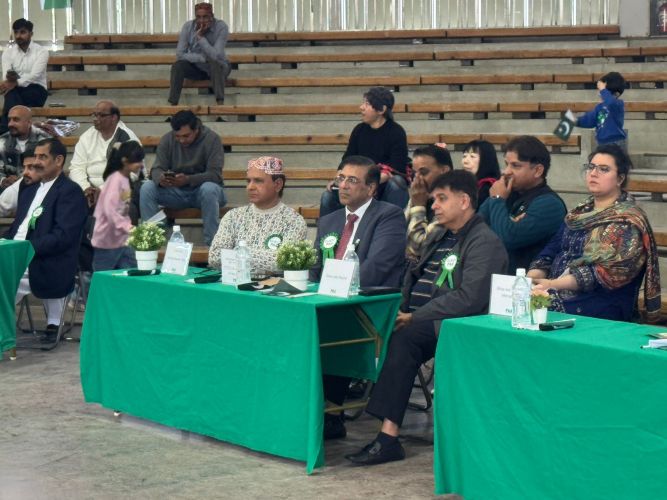
As the ceremony commenced, Pakistan’s Ambassador to Japan, Abdul Hameed, joined the Mayor of Kansai to formally inaugurate the proceedings. The silence of the hall was soon broken by the soul-stirring strains of Qawwali performed by the Sabri Qawwal group from Sindh.
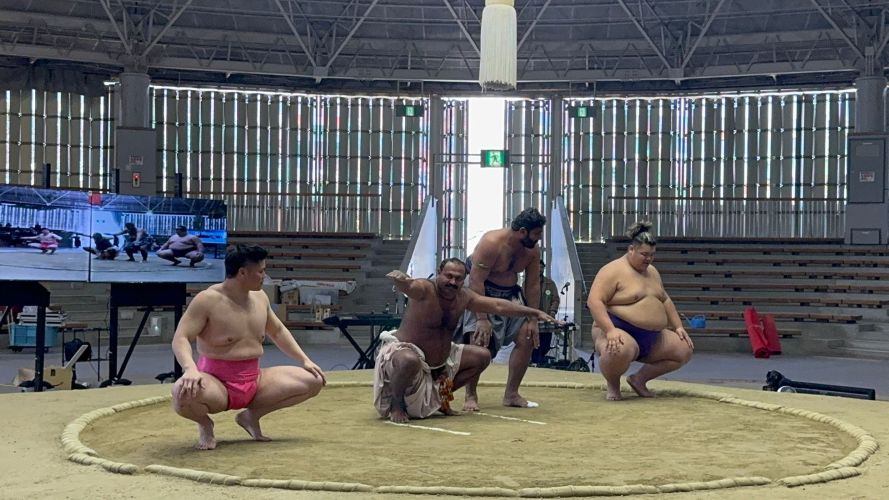
Their voices, steeped in Sufi mysticism, set a vibrant and spiritual tone, preparing the audience for a spectacle that would transition from the ethereal to the visceral. This was the moment the crowd had waited for: the collision of Malakhro, the ancient “belt-wrestling” of the Indus Valley, and Sumo, the sacred ritual sport of the Japanese Shinto tradition.
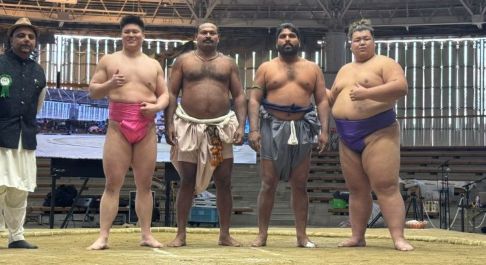
Malakhro is a test of grit that dates back to the dawn of the Indus Civilization, where a Malh Pahlwan relies on a twisted cloth belt, the sandro, to upend his opponent. Across the ring stood the Sumo Rikishi, practitioners of a discipline that has defined Japanese identity for over fifteen centuries.
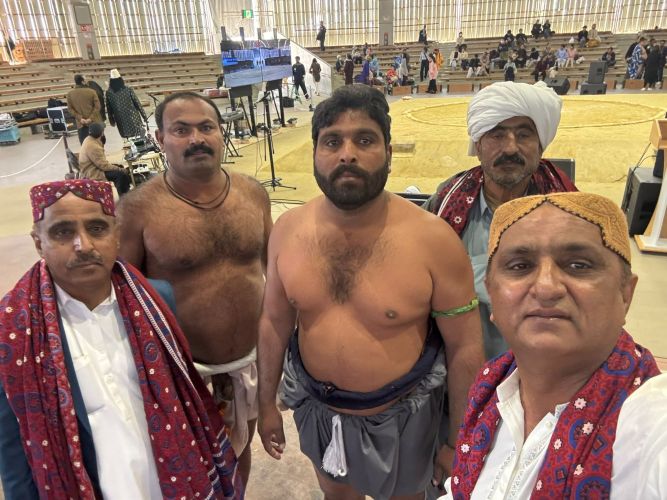
Representing the sands of Sindh were Muhammad Sadiq and Qurban Hothi Poto, guided by the watchful eye of referee Muharram Majeedani. The competition was structured as a four-round hybrid challenge, a true test of adaptability.
The first round saw the Sumo wrestler dominate in his native style, but the tide turned in the second round when the rules shifted to Malakhro. Sadiq Bugti, moving with the agility of a desert predator, executed a perfect throw to claim victory for Sindh.
The third round returned to Sumo rules, reclaimed by the Japanese side, leading to a climactic fourth round held in the Malakhro style. Once again, Sadiq Bugti emerged victorious, his triumph met with a roar of applause that transcended language barriers.
In the wake of the matches, the physical intensity gave way to a graceful exchange of cultural symbols. The Sindh delegation, led by a travel writer Qurban Mangi and renowned artist Saeed Mangi, stood as ambassadors of dignity in their traditional shalwar kameez, intricate Ajraks, and Sindhi caps.
Saeed Mangi took the stage to weave a narrative of the history of Malakhro, screening a documentary that traced the sport’s roots back to the ancient mounds of Mohenjo-Daro. In a poignant display of “Komorebi” meets “Sufi” hospitality, Qurban Mangi draped the Pakistani Ambassador in an Ajrak, while Saeed Mangi presented similar cultural treasures to the mayor.
The wrestlers themselves exchanged gifts; the Sindhi Pahlwans offered the block-printed Ajrak to their Sumo counterparts, receiving traditional Japanese souvenirs in return—a silent pact of mutual respect between warriors.
The orchestration of this bridge between nations rested on the shoulders of Ali Johar Zaidi, a Japanese host with deep roots in Luqman, Khairpur Mirs. His leadership, supported by the tireless efforts of Muhammad Azmat Shigeyuki Ataka of the Pakistan Japan Cultural Association, ensured that the delegation from Sindh reached Japan against all odds.
As the festival drew to a close, Zaidi spoke of the joy that the fusion of Malakhro and Sumo had brought to the region, noting that such encounters do more for international friendship than any formal treaty.
He looked toward the future with a hopeful eye, expressing a wish that Japanese Sumo wrestlers might one day travel to the dusty plains of Sindh to compete under the Pakistani sun, continuing a journey of brotherhood that began on a vibrant afternoon in Osaka.


