It Is the Narrative, Stupid! The Battle Beyond the Battlefield
Once trust collapses, societies become vulnerable to entrenched polarization, collective moral exhaustion

By Habib Toumi
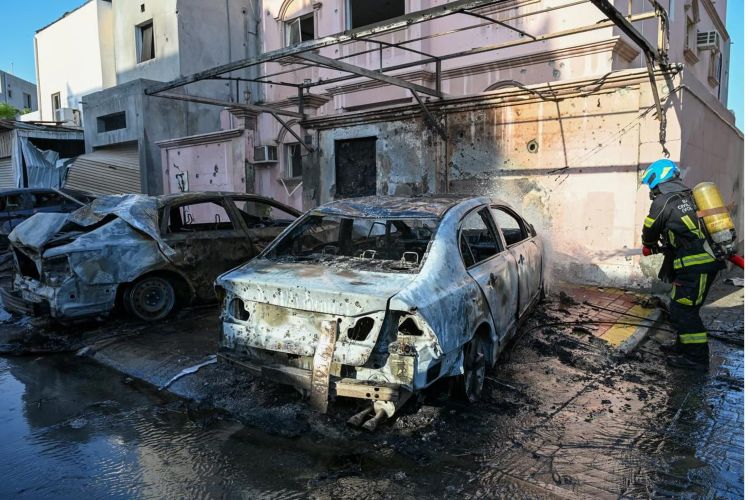
MANAMA: The war in the Gulf and the Middle East has not fully settled. Missiles and drones may have temporarily disappeared from the skies, and military operations may have entered phases of hesitation or recalibration, but another confrontation has already assumed great prominence and ominous danger: the battle of narratives.
Today, every side involved in the war seeks to dominate the story. Each country endeavors to convince its own people, the wider region and the international community that it has achieved a decisive triumph, while its adversary has faltered, capitulated or failed to withstand the might of its military and strategic capabilities.
In modern conflicts, victory is no longer measured solely by shattered lives, territorial gains, destroyed targets or military casualties. It is increasingly measured by perception. Whoever controls the narrative often claims the psychological and political victory, regardless of the realities on the ground.
What makes this phase particularly alarming is the unprecedented sophistication of information warfare. The mechanisms used to diffuse information, misinformation and mal-information have become extraordinarily advanced and deeply invasive. Social media platforms, manipulated videos, anonymous digital accounts, selective leaks and algorithm-driven amplification now shape public consciousness at astonishing speed and produce narratives built on chimeras.
For ordinary people or those far away from the battle grounds, discerning the truth has become painfully difficult.
When the war broke out, the world watched missiles and drones crossing borders and skies. Now, societies are witnessing the relentless bombardment of competing narratives, many of them fallacious, emotionally manipulative and openly dismissive of logic or factual consistency.
The first victims of wars have always been innocent people: civilians, families, children, the elderly, locals and foreigners alike. But in this new phase of the war, another category of victims is emerging: populations overwhelmed by deception, misrepresentation and fabricated realities.
Artificial Intelligence, despite its enormous promise for humanity, has also become a dangerous instrument when flagrantly misused. Deepfakes, fabricated audio recordings, stage-managed videos, manipulated images and AI-generated propaganda now circulate with alarming credibility. Lies no longer need to be convincing; they only need to spread faster than the truth.
This creates a deeply troubling question: Is it humanity’s destiny to continue suffering even after missiles and drones fall silent?
If wars once destroyed cities and infrastructure, today’s narrative wars threaten something even more fragile: trust itself. Trust in facts. Trust in institutions. Trust in the media. Trust in human judgment.
And once trust collapses, societies become dangerously susceptible to entrenched polarization, deepening cynicism and a pervasive sense of collective moral exhaustion.
People retreat into ideologically sealed, like-minded silos, while opposing groups no longer merely disagree over events, facts or policies; they begin to inhabit entirely separate realities.
In such an environment, meaningful dialogue steadily disintegrates, and the prospect of collective problem-solving grows ever more distant.
The saying prevalent in several countries, “Tell me about the one I love, even if it is a lie,” captures a profound human impulse: the longing for emotional reassurance and psychological comfort, especially when confronting painful truths.
In matters of the heart, the solace of hearing what one wishes to believe, even if embellished or untrue, becomes more bearable than the cold weight of objective reality. It quiets doubt, eases insecurity and offers temporary refuge from discomfort.
This human vulnerability is increasingly exploited by those who manipulate the media and seek to assert their narratives.
The challenge confronting humanity is no longer confined to ending wars on the battlefield. It is also about restoring dignity amid the deafening noise of deception, resisting the manipulation of perception and reclaiming truth in an era increasingly shaped by manufactured realities and weaponized narratives.
The world may eventually succeed in rebuilding shattered cities and smashed infrastructure. Rebuilding collective trust, however, is far more difficult.
That may well be the most dangerous battlefield of all.
Too many people have been killed. Too many lives have been irreparably shattered. Too many families have lost their means of livelihood. Too many homes have been destroyed…
And behind every statistic stands a human being, a life shaken by grief, scarred by loss and overshadowed by uncertainty.