Pakistan’s Women Being Killed for So-called Honor
The tragedy lies not just in the killing, but also in the legal vacuum that follows

By Nasir Aijaz
The AsiaN Representative
ISLAMABAD: The statistics are a grim testament to the failure of the Pakistani state and its justice system, making it perhaps one of the most dangerous countries for women in the world.
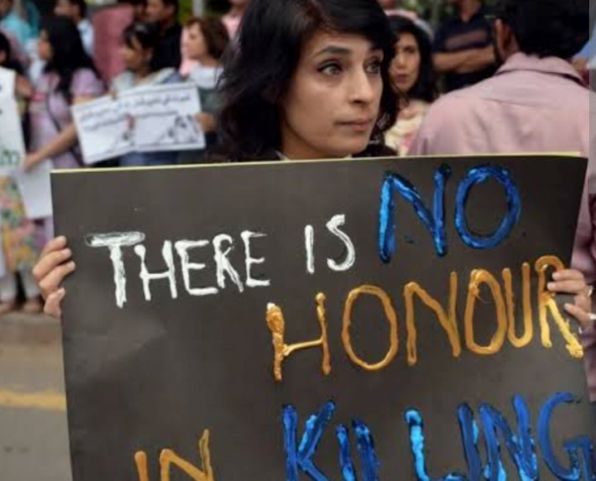
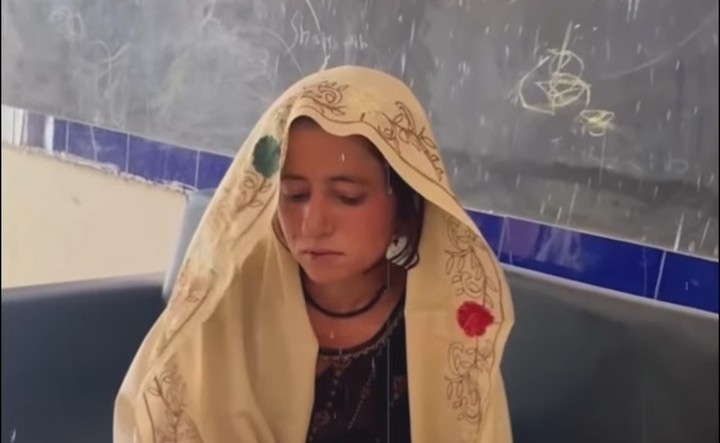
According to the Human Rights Commission of Pakistan (HRCP), some 470 women were murdered last year in the name of so-called “honor”, a euphemism for cold-blooded domestic execution. In the province of Sindh alone, the bloodletting has reached a fever pitch, with roughly ten women killed by their own male relatives within a single month. In one of the recent tragic incidents, a young woman Gulaan was axed to death by her father and a cousin. She had approached the police for protection, which produced her in the court but was handed back to the parents on court orders. Her last words were: “I’m sure to be killed by my father.” And it so happened – Gulaan was murdered within a week, with the ‘Proud Declaration’ of assassins that ‘We have saved our honor.’
Despite the passage of years and supposed legal reforms, the barbaric tradition of Karo-Kari remains a haunting reality, particularly in rural belts where tribal codes supersede the law of the land. The terminology itself is designed to dehumanize. Under this archaic custom, the Kari (“Black Woman”) is a woman accused of an alleged illicit relationship or simply defying male authority, and the Karo (“Black Man”) is the alleged paramour. Once labeled, both are marked for death.
In Sindh, while the violence is local, it is often exacerbated by rigid tribal structures—some of which have migrated from neighboring regions, bringing with them a refusal to acknowledge the state’s judicial authority.
The tragedy lies not just in the killing, but also in the legal vacuum that follows. The state machinery often stands by as a silent spectator. Cases linger in courts for decades, and perpetrators frequently secure bail, returning to their communities as “heroes” who defended their family’s pride. In provinces like Balochistan and Khyber Pakhtunkhwa, the tribal hold is so absolute that many of these murders are never registered with the police or reported by the media.
Perhaps most alarming is the state’s shift from passive bystander to active suppressor of dissent. When the law fails to protect women, civil society steps in, only to be met with iron-fisted resistance. A recent, jarring example occurred in Karachi: Sheema Kirmani, a renowned classical dancer and tireless advocate for progressive values, was detained while attempting to hold a press conference at the Karachi Press Club. Her “crime” was planning a protest march for World Mother’s Day to highlight these very murders.
When the state drags a peaceful activist into a police van for mourning dead daughters, it sends a clear message: the “honor” of the tribe is more valuable than the life of the citizen.
The Anti-Honor Killing Act of 2016 was supposed to close the loophole that allowed families to “forgive” the killers. Yet, without a complete overhaul of the investigative process and protection for witnesses, the law remains a paper tiger.
Pakistan cannot claim a seat among modern nations while its daughters are hunted by their own fathers and brothers. The protection of women is not just a “women’s issue”; it is the ultimate litmus test for the rule of law in Pakistan. Until the state stops arresting activists and starts convicting killers, the label of Kari will continue to be a death sentence written in the blood of the innocent.