Australia And Singapore “Good Neighbours” in Good and Bad Times
War and vengeance in the Middle East have sown the seeds for “beggar thy neighbour” policies


By Ivan Lim
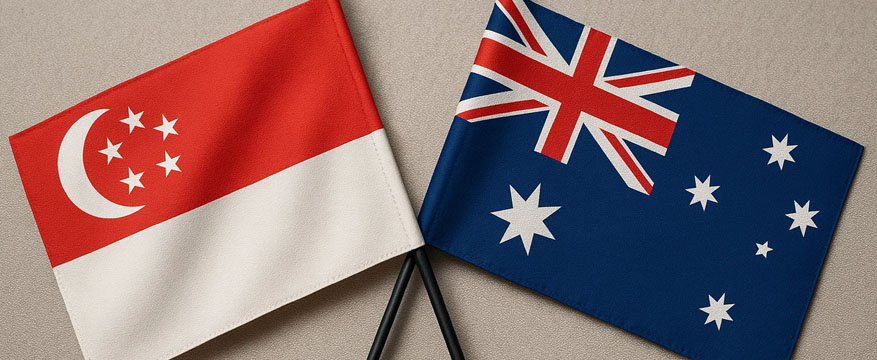
SINGAPORE: Australia and Singapore, in a show of “friends in need are friends in deed” have inked a bilateral agreement to keep fuel supplies and essential goods flowing between them in the wake of the disruption in supply chains created by United States-Iran conflict, now entering its 8th week.
Australia accounts for more than one-third of the city-state’s liquified natural gas while the latter meets the bulk of its refined petroleum needs.
Visiting Australian Prime Minister Anthony Albanese signed the partnership pact with Singapore Prime Minister Lawence Wong on April 10 and issued a joint statement highlighting “deep concern’ over the Middle East war that the impact on energy supplies and prices.
The Brent, global oil benchmark, soared above US$100 a barrel after President Trump vowed to blockade the Strait of Hormuz after ease-fire talks with Tehran collapsed.
This has dashed hopes of shipping traffic through the Strait of Hormuz returning to normalcy and a respite in the escalating oil prices. But in the best-case scenario, the International Monetary Fund has forecast that the world economic growth will be stymied by the “scarring effects” of the war since Feb 28. In a report on the Iran war, the IMF said “…all roads lead to higher prices and slower growth”, and highlighted the disrupted fertilizer supply chain will create food security.
In a hopeful plug for global free trade, Mr Albanese and Mr Wong refreshed a call for a rules-based multilateral trading system that underpins stability during periods of global disruption.”
The two leaders’ initiative came as various Asean governments launched into crisis management mode in response to the economic fallout from the US-Iran conflict hit home in rising daily food and transport costs affecting households and businesses.
On April 7 the city-state of 6.11 million population rolled out a $1 billion in short-term relief package, comprising:
*$500 vouchers that has been brought forward to June from January 2027;
*$200 cash payments for eligible platform workers, private -hire car divers and taxi drivers from April; and
$400 to $600 special cost-of-living payments in September;
* temporary co-Funding for cost increases incurred by public bus services, and
* corporate income tax rebates increased to 50 per cent for 2026.
At the same time, the Singapore government, perceiving that the Middle-East conflict will have long-term repercussions, is seizing the opportunity to diversify and strengthen its supply channels
In line with this long-term perspective, Singapore has also signed on April 10 a rice trade agreement with Cambodia to ensure its food security. This is the third agreement after similar ones signed with Vietnam and Thailand in 2025
The Philippines, facing a 40-day energy supply crunch, has been the first off the block to declare a state of national emergency. On March 14, President Ferdinand Marcos Jr unveiled urgent fuel rationing. flexible working arrangements and air-conditioning at below 24 degrees Celsius.
At the regional level, the Philippines, as the Asean chair, is keen to speed up the Asean Power Grid project and sharing of energy resources among Asean members.
Next in line. Indonesia announced on April 1, energy-saving steps that include working from home for public employees; capping subsidized fuel purchases at 50 liters daily. The state oil firm Petronas is
Taking the long view, President Prabowo Subianto is also bent on reducing reliance on Middle East energy supplies by importing from Russia and Africa.
Dubbing the current energy crisis a “blessing in disguise”, he said it hastens the nation’s move towards a “green emerald” energy network.
Meanwhile, Malaysia, which imports crude oil from the Gulf countries, is pacing energy consumption for the next few months. It is also facing the squeeze of higher bills for its monthly subsidized fuel, rising from RM700 million to RM3.2 billion.
Manufacturers, hit by rising logistic costs, are also concerned about shortages of raw material that will crimp production. Prime Minister Anwar Ibrahim is also reaching out to Tehran to allow Malaysian cargo vessels to transit safely through the Strait of Hormuz even as the state oil firm Petronas secure sources of supplies outside the Gulf.
War and vengeance in the Middle East have sown the seeds for “beggar thy neighbour” policies. But Australia and Singapore have set in store the practice of “benefit thy neighbour” -in good times and bad.