
Iranian Journalist: Daily Life Is Gradually Returning, but People Still…

By Lee Sang-ki,
The AsiaN Editor-in-Chief
SEOUL: THE AsiaN reported a contribution written by Alireza Bahrami, Editor in Chief of Asre Rowshan, Iran and a member of Asia Journalist Association (AJA) based in Iran on January 19, 2026.
While Iranian authorities had blocked access to overseas internet services for more than 200 hours starting January 9, 2026, Alireza Bahrami managed to send his contribution on January 19, when access was briefly restored. Contact with him was subsequently cut off once again.
Following the publication of the contribution, THE AsiaN sent the questions below to Alireza Bahrami. Four days later, on January 23, his responses were received. In consideration of the complex situation on the ground, it was clearly stated in advance that he was not required to answer sensitive questions. THE AsiaN shares the written interview with Alireza Bahrami.
At this moment, are people inside Iran able to access foreign media or international news at all? If so, is this access regular, or only occasional and very limited?
The people of Iran have been informed about the events 24/7 through satellite TV channels since the day the protests began, even since their access to the international internet was restricted. Specifically, the two networks Iran International (headquartered in Washington) and BBC Persian (headquartered in London) have been active exclusively and full-time in covering the protests in Iran.
Q2. From your perspective on the ground, what is the most significant gap between how Iran is portrayed in foreign media and what you are actually experiencing inside the country?
The media abroad, especially since the international internet access was cut off, lost their visual sources. So, they mostly reported based on hearsay and by repeating the images of the past few days. Especially in the few days when international phone calls were also cut off, they reported only based on their guesses. But the reputable foreign media behaved more professionally.
Various figures regarding deaths and injuries have been reported abroad. From the information and atmosphere you encounter locally, how should these numbers be approached or understood with caution?
On Wednesday, January 21, the Iranian government announced the death toll: 3,117 people. According to this official announcement, 2,427 police and civilians were killed. This means that 690 of the dead were protesters. However, unofficial sources in foreign media have announced figures between 5,000 and 20,000 people killed. In any case, the number of deaths during this period of protests was higher than in previous years.
Regardless of exact figures, it appears undeniable that many people have been killed or injured. Within what you consider safe to share, under what kinds of situations have these tragedies most often occurred?
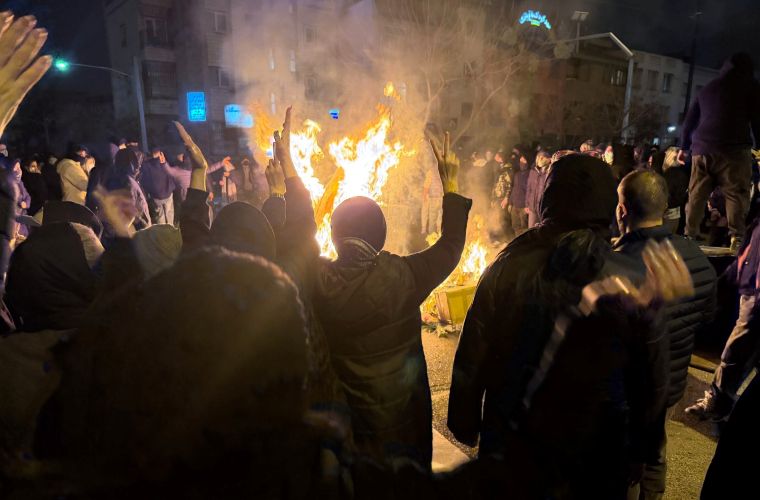
In various cities, murders were committed in places where the protests turned violent. We can say that this period of protests saw more violence.
There are sharply conflicting narratives about responsibility for the violence. How are these events being explained or discussed among people inside Iran?
Some government sources have stated: In these protests, 749 police vehicles, 314 government buildings, 399 banks, 704 non-government buildings, 419 chain stores, 235 bus stations, 305 ambulances and fire engines were damaged. Also, 155 government buildings, 303 banks, 384 non-government buildings, 134 mosques, 89 religious centers and 24 gas stations were set on fire. Although the parties accuse each other. The government believes that some protesters as well as terrorist forces affiliated with outside Iran resorted to violence. The protesters also believe that unknown forces on the other side played a role in the protests turning violent.
As a journalist and as a citizen, have you personally witnessed—or been very close to—any moment that you feel can be shared publicly without putting yourself or others at risk?
As a journalist and a citizen, I witnessed both types of scenes from the protests; both peaceful and non-violent protests and very violent protests. I was surprised by the effects of violence.
It is winter now. Beyond protests and politics, what does everyday life look like for ordinary Iranians – work, shopping, heating, transportation, and basic survival?
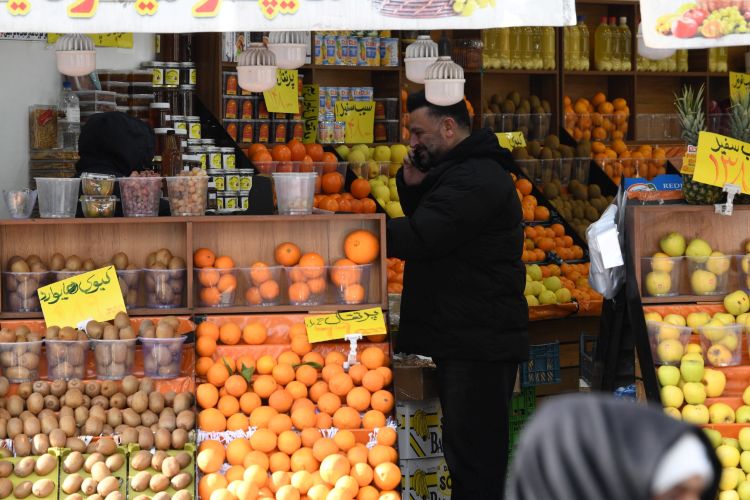
Transportation is without problems. Shops are open and not abnormal. Heating is as usual. Schools, hospitals and government offices are operating as before. We can say that people’s lives are normal; except that people are not happy. Music concerts have been canceled. Art events have been canceled. Football games are being played but the footballers are not happy either. And inflation has affected people’s livelihoods and emotions. Due to instability, many projects are stalled and uncertain and fewer transactions are being made. Internet-based businesses have also been badly affected. For example, travel agencies.
Yesterday, the son of Iran’s former Shah held a press conference in the United States criticizing the Iranian government. Has this news reached people inside Iran, and if so, how is it being perceived?
Messages from the son of the former Shah of Iran have been reaching the Iranian people regularly – via satellite TV.
Under the current conditions, is it realistically possible for people to send photos or videos from inside Iran to the outside world, or is this extremely difficult or risky?
No. This is impossible for people. It is only possible with Starling Internet, which is also very limited and criminal. Of course, the mainstream Iranian media has had access to the international internet for a few days now, but in terms of professional behavior, they do not cooperate with foreign media. Of course, the media in Iran have not been doing their jobs properly for years.
Finally, not as a journalist but simply as an Iranian citizen, is there one message you would like readers across Asia to understand at this moment?
Political traders destroy human lives. Both traders who claim liberalism and democracy, and traders who claim ideology.


