
By Habib Toumi
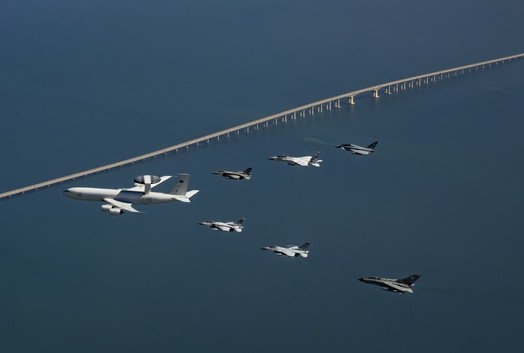
MANAMA: In a region often portrayed through the lens of tension and fragmentation, the recent “Gulf Shield 2026” joint military exercise delivered a different and deliberate message: Gulf unity is not rhetorical, nor circumstantial. It is strategic.
At first glance, the week-long maneuvers involving all six member states of the Gulf Cooperation Council (GCC) may appear to be a routine military drill. In reality, they were far more consequential. They constituted a public reaffirmation that the security of the Gulf is collective, indivisible, and firmly anchored in cooperation rather than rivalry.
Since its establishment in 1981, the GCC, comprised of Bahrain, Kuwait, Oman, Qatar, Saudi Arabia, and the United Arab Emirates, has operated in one of the world’s most volatile geopolitical environments. Wars, economic crises, energy shocks, and shifting global alliances have repeatedly tested the Council’s cohesion. Yet, four decades on, the GCC remains standing, evolving, and capable of coordinated action. Gulf Shield 2026 is evidence of that endurance.
The exercise underscored a central reality: in today’s security landscape, threats do not respect borders. Missile systems, drones, cyber warfare, and hybrid threats can neither be deterred nor managed by individual states acting alone. The scenarios rehearsed reflect a shared understanding that Gulf security must be approached as a single strategic space. Coordination is no longer optional; it is essential.
But the significance of Gulf Shield 2026 extends beyond defense. Politically, the exercise sends a clear rebuttal to persistent narratives that exaggerate differences among GCC states. Yes, disagreements exist, as they do in any regional bloc. But the full participation of all six members demonstrates that such differences remain secondary to the overriding priority: preserving stability. Unity on core interests has proven stronger than divergence on secondary issues.
This message resonates at a critical moment. The international system is under strain. The global economy is marked by volatility, inflationary pressures, and uncertainty. Climate change is intensifying resource scarcity, particularly in water-stressed regions like the Gulf. Meanwhile, geopolitical tensions continue to escalate across multiple theaters. In this context, Gulf solidarity is not merely about defense. It is about resilience.
Security, economic stability, and sustainable development are deeply interconnected. Without stability, there can be no long-term growth, no effective climate policy, and no meaningful regional integration. Gulf Shield 2026 reflects an understanding that military preparedness underpins the broader capacity of Gulf states to confront economic and environmental challenges collectively.
Equally important is the message directed inward. Gulf citizens, closely following regional and global crises, need reassurance that their governments are capable of protecting their security and safeguarding stability.
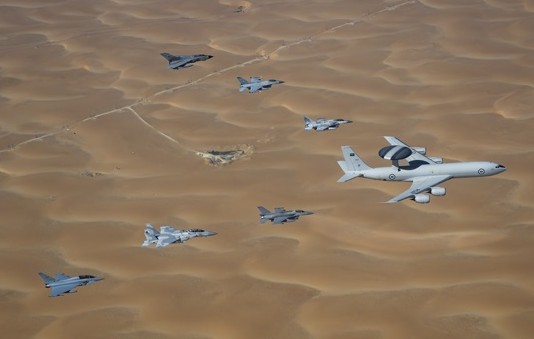
A joint exercise of this scale provides that reassurance. It reinforces confidence that security is a shared responsibility, not the burden of any single state, and that cooperation is translating into real capabilities on the ground.
For the international community, the implications are equally clear. The Gulf is not a passive arena for external intervention, nor a collection of fragmented actors. It is a region increasingly capable of managing its own security through internal coordination. This reality carries weight not only in political and security calculations, but also in global energy markets, where stability in the Gulf remains a cornerstone of international economic confidence.
Historically, the GCC has often been underestimated. Predictions of its fragmentation have surfaced repeatedly, only to be disproven by moments of collective action. Gulf Shield 2026 fits squarely within this pattern—a continuation of a long-standing approach that treats unity not as an emergency response, but as a permanent strategic choice.
Ultimately, this exercise was not about showcasing military hardware or operational readiness alone. It was also a political statement, a reassurance to citizens, and a signal to the world. It affirmed that the Gulf states understand the nature of the challenges ahead—and that they intend to face them together.
In an era defined by division and uncertainty, the Gulf is making a different bet: that unity strengthens security, cooperation sustains stability, and solidarity remains the most reliable path forward.


