By Bhanu Ranjan Chakraborty
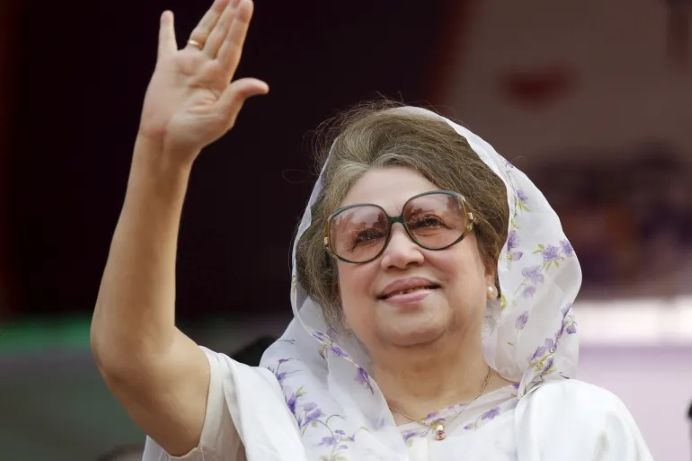
DHAKA: Begum Khaleda Zia, Bangladesh’s first female Prime Minister and long-time Chairperson of the Bangladesh Nationalist Party (BNP), passed away after a prolonged illness.
She died at 6 am on Tuesday (30 December 2025) while undergoing treatment at Evercare Hospital in the capital Dhaka.
The interim government has declared three days of state mourning from Wednesday to Friday (December 31 and January 1 and 2) following the death of former Prime Minister and BNP Chairperson Begum Khaleda Zia. Chief Advisor to the interim government Professor Dr. Muhammad Yunus announced this in his address to the nation on Tuesday (December 30).
Her death marks the end of an era in Bangladesh’s political history and the passing of one of South Asia’s most prominent women leaders.
Born in 1945, Khaleda Zia entered public life following the assassination of her husband, President Ziaur Rahman, in 1981. Rising from personal tragedy, she became a central figure in national politics and went on to serve as Prime Minister three times. Her first term (1991- 1996) was particularly significant, as she led the restoration of parliamentary democracy after years of military-backed rule.
As BNP chairperson, Begum Khaleda Zia dominated Bangladesh’s political scene for more than three decades. She commanded deep loyalty among her supporters, who viewed her as a symbol of nationalism, democratic pluralism, and political resilience. At the same time, her career unfolded amid intense political rivalry—most notably with Sheikh Hasina—defining a polarized but dynamic democratic era often referred to as the “battle of the Begums.”
Khaleda Zia’s political life was marked by both achievement and controversy. Legal challenges, imprisonment, and prolonged illness kept her away from active politics in her later years, reflecting the broader turbulence and confrontational nature of Bangladeshi politics.
Beyond partisan lines, Khaleda Zia stands as a pioneering figure for women in leadership. At a time when politics was overwhelmingly male-dominated, she rose to the highest office and reshaped public expectations of women’s roles in governance across Bangladesh and South Asia.
With her passing, Bangladesh loses a leader who shaped its democratic journey through moments of transition, conflict, and resilience. Khaleda Zia’s legacy will remain deeply embedded in the nation’s political memory, as a leader who embodied both the hopes and the hardships of Bangladesh’s modern democracy.
Condolences
Leaders of various political parties in the country have expressed deep condolences over the death of BNP Chairperson and former Prime Minister Begum Khaleda Zia. BNP has declared seven days of mourning. Professor Muhammad Yunus, the chief advisor to the interim government, expressed deep condolences over the death of Khaleda Zia.
Heads of state and embassies of several countries have expressed condolence over the death of three-time former Prime Minister Begum Khaleda Zia. Countries including the United States, China, India, and Pakistan have expressed condolence over her death. Embassies of the European Union, France, Germany, and Canada have also expressed grief.