
From Political Changes to Economic Growth, from Wars to Disasters: Asia’s Defining Year 2025 (XI)

The year 2025 in Asia was shaped by impressive economic performances, historic turning points, lingering tensions between neighbors, high-stakes elections, waves of protest, the change of governments, cautious diplomatic breakthroughs among certain states, and relentless natural disasters with deep scars for peoples and countries.
THE AsiaN, founded on Asia Journalist Association’s network of journalists, is highlighting through articles written by its members the major issues that defined 2025 across Asia’s regions and countries. – Editor’s note”.
2025: GCC Stepping into Global Strategy
A New Middle East Order Taking Shape
By Habib Toumi,
Editor in Chief of THE AsiaN English Edition, Bahrain
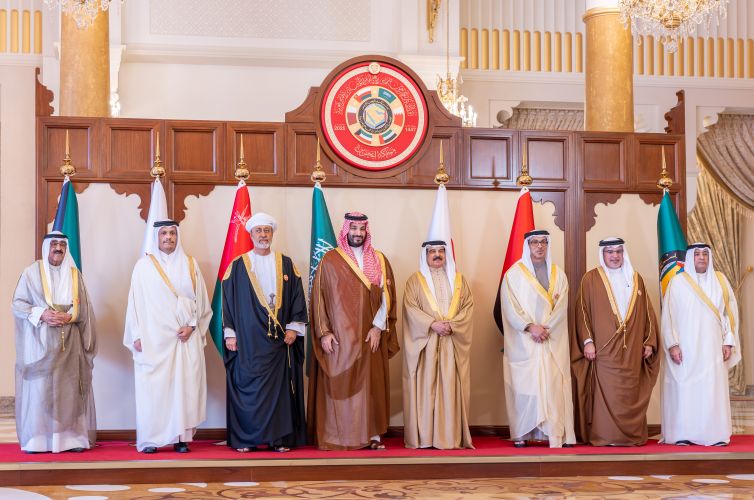
MANAMA: The Gulf Cooperation Council (GCC) began and ended 2025 as one of the world’s most strategically consequential regional blocs. Its growing global political and economic weight was on full display through high-profile international engagement. U.S. President Donald Trump’s participation in the Gulf–US Summit in the spring and Italian Prime Minister Giorgia Meloni’s appearance at the 46th GCC Summit in December underscored the bloc’s expanding centrality in global diplomacy, trade connectivity, and security planning.
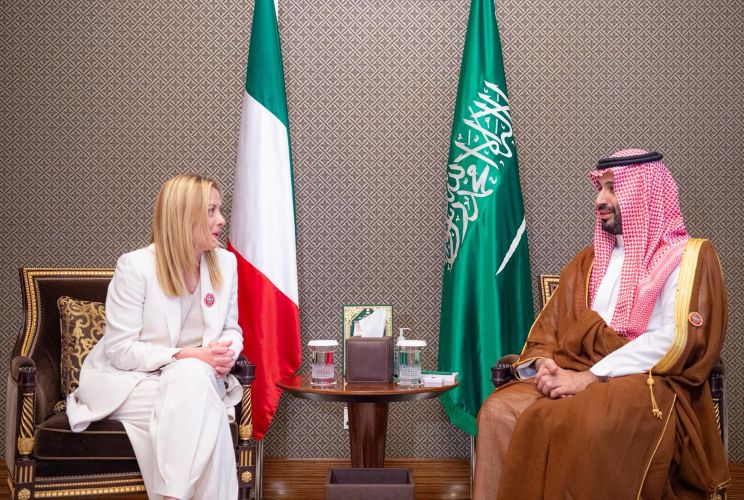
Speaking in Bahrain on December 3 as guest of honor at the GCC Summit, Meloni declared that the Gulf states were no longer merely regional actors but emerging architects of global strategic thinking. Her assessment echoed Trump’s remarks during his May visit, when he described the GCC as playing a “pivotal role” in shaping a stable Middle East with expanding global influence. He praised the Gulf’s development as a model closely watched by governments and investors worldwide, emphasizing that the Middle East was transforming into an interconnected cultural, economic, and diplomatic hub.
Meloni reinforced this message with a distinctly European framing. She argued that the Gulf was redefining its international footprint and that Europe must anchor itself as a credible, long-term partner. “If we want to fully seize the potential of our shared geopolitical space, we need a more structured dialogue between the Gulf and the Mediterranean,” she told GCC leaders. To this end, she proposed a dedicated Gulf–Mediterranean Summit to institutionalize cooperation on economic connectivity, regional stability, and long-term development.
A centerpiece of her remarks was the India–Middle East–Europe Corridor (IMEC). “I am thinking of the India–Middle East Corridor, the infrastructure and economic project to connect major port cities in India, the Middle East, and Europe, enabling interconnection with the United States. This initiative would allow our economies and businesses to unleash enormous potential,” she said.
A Bloc That Survived Every Shock — and Is Now Redefining Itself
More than four decades after its founding in 1981, the GCC -comprising Bahrain, Kuwait, Oman, Qatar, Saudi Arabia, and the United Arab Emirates – stands as the Arab world’s most durable alliance. It has outlasted wars, diplomatic ruptures, and seismic economic shocks, while maintaining internal cohesion and steadily deepening cooperation across travel, trade, labor mobility, and infrastructure.
Its summit in Bahrain came at a decisive juncture. The Gulf states are no longer content to merely respond to regional turbulence; they are beginning to shape the architecture of security, diplomacy, and long-term transformation. In 2025, they accelerated this strategic shift.
Since June, rising military tensions between Iran and Israel have underscored the urgent need for a more integrated regional security framework. In response, the GCC has moved to expand intelligence-sharing through early-warning systems, strengthen defense cooperation, and widen its security perimeter to include the Red Sea, the Bab el-Mandeb Strait, and Sudan. These areas are no longer viewed as peripheral, but as core pillars of Gulf national security.
Politically, the bloc is positioning itself as a proactive diplomatic force rather than merely a financial backer. From Gaza to Syria, from Lebanon to Sudan, GCC leaders are engaging more directly in efforts to stabilize conflict zones, secure maritime routes, deter escalation, and manage threats posed by both state and non-state actors. This political evolution is inseparable from the GCC’s economic strategy, as greater stability strengthens diversification efforts and supports the Gulf’s role in global energy transitions.
Looking Ahead: Stability, Modernization, and the Rise of Gulf Tech Power
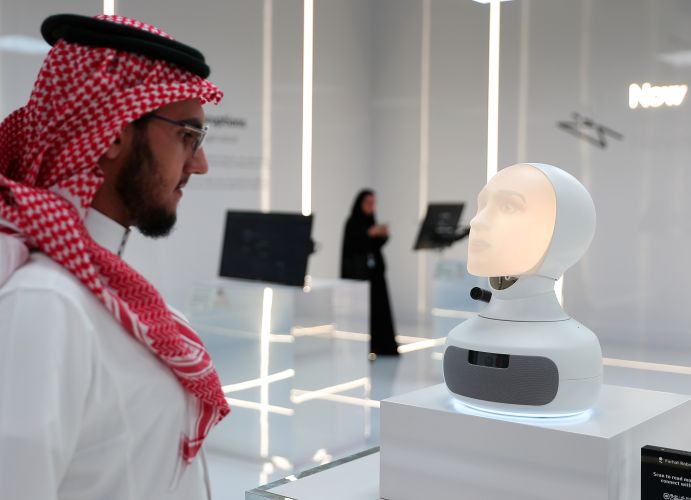
Looking ahead, 2026 is expected to be a year of comparative political stability, active diplomacy, and carefully calibrated social and economic evolution. Across the GCC, governments continue to balance deep-rooted traditions with rapid modernization. Digital connectivity, artificial intelligence ecosystems, cybersecurity cooperation, and smart infrastructure—once peripheral—are now central pillars of national strategy.
Streamlined, centralized policymaking remains a hallmark of GCC governance, enabling swift execution of reforms and reducing bureaucratic friction. With its increasingly open policies, the Gulf is now viewed by Western and Asian powers as an indispensable partner for stability, energy transition, and global connectivity. Meloni’s call for a Gulf–Mediterranean Summit and her endorsement of IMEC confirm Europe’s desire to formalize these strategic engagements.
The Gulf Asserts Itself: A New Era of Equal Partnerships
Meloni’s appeal also aligns with a broader strategic shift across GCC capitals. The Gulf has become increasingly firm in insisting on partnerships rooted in mutual interest rather than external pressure. Its message is unmistakable: the Gulf is now a partner, not a follower; a player, not a playground.
This shift reflects a growing determination to shape decisions that affect the region, rather than simply respond to them. Whether in energy, security, technology, or global diplomacy, the GCC now expects cooperation grounded in respect, reciprocity, and shared benefit. The era in which major powers could assume automatic alignment or one-sided influence is rapidly fading.
Saudi Arabia and the UAE: The Middle East’s Emerging Technology Hubs
Saudi Arabia and the United Arab Emirates continue to lead the Gulf’s technological transformation. Once oil-centric economies, both are repositioning themselves as the region’s premier hubs for innovation. Riyadh and Abu Dhabi are racing—at times cooperating, at times competing—to invest in artificial intelligence, clean technologies, and digitally enabled industries.
These efforts, guided by Saudi Arabia’s Vision 2030 and the UAE’s Centennial 2071, aim to build diversified, innovation-driven economies anchored in research, automation, and advanced science. AI has become the strategic centerpiece. Both states are channeling vast resources into STEM education, research centers, and global technology partnerships.
In Saudi Arabia, these economic shifts run parallel to a profound social transformation. Under Crown Prince Mohammed bin Salman’s agenda, the Kingdom continues to liberalize social norms, expand public entertainment, and encourage broader participation of women in the workforce. A new cultural landscape is reshaping cities, even as social reforms remain tightly managed to preserve societal cohesion.
Asia and the Gulf: A Strategic Convergence
Gulf–Asian relations have entered a new phase. Ties with China, India, Japan, South Korea, and Southeast Asian states are expanding well beyond energy and labor flows into investment, manufacturing, defense, and technology. Economic interests, political pragmatism, and shifting global power dynamics are producing deeper strategic alignment.
While historical and cultural connections still matter, the driving force is strategic interest. The Gulf increasingly views Asia as essential to its long-term security and economic resilience. This realist orientation has shaped GCC foreign policy for over two decades and continues to intensify each year.
2025 in the Wider Middle East: Gaza and Syria Dominate the Agenda
Beyond the Gulf, two issues defined regional politics in 2025: the war in Gaza and Syria’s post-Assad transition.
Gaza: A Ceasefire Opens a Precarious Stage
After two years of catastrophic destruction, a late-2025 ceasefire brought an uneasy calm to Gaza. The truce is anchored in a 20-point plan championed by President Trump and grounded in UN Resolution 2803, aiming to rebuild Gaza and reconfigure governance, territory, and political authority.
Israel, still reeling from the trauma of October 7, exited the war without a clear strategic victory. Political divisions remain deep: hardliners demand maximal security guarantees, while others warn that the plan could reopen debate over the future of the two-state solution. Within Palestinian politics, Hamas accepted the deal under intense pressure, prioritizing an end to the war while resisting disarmament that could undermine its identity. The Palestinian Authority, by contrast, sees the plan as a potential path back to Gaza and to renewed political relevance.
Syria: Between Rupture and Rebirth
One year after Bashar al-Assad’s fall, Syria remains suspended between collapse and renewal. The regime’s disintegration exposed the hollowed-out nature of state institutions, leaving new authorities struggling to impose order and construct functional governance. Some regions are experimenting with reconstruction and local administration, while others have slipped into episodic lawlessness.
International engagement remains narrowly focused on sanctions and security rather than the equally urgent task of rebuilding institutions capable of restoring trust and sustaining peace. Although several states have pledged investment in energy and infrastructure, uncertainty persists over the ideological trajectories of emerging governing actors, many of whom trace their roots to formerly militant factions. Syria stands at a fragile crossroads, where the decisions of the coming years will shape the country’s future trajectory.


