From Political Changes to Economic Growth, from Wars to Disasters: Asia’s Defining Year 2025 (X)

The year 2025 in Asia was shaped by impressive economic performances, historic turning points, lingering tensions between neighbors, high-stakes elections, waves of protest, the change of governments, cautious diplomatic breakthroughs among certain states, and relentless natural disasters with deep scars for peoples and countries.
THE AsiaN, founded on Asia Journalist Association’s network of journalists, is highlighting through articles written by its members the major issues that defined 2025 across Asia’s regions and countries. – Editor’s note”.
Central Asia in 2025: Achievements and Challenges
By Kuban Abdymen
Centralasianlight, Kyrgyzstan
BISHKEK: The year 2025 became a turning point for Central Asia, marked by significant geopolitical shifts, major economic and energy developments, and strengthened cooperation among the countries of the region. While all Central Asian states adapted to changing global dynamics, it was Kyrgyzstan and Kazakhstan, together with Uzbekistan, that stood at the center of the most significant changes in both political development and economic transformation. Tajikistan and Turkmenistan also played notable, though more limited, roles.
Kyrgyzstan: Diplomatic Breakthroughs, Energy Projects, and Rapid Growth
In 2025, Kyrgyzstan emerged as one of the most active diplomatic players in Central Asia. Its most important internationally recognized achievement was the final resolution of long-standing border disputes with Tajikistan. In spring 2025, Presidents Sadyr Japarov and Emomali Rahmon signed a State Border Treaty that sharply improved bilateral relations and positively affected the entire region.
As a result, Central Asia became significantly more attractive to investors, with total foreign investment reaching approximately 13 billion dollars in 2025.
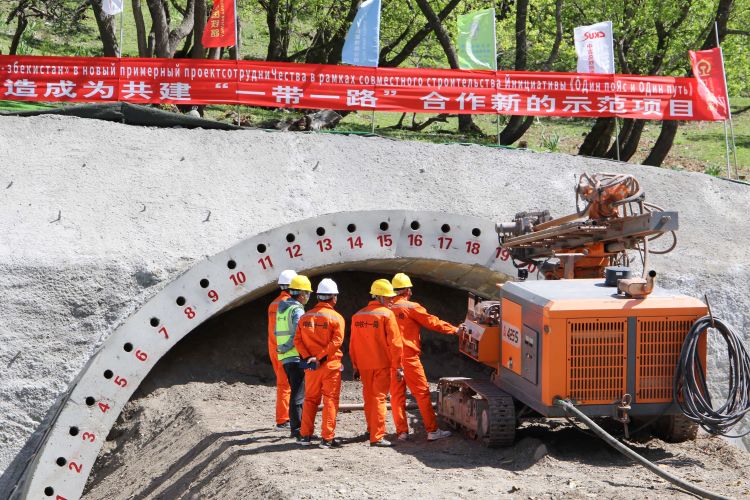
Kyrgyzstan also launched ambitious energy and transport-logistics projects to strengthen regional ties and modernize its economy and administration. The most significant interstate project initiated in 2025 was the China–Kyrgyzstan–Uzbekistan railway.
With an estimated cost of 8 billion dollars and a six-year construction timeline, the line will run 320 kilometers through Kyrgyzstan. Experts project that cargo transit alone will generate about 200 million dollars annually for the country once operational.
Energy Security and Regional Infrastructure Cooperation
One of Kyrgyzstan’s greatest strategic achievements in 2025 was the signing of a memorandum on electricity exchange with Pakistan in December. Under this agreement, Kyrgyzstan will export surplus hydropower in summer and receive equivalent volumes in winter through the CASA-1000 project, which regained momentum after years of delays linked to financial problems and the situation in Afghanistan. Kyrgyzstan is also negotiating electricity transit mechanisms with Kazakhstan.
The Kambarata HPP-1 project, the country’s most significant infrastructure undertaking in decades, continued to advance. In early 2025, the tripartite financing framework involving Uzbekistan and Kazakhstan entered the pre-project phase, including feasibility studies and revisions to participation shares. Although construction has not yet begun, political backing has strengthened.
Domestically, Kyrgyzstan accelerated energy-sector reforms by recruiting foreign engineers, introducing modern grid technologies, reducing losses, and improving payment discipline. The energy crisis of winter 2023–2024 generated strong public pressure that forced the government to speed up modernization.
Economic reforms helped push Kyrgyzstan’s GDP to 18 billion dollars in 2025, nearly triple the 2020 level. Anti-corruption campaigns led by the security services significantly boosted state revenues.
Foreign Policy Expansion and Multivector Diplomacy
In 2025, Kyrgyzstan substantially broadened its foreign policy engagements. High-level visits with Pakistan, Saudi Arabia, Qatar, Turkey, and other countries raised its international profile. President Japarov’s state visit to Pakistan late in the year produced not only the energy memorandum but also agreements on infrastructure, vocational education, and engineering projects.
Ties with Gulf monarchies also deepened. Bishkek hosted investment delegations from the UAE and Saudi Arabia focused on renewable energy, logistics, and mining. Kyrgyzstan positioned itself as an emerging destination for Gulf capital, particularly in green hydrogen and rare earth metals.
At the same time, the country preserved its traditional multivector policy, balancing relations among Russia, China, and Western partners. Cooperation with Russia continued through the CSTO and in trade and energy, while economic engagement with China expanded under the Belt and Road Initiative.
Internal Governance, Reforms, and Political Pressures
Domestically, 2025 was shaped by institutional reforms aimed at improving governance and combating corruption. New public procurement regulations were introduced, digital monitoring platforms were launched, and a multi-year administrative modernization program began. Challenges nevertheless persisted. Rising tariffs, inflationary pressure, and periodic energy disruptions strained public confidence.
Signs of democratic contraction also appeared. Constitutional amendments adopted in 2021 reduced the role of political parties, and for the first time since independence, the parliament was formed through single-mandate constituencies instead of party lists. While large-scale protests did not erupt, social tensions remained visible. In response, the government expanded targeted subsidy programs and pledged to accelerate reforms.
Despite these issues, Kyrgyzstan consolidated its position as one of the region’s most dynamic political and economic actors in 2025. Its growth rates remained the highest in Central Asia and within the Eurasian Economic Union.
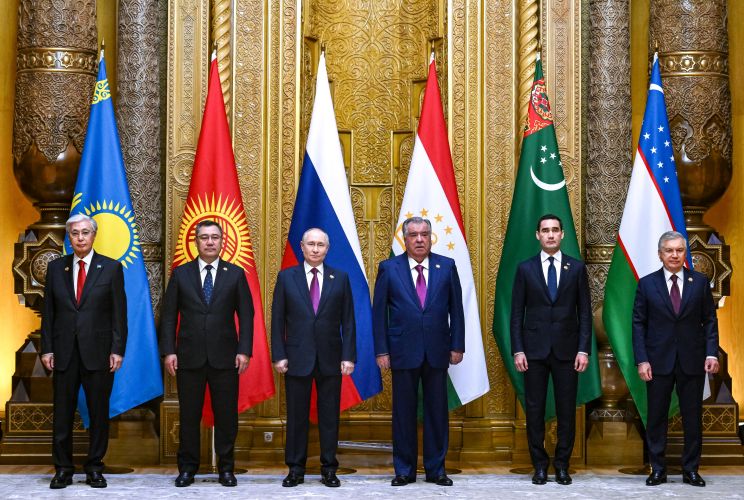
A general overview of the situation in Central Asia’s neighboring countries in 2025:
Kazakhstan as the Regional Economic Engine and Green Energy Connector
Kazakhstan’s development trajectory in 2025 reaffirmed its role as Central Asia’s economic engine. The country focused on diversification, energy transition, and expanded connectivity. GDP growth, driven by industry, logistics, and renewable energy, approached 300 billion dollars. Infrastructure modernization advanced under the National Infrastructure Plan.
Foreign investment expanded significantly, mainly from the EU, Gulf states, and East Asia. Kazakhstan attracted over 7 billion dollars, accounting for roughly 60 percent of all foreign investment into Central Asia in 2025. Construction of solar and wind power facilities continued at scale, and Kazakhstan reaffirmed its commitment to carbon neutrality by 2060.
Kazakhstan also played a central role in regional integration through the Green Energy Corridor project with Uzbekistan and Azerbaijan, designed to export renewable electricity to Europe via the Caspian. It confirmed participation in developing Kambarata HPP-1 with Kyrgyzstan and Uzbekistan.
On security matters, Kazakhstan strengthened border control and counterterrorism cooperation and became the first country in the region to surpass 1 billion dollars in trade with Afghanistan.
Uzbekistan, Tajikistan, and Turkmenistan in the Energy Landscape
Uzbekistan continued large-scale energy transformation through solar and wind installations, the launch of international carbon credit trading, and a target to cut emissions by 50 percent by 2035. Cooperation with Kyrgyzstan and Kazakhstan strengthened regional integration.
Tajikistan focused on steady progress in constructing the Rogun Hydropower Plant and small-scale hydropower projects despite financial constraints. Turkmenistan continued expanding natural gas exports, with trade with China exceeding 8.3 billion dollars in 2025, driven almost entirely by gas.
Regional Integration and the Outlook for 2026
The year 2025 reinforced several regional trends. Energy cooperation became the main driver of diplomacy, Kyrgyzstan assumed a central role in launching new cross-border initiatives, Kazakhstan confirmed its status as the region’s economic and infrastructure leader, Uzbekistan accelerated green energy reforms, and Tajikistan and Turkmenistan maintained their own energy strategies.
In 2026, Central Asia is expected to experience evolutionary rather than revolutionary change. Kyrgyzstan aims to reduce its energy deficit and advance infrastructure projects, including progress on Kambarata-1 and CASA-1000. Kazakhstan is likely to strengthen leadership in logistics and energy cooperation with the EU and China, though deep diversification will remain gradual. Uzbekistan will continue expanding renewables and regional electricity markets, while Tajikistan and Turkmenistan will sustain their established energy paths.
Overall, Central Asia enters 2026 with strengthened integration, cautious reform momentum, and growing emphasis on sustainable energy development.