
From Political Changes to Economic Growth, from Wars to Disasters: Asia’s Defining Year 2025 (II)

The year 2025 in Asia was shaped by impressive economic performances, historic turning points, lingering tensions between neighbors, high-stakes elections, waves of protest, the change of governments, cautious diplomatic breakthroughs among certain states, and relentless natural disasters with deep scars for peoples and countries.
THE AsiaN, founded on Asia Journalist Association’s network of journalists, is highlighting through articles written by its members the major issues that defined 2025 across Asia’s regions and countries. – Editor’s note”.
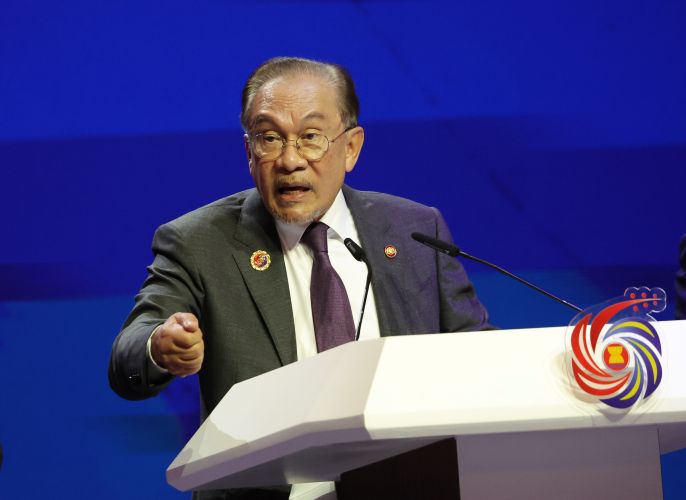
As ASEAN Chair, Anwar Promotes Balanced Diplomacy
and a New Framework for Regional Cooperation
By Norila Daud
Malaysia World News, Malaysia
KUALA LUMPUR: Datuk Seri Anwar Ibrahim, Malaysia’s 10th prime minister, took office on November 24, 2022, following the 15th general election, which resulted in a hung parliament. He has served as president of the People’s Justice Party (PKR) since 2018 and has represented the Tambun constituency in Parliament since 2022.
From Reformasi to MADANI: Anwar’s Political and Policy Foundation
Known as a reform-minded politician, Anwar first rose to prominence in September 1998 after he was dismissed as deputy prime minister by then Prime Minister Mahathir Mohamad.
That episode marked the beginning of the “Reformasi” movement, which continues to shape his political identity. Today, the core governing principle of Anwar’s unity government is the MADANI framework, which emphasizes humility, inclusiveness, transparent governance, and regional cooperation. This approach has since become a key reference point for Malaysia’s foreign policy.
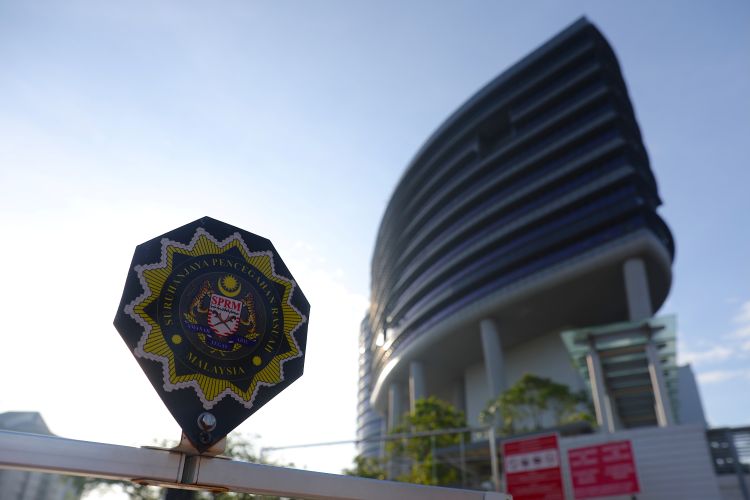
One of Anwar’s main domestic priorities has been the fight against corruption. His government has focused on reducing corruption and strengthening accountability across public institutions, government agencies, and the political system. To support this effort, the Malaysian Anti-Corruption Commission (MACC) has been given authority to investigate corruption and abuse of power and to pursue legal action against those involved. In the 2024 Corruption Perceptions Index, Malaysia scored 50 points and ranked 57th out of 180 countries, unchanged from the previous year.
ASEAN Summit and Trade Diplomacy: Progress and Debate
Anwar entered his third year in office as Malaysia assumed the ASEAN chairmanship, giving him a broader platform on the regional and global stage. He has used this opportunity to respond to shifting geopolitical conditions and to reassess ASEAN’s economic and political role in a changing international environment.
The 47th ASEAN Summit and related meetings, held in Kuala Lumpur in October 2025 under the theme “Inclusivity and Sustainability,” focused on regional peace, shared prosperity, and narrowing development gaps among member states. One of the economic initiatives highlighted by Anwar was the Agreement on Reciprocal Trade (ART) between Malaysia and the United States.
Signed on October 26, 2025, on the sidelines of the summit, the agreement lowers U.S. tariffs on Malaysian goods from 25 percent to 19 percent. While aimed at stabilizing trade and boosting exports, the ART is a limited arrangement rather than a comprehensive free trade agreement.
The signing of the agreement sparked debate at home, with some questioning whether parliamentary or cabinet approval procedures had been sufficiently addressed. Others raised the possibility of legal review. The government responded by stressing that the ART is not a full-fledged FTA and was therefore pursued within existing procedural boundaries.
Separate from the trade debate, the ASEAN summit itself drew largely positive international attention. Congratulatory messages from world leaders highlighted interest in Malaysia’s role as ASEAN chair. Anwar expressed appreciation for messages from Chinese President Xi Jinping and leaders from the United Arab Emirates and Mexico, noting that Malaysia’s ability to maintain balanced relations between the United States and China had drawn particular notice. He said ASEAN’s achievements included helping stabilize relations between Cambodia and Thailand and managing major-power dynamics in a balanced way.
At the APEC CEO Summit held in Gyeongju on October 30, 2025, U.S. President Donald Trump also thanked Anwar and the Malaysian government for their role in facilitating the Kuala Lumpur Peace Accord, which helped ease border tensions between Thailand and Cambodia.
Preserving ASEAN’s Space amid U.S.–China Rivalry
Anwar’s leadership is increasingly seen as influential in shaping ASEAN’s political and economic direction. With intensifying U.S.–China rivalry, ongoing instability in Myanmar, and renewed tensions in the South China Sea, Malaysia’s role as a coordinator and mediator has become more significant. Since taking office, Anwar has consistently emphasized balanced diplomacy and practical cooperation.
His foreign policy approach is based on avoiding alignment with any single major power. At a time when U.S.–China competition strongly affects global political and economic decisions, Anwar has focused on preserving ASEAN’s room for independent choice and collective action.
As ASEAN chair, Anwar has pursued diplomatic and security engagement with both Washington and Beijing, while also maintaining trade and investment ties. At the same time, Malaysia has expanded cooperation with South Korea and Japan in areas such as advanced technology, smart manufacturing, and infrastructure, viewing their investment as an important pillar of ASEAN’s economic strength.
These efforts reflect Malaysia’s intention to move ASEAN beyond the image of a simple consumer market, toward a region where production, investment, and technology development work together to support long-term growth.
Anwar sees ASEAN not merely as a regional economic grouping but as a coalition of middle powers capable of contributing to global discussions. He has called for clearer common positions on climate change and energy transition, more active involvement in addressing civilian suffering linked to conflicts such as those in Palestine and Myanmar, and a stronger ASEAN voice in global forums including the G20, APEC, and the United Nations.


