By Ivan Lim
Former AJA President, Contributor to AsiaN
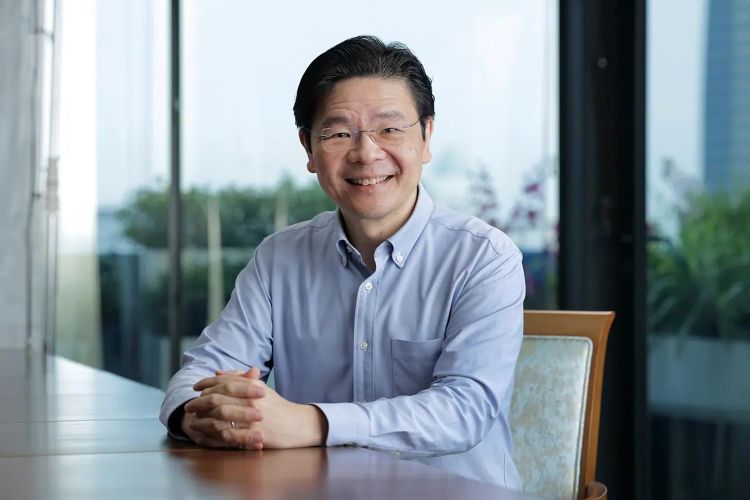
(Ministry of Digital Development and Information)
SINGAPORE: Fourth generation Prime Minister Lawrence Wong will draw a S$3.6 million annual income, up from $2.2 million, under a revised framework for Singapore political leaders, earning him the “world’s best-paid political leader” accolade.
Not that Prime Minister Lawrence Wong fancy the label but he endorsed the new ministerial pay package as part and parcel of the ruling People’s Action Party (PAP) meritocratic system of governance.
At $3.6 million (US$2.85 million), his pay will top those of US president Donald Trump at US$400,000 and other Western and Asian political leaders. To be sure, such headline comparison may not tell the whole story.
The high pay hike, announced on Sept 8 but taking effect on Oct 15, represented a catching up with the prevailing market rate of corporate high-flyers after a 15-year freeze.
PM Wong said the aim is to ensure that political salaries are competitive enough to attract high-calibre corporate leaders and professionals to take up political office.
As he puts it: “…the purpose of the salary framework is to ensure that, on top of all the other sacrifices involved, we do not make the financial cost unnecessarily high for them.”.
In expressing his own commitment to public service, Mr Wong said he would donate his full salary increase from S2.2 million over the next five years to charitable causes.
Under the new revised pay framework, Cabinet ministers will also see the entry point rise to $1.8 million up from $1.1 million. The new benchmark is set against the median income of the top 1,000 earners in the private sector, subject to a 40 per cent discount for public service.
However, to moderate the pay increase, the ministers will get a one-off adjustment of up to 9 per cent. The monthly allowance for Members of Parliament has been raised from $S13,750 to S$18,500.
The latest revision of ministerial salaries is in keeping with the 1994 White Paper on Competitive Salaries for Competent and Honest government put up by then Prime Minister Goh Chok Tong. It introduced a formula that set an entry-level minister’s benchmark at two-thirds of the average income of the top 24 earners across six professions from banking, accounting, law, engineering and CEOs of local and foreign companies.
The formula was in accord with founder-Prime Minister Lee Kuan Yew’s expressed principle of paying competitive salaries to attract talented people from the private sector into politics and government as well as to deter corruption.
In his book, One Man’s View of the World, Mr Lee stated: “it is true that no country in the world pays ministers as we do. But it is also true that no island has developed like Singapore: sparkling, clean, safe, with no corruption and low crime rates… None of this came about by coincidence. It took the construction of an eco-system that requires highly-paid ministers.”
Linking competitive pay to the future of Singapore, PM Wong told Parllament on Sept 8: “This is not about the PAP government of today. We cannot predict what the political landscape will look like years from now.
But whichever party is in charge, whichever party is in government, Singapore will need strong and effective political leadership to serve our people and take our country forward.”
Back in 2012, Prime Minister Lee Hsien Loong, who had succeeded Mr Goh Chok Tong adopted a revised formula that benchmarked ministerial salaries against the median income of the top 1,000 corporate earners instead of the top 8 earners in six professions.
An added feature was a 40 per cent discount to reflect sacrifice in public service, plus a no-pensions clean-wage policy.
The pay adjustments were backdated to May 2011 when PM Lee began his third term in office.
However, a proposal to adjust ministerial pay every five years was not implemented in 2017 and 2023 owing to prevailing economic circumstances.
The return to a competitive salary regime under PM Wong has to do with political succession. “It is not just about what we pay Ministers today,” said Mr Lee’s successor. It is about whether future Prime Ministers will continue to have a realistic chance of persuading capable Singaporeans from the public service, the private sector and other walks of life to step forward and built a first-rate team to serve Singapore and Singaporeans.”
PM Wong acknowledge the late Lee Kuan Yew’s legacy and formula for PAP dominance and rule, transforming the republic from Third World to First in the short span of 35 years, based on a per capita GDP of US$23,853 in year 2000.
At the same time, he appeared to heed Mr Lee’s warning on the danger of PAP leadership over time lapsing into mediocrity.
In 2011the then Minister Mentor had raised questions about the PAP’s longevity in his book Hard Truths for Singapore’ Survival, saying “There will come a time when eventually the public will say, look, let’s try the other side, either because the PAP has declined in quality or the opposition has put up a team which is equal to the PAP.
The PAP has been in power since 1965 when Singapore became an independent nation – for 61 years without a break.
If PM Wong could repeat the late Mr Lee’s feat on political renewal and succession, he would earn his keep and a new accolade for PAP as the longest-ruling political party in the world.