Bishkek SCO Summit: Kyrgyzstan’s Chairmanship and a New Stage of Eurasian Cooperation
Bishkek Declaration outlines common approaches to international and regional developments, future cooperation

By Kuban Abdymen,
Centralasianlight, Kyrgyzstan
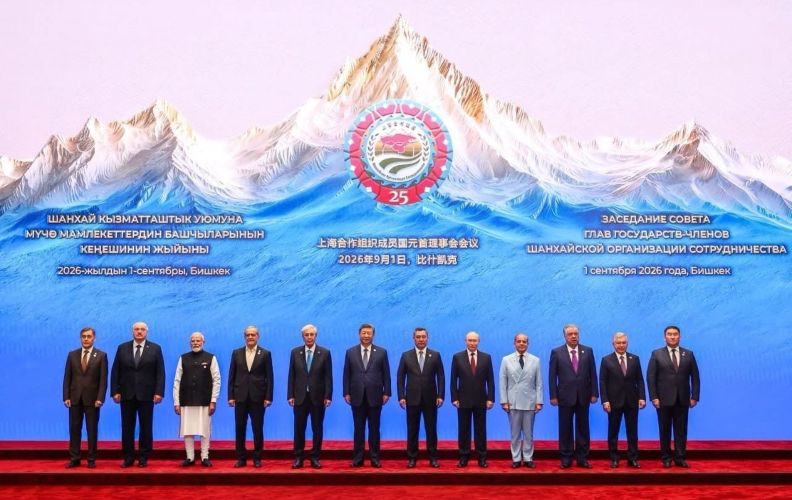
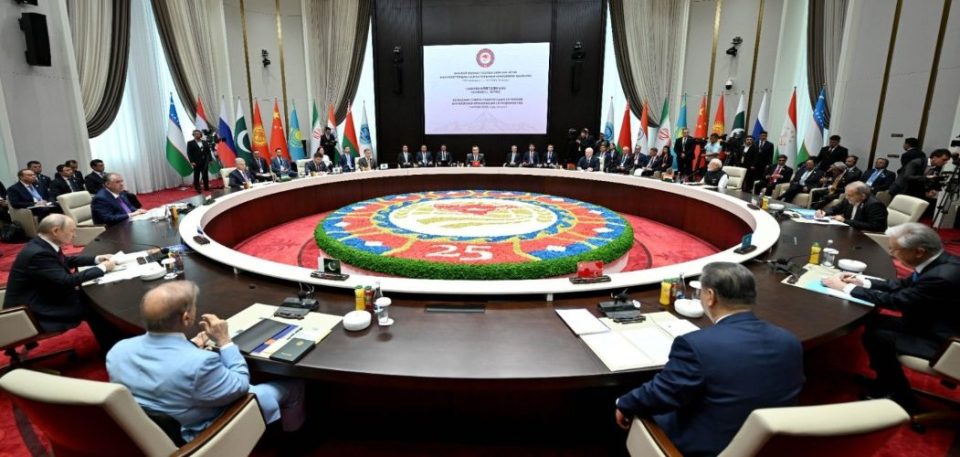
BISHKEK: The 26th Summit of the Council of Heads of State of the Shanghai Cooperation Organization (SCO), held in Bishkek on September 1, 2026, became an important milestone for both the Organization and Kyrgyzstan. For Bishkek, it marked the conclusion of its 2025–2026 SCO chairmanship, while for the Organization it coincided with the 25th anniversary of its establishment. The summit also took place in a symbolic year for Kyrgyzstan, which is celebrating the 35th anniversary of independence, and coincided with the opening of the 6th World Nomad Games.
Kyrgyzstan conducted its chairmanship under the motto “25 Years of the SCO: Together Towards Sustainable Peace, Development and Prosperity.” The slogan reflected the transformation of the Organization since its establishment in 2001. Originally focused primarily on mutual trust and security, the SCO has gradually expanded its agenda to include trade, investment, transport connectivity, energy, digitalization, artificial intelligence, environmental protection and humanitarian cooperation.
The Bishkek summit produced 28 documents, including the Bishkek Declaration marking the 25th anniversary of the SCO, amendments to the SCO Charter, and agreements and programs covering security, counter-narcotics cooperation, energy, logistics, digital technologies, artificial intelligence and environmental protection.
A changing SCO
The Bishkek Declaration was the principal political outcome of the summit. It outlined common approaches to international and regional developments and set directions for future cooperation.
Its importance should be viewed against the background of a rapidly changing international system. Growing multipolarity, geopolitical competition and economic fragmentation are creating new uncertainties. In this environment, the SCO provides a platform where countries with different political systems and foreign-policy priorities can maintain dialogue and develop practical cooperation.
The Organization now comprises ten member states, including China, Russia, India, Pakistan, Iran, Belarus and the four Central Asian countries. Its geographical reach and economic potential give the SCO significance far beyond Central Asia.
Security remains the foundation
Security remains the historical foundation of the SCO. Among the important Bishkek decisions was the establishment of a Universal Center for Countering Security Challenges and Threats of SCO Member States. The summit also strengthened mechanisms for combating drug trafficking and approved programs against drug addiction and the spread of synthetic drugs and their precursors through 2030.
For Central Asia, these issues are of direct importance. The region faces terrorism, extremism, organized crime, drug trafficking and other transnational threats. At the same time, the concept of security is becoming broader. Energy and food security, water resources, cybersecurity, climate change and emergency response are increasingly connected with regional stability.
From security to economic connectivity
Another important development is the SCO’s gradual transformation into a broader platform for economic cooperation. The Bishkek summit paid considerable attention to transport, logistics, energy and infrastructure, including a roadmap for developing ports and logistics centers for 2026–2030.
This is particularly relevant to Central Asia, which is increasingly becoming a bridge connecting China with Russia, South Asia, the Caspian region, the Middle East and Europe.
For Kyrgyzstan, transport connectivity is a strategic necessity. Projects such as the China–Kyrgyzstan–Uzbekistan railway demonstrate how infrastructure can change the economic geography of the region. The SCO can contribute by facilitating cooperation among member states and reducing barriers to trade.
But connectivity should not be understood only in terms of railways and roads. Investment, energy, agriculture, tourism, industrial cooperation and digital commerce are equally important. The real test will be whether SCO agreements produce concrete projects and tangible economic benefits.
Energy, water and climate
Energy cooperation is becoming increasingly important within the SCO, particularly for Central Asia. Yet for Kyrgyzstan, energy is inseparable from water resources and climate change.
The country’s mountains and glaciers are an important part of the Central Asian water system, while glacier retreat creates long-term risks for agriculture, hydropower and water availability. Climate change should therefore be treated not only as an environmental issue but also as a question of regional security.
The environmental initiatives discussed in Bishkek can contribute to a broader understanding of sustainable development, linking water, energy, agriculture and climate resilience.
Digitalization and artificial intelligence
The summit also highlighted digital transformation and artificial intelligence. Technological development is becoming a major factor in economic competitiveness and national security, making cooperation in AI, digital infrastructure, data processing and cybersecurity increasingly important.
For Central Asian states, the challenge is to avoid becoming only consumers of technologies developed elsewhere. Strengthening education, human capital, digital infrastructure and research capacity will be essential.
By incorporating these issues into the SCO agenda, Kyrgyzstan’s chairmanship contributed to broadening the Organization’s understanding of future development.
Kyrgyzstan’s contribution as chair
Kyrgyzstan’s chairmanship should be assessed as a year-long diplomatic process, not simply the organization of one summit. Bishkek emphasized issues particularly relevant to Central Asia: security, sustainable development, environmental protection, emergency response, transport connectivity, digital transformation and humanitarian cooperation.
For a relatively small country, chairing an organization that brings together China, Russia, India, Iran, Pakistan, Belarus and the Central Asian states was a significant diplomatic responsibility.
The chairmanship demonstrated Kyrgyzstan’s ability to contribute to the agenda of a major Eurasian organization. It also supported the country’s multi-vector diplomacy by providing a multilateral framework for interaction with several major powers.
The summit itself reinforced this role. Alongside the formal SCO discussions, Bishkek hosted numerous bilateral meetings and negotiations, making the Kyrgyz capital an important diplomatic center of Eurasia during the gathering.
Central Asia at the heart of the SCO
The future of the SCO is closely connected with Central Asia. The Organization was born in this region, and Central Asian states remain among its most important stakeholders.
The region is also becoming increasingly active in shaping its own international agenda. Central Asian countries are strengthening regional cooperation while maintaining relations with China, Russia, the European Union, the United States, Türkiye, Iran and other partners.
For them, the SCO is valuable as an additional platform through which regional priorities can be connected with wider Eurasian processes. Transport connectivity, water and energy, climate change, food security, trade and regional security should therefore remain central to the Organization’s future agenda.
Central Asia should not be viewed simply as a space between major powers. Its strategic importance is growing because it is becoming a connecting region between several major economic and political centers.
From declarations to implementation
The Bishkek summit does not eliminate all of the SCO’s challenges. Its members have different political systems, economic interests and foreign-policy priorities, making consensus difficult on some sensitive issues.
The Organization’s future credibility will increasingly depend on implementation. This is particularly important for economic and financial mechanisms, including proposals for an SCO Development Bank. Major infrastructure and development projects require reliable financing if cooperation is to move beyond declarations.
The success of the Bishkek decisions should therefore ultimately be measured not by the number of documents adopted, but by the number of projects implemented.
The legacy of Bishkek
The Bishkek summit can be viewed as both the conclusion of Kyrgyzstan’s chairmanship and the beginning of a new stage in the development of the SCO.
Security remains its foundation, but economic connectivity, transport corridors, energy, digitalization, artificial intelligence, climate change, water resources and humanitarian cooperation are becoming increasingly important.
For Kyrgyzstan, the chairmanship provided an opportunity to demonstrate diplomatic initiative and bring Central Asian priorities more prominently into the wider Eurasian discussion. The coincidence of the summit with the 35th anniversary of independence and the opening of the World Nomad Games gave the event additional symbolic significance, presenting Kyrgyzstan as both an active diplomatic actor and a country with a distinctive historical and cultural identity.
The real legacy of Bishkek, however, will depend on implementation. If the adopted decisions lead to stronger security, greater connectivity, expanded trade, technological cooperation and better responses to environmental challenges, the summit will have marked more than the end of Kyrgyzstan’s chairmanship.
It will have contributed to a more interconnected, stable and development-oriented Eurasian space, with Central Asia increasingly becoming not merely an arena where major powers interact, but an active participant in shaping the future of Eurasia.
Kyrgyzstan has now handed the SCO chairmanship to Pakistan. The announcement of the transfer was made following the SCO+ meeting, which was attended by UN Secretary-General Guterres and several heads of SCO partner states, such as Turkey, Vietnam, Laos, Congo, and others. The next stage will show how effectively the Organization can build upon the priorities and decisions established in Bishkek.