A Personal Reflection on Nepal’s Tragic Loss
This disaster feels all the more cruel when considering what Nepal has already endured

By Nasir Aijaz
The AsiaN Representative
ISLAMABAD: Nepal has always held a deeply special place in my heart. Having had the privilege of visiting Kathmandu three times, my relationship with this extraordinary nation goes far beyond that of a typical visitor.
Though my journeys kept me grounded in the vibrant, historic heart of the capital rather than trekking high into the mountains, the breathtaking backdrop of the Himalayas and the genuine warmth of the Nepalese people left an indelible mark on me.
Over the years, I have been fortunate to build cherished friendships in Kathmandu that keep me connected to the country’s daily rhythm and soul.
My connection to Nepal is also intimately tied to its vibrant creative spirit. As a publisher who has brought the works of Nepalese poets to light, and through my close ties with Nepalese journalist friends I met during Asia Journalists Association (AJA) events in Seoul, South Korea, I have spent years deeply connected to the country’s literary and media community.
Through their work, I learned to see Nepal not just as a land of sacred heritage, but as a living landscape of profound resilience and ancient wisdom. These writers and journalists capture the quiet majesty of their homeland with reverence, painting a picture of a place where nature and human life are inextricably intertwined.
That is why the news of the recent catastrophe near the Nepal-Tibet border has left me so deeply shaken.
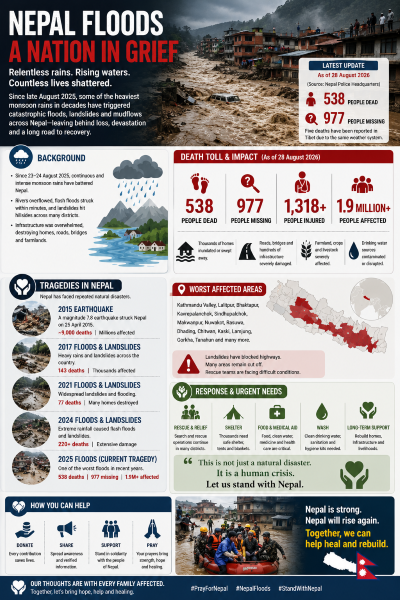
Reports of a massive glacier burst unleashing sudden, violent floodwaters have brought unimaginable devastation to the region.
Watching torrents of water tear through northern valleys—washing away entire buildings, sweeping away bridges, and severing vital lifelines, is harrowing.
Hundreds of precious lives have been cut short, scores of people remain missing, and families have seen their livelihoods dissolved in an instant. The immense loss of life and property across these border communities is truly heartbreaking.
This disaster feels all the more cruel when considering what Nepal has already endured. The country is no stranger to hardship, having repeatedly suffered the destructive wrath of severe earthquakes that shattered historic cities and displaced thousands.
To see a nation that has fought so courageously to rebuild from seismic tragedy now struck by the sudden fury of a glacial flood is an overwhelming blow.
In these heavy moments, my thoughts are constantly with my dear friends in Kathmandu, with the poets whose voices I hold dear, and with every community mourning across the affected border areas.
Nepal’s true strength has never simply been its magnificent scenery; it is the quiet dignity, generosity, and resilience of its people. Having experienced their warmth firsthand during my stays in Kathmandu, I know they will support one another through this dark hour just as they have done in the past.
Yet, strength does not erase the pain of such tremendous loss. As search, rescue, and relief operations continue in the devastated districts, my heart aches for every family waiting for news or grieving a lost loved one. The international community must stand actively beside Nepal in solidarity and support.
To my friends and all those suffering in Nepal: please know that across the distance, we grieve with you, hold you in our thoughts, and hope for comfort and recovery in the days ahead.