The Overheated System: Causes of Climate Change and Our Leverage Against the Crisis
We cannot influence natural cycles, but we certainly can influence anthropogenic drivers

By Dr. Hassan Humeida
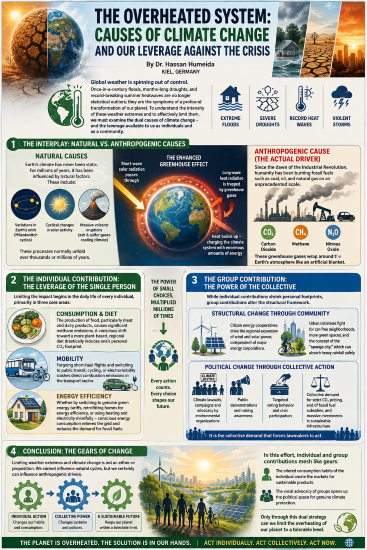
KIEL, GERMANY: Global weather is spinning out of control. Once-in-a-century floods, months-long droughts, and record-breaking summer heatwaves are no longer statistical outliers; they are the symptoms of a profound transformation of our planet.
To understand the intensity of these weather extremes and to effectively limit them, we must examine the dual causes of climate change – and the leverage available to us as individuals and as a community.
The Interplay: Natural vs. Anthropogenic Causes: Earth’s climate has never been static. For millions of years, it has been influenced by natural factors. These include minute variations in the Earth’s orbit around the sun (known as Milankovitch cycles), cyclical changes in solar activity, and massive volcanic eruptions that spew ash and sulfur gases into the stratosphere, temporarily cooling the climate. However, these processes normally unfold over thousands or millions of years.
In stark contrast stands the anthropogenic (man-made) cause – and it is the actual driver of the current, rapid change. Since the dawn of the Industrial Revolution, humanity has been burning fossil fuels such as coal, oil, and natural gas on an unprecedented scale.
CO2 (Carbon Dioxide)+CH4 (Methane)+N2O (Nitrous Oxide)
The greenhouse gases released during this process wrap around the Earth’s atmosphere like an artificial blanket. They allow short-wave solar radiation to pass through, but block the Earth’s long-wave heat radiation from escaping back into space.
This enhanced greenhouse effect charges the global climate system with gigantic amounts of energy, which then discharge in violent storms and extreme temperature spikes.
The Individual Contribution: The Leverage of the Single Person: The global scale of this crisis often triggers feelings of powerlessness. Yet, the sum of individual decisions holds enormous steering power. Limiting the impact begins in the daily life of every individual, primarily in three core areas:
- Consumption and Diet: The production of food, particularly meat and dairy products, causes significant methane emissions. A conscious shift toward a more plant-based, regional diet drastically reduces one’s personal CO2 footprint.
- Mobility: Forgoing short-haul flights and switching to public transit, cycling, or electromobility slashes direct combustion emissions in the transport sector.
- Energy Efficiency: Whether by switching to genuine green energy tariffs, retrofitting homes for energy efficiency, or using heating and electricity mindfully – conscious energy consumption relieves the grid and reduces the demand for fossil fuels.
The Group Contribution: The Power of the Collective: While individual contributions shrink personal footprints, group contributions alter the structural framework. Only by working together as a collective can we generate the necessary pressure on politics and business to bring about systemic change.
Structural Change Through Community: Citizen energy cooperatives drive the regional expansion of wind and solar power, independent of major energy corporations. Urban initiatives fight for car-free neighborhoods, more green spaces, and the concept of the “sponge city,” which can absorb heavy rainfall safely.
Furthermore, groups act as political changemakers. Whether through climate lawsuits by environmental organizations, public demonstrations, or targeted voting behavior: it is the collective demand for strict CO2 pricing, the end of fossil fuel subsidies, and massive investments in sustainable infrastructure that ultimately forces lawmakers to act.
Conclusion: The Gears of Change: Limiting weather extremes and climate change is not an either-or proposition. We cannot influence natural cycles, but we certainly can influence anthropogenic drivers.
In this effort, individual and group contributions mesh like gears: the altered consumption habits of the individual create the markets for sustainable products, while the vocal advocacy of groups opens up the political space for genuine climate protection. Only through this dual strategy can we limit the overheating of our planet to a tolerable level.