Pakistan’s Water Protest Sparks Satire


By Nasir Aijaz
The AsiaN Representative
ISLAMABAD: The Pakistan People’s Party (PPP) organized a series of province-wide rallies across Sindh on July 12, 2026, protesting what they termed India’s “water terrorism”. The protests focused on India’s unilateral moves surrounding the 1960 Indus Waters Treaty (IWT).
While the rallies targeted external alleged “water aggression” by Indian Prime Minister Narendra Modi, they also sparked intense domestic debate. Critics, citizens, and Sindhi nationalist leaders questioned why the PPP, a major partner in the federal coalition government, staged these protests solely in Sindh, rather than launching a nationwide movement or pushing the PML-N-led federal government of Prime Minister Shehbaz Sharif to take official state-level action.
Political observers and nationalist leaders in Sindh argue that the PPP’s decision to limit the protests to its home province serves several strategic domestic purposes:
Deflecting Local Anger Over Water Governance: Sindh, a lower riparian province in the south of the country, has been facing severe, chronic water shortages that directly threaten its standing crops and worsen sea intrusion in the Indus Delta.
Critics and local nationalist groups accuse the PPP, which has governed Sindh for nearly two decades, of failing to manage the province’s water infrastructure fairly, pointing to local feudal lords who routinely divert canal waters to their own agricultural fields.
Staging highly visible, nationalistic protests against India helps channel public frustration outward. Pressure on the Federal Coalition (PML-N) & Punjab: Water distribution is a deeply sensitive inter-provincial issue in Pakistan.
Sindh frequently accuses the Punjab province (the traditional stronghold of Prime Minister Shehbaz Sharif’s PML-N) of illegally drawing excess water through link canals.
By protesting “water terrorism” under the slogan “Marsoon Marsoon, Sindhu na Desoon” (“We will die, but we will not give up the Indus”), the PPP subtly builds pressure on its federal partner, PML-N, to enforce the 1991 Water Accord for fair distribution of river water.
Appeasing the Military Establishment: Taking an aggressive, hawkish stance on a major national security issue like the Indus Waters Treaty aligns the PPP with the traditional, hardline national security narratives favored by the country’s military establishment.
The rallies featured fierce statements from provincial ministers, who went as far as warning that “war would be the only option, and that India would be taught a lesson” if Pakistan’s water supply was cut off.
This intense, localized rhetoric, combined with the political mismatch of a provincial government threatening a neighboring nuclear power while the federal government remained quiet, spurred widespread mockery and satire on social media.
Many online commentators poked fun at the provincial ministers’ grand statements, jokingly asking if Prime Minister Narendra Modi had personally walked down to the Sindh-Punjab border to turn off a water tap.
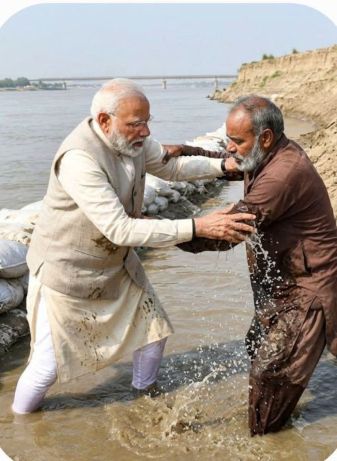
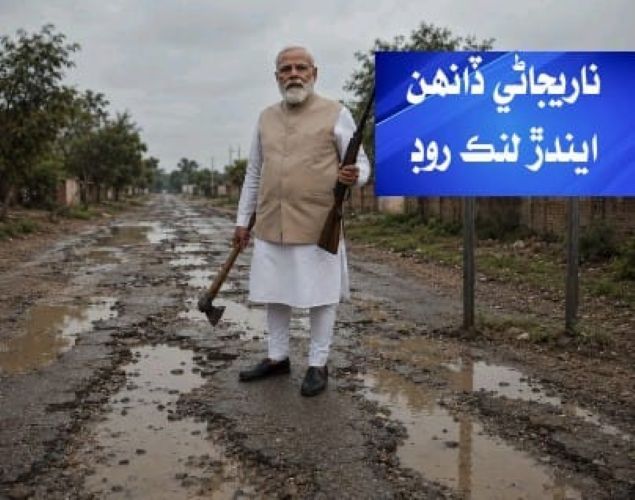
The online response was heavily fueled by viral, satirical AI-generated caricatures. These images depicted Narendra Modi in various cartoonish scenarios, such as standing in a dry riverbed holding a giant faucet, or physically sitting on a massive water valve labeled “Sindh.”
While the PPP used the rallies to project regional defiance, the public largely used these humorous, tech-driven memes to highlight the absurdity of provincial ministers fighting a geopolitical water war on the streets of Hyderabad and Karachi.