Geopolitical Shifts and the Migration of Cyber Mafias: International Cybercrime Syndicates Penetrate Sri Lanka

By Leo Nirosha Darshan
COLUMBO: In today’s Indo-Pacific landscape, transnational organized crime has escalated from a law enforcement headache into a major geopolitical threat and strategic challenge, disrupting regional security, diplomatic equilibrium, and economic order.
Facing intense law enforcement pressures and crackdowns in traditional strongholds like Cambodia and Myanmar, multi-billion-dollar international cyber-scam networks are shifting operations toward other vulnerabilities in South and Southeast Asia.
Recent security data and a wave of high-profile arrests confirm that these global cyber-fraud syndicates are turning to new testing grounds, specifically Vietnam and Sri Lanka.
For years, the cyber-scam industry thrived in Cambodia as a massive shadow economy, operating via local casinos, real estate ventures, and the tacit protection of politically connected domestic elites.
At its peak, this illicit industry industrialized human trafficking, trapping tens of thousands of forced laborers in fortress-like scam compounds. This black-market economy generated profits equivalent to nearly 40% of Cambodia’s GDP. Over the past two years alone, Chinese-led cyber syndicates have stolen an estimated $75 billion from victims worldwide.
However, mounting pressure from Washington and Beijing—combined with severe reputational damage on the world stage—forced the Cambodian government to dismantle hundreds of these scam hubs, arrest ringleaders, and deport tens of thousands of foreign nationals. In 2023 and 2024 alone, Southeast Asian nations deported or arrested over 100,000 foreign nationals linked to cybercrimes. Driven out by these crackdowns and targeted by the Financial Action Task Force (FATF), this criminal underworld is now spilling heavily into Vietnam and Sri Lanka.
Vietnam Rebounds Against Cyber Syndicate Infiltration
Vietnam, which had historically remained insulated from industrial-scale cybercrime compared to its neighbors Cambodia and Myanmar, has recently emerged as a primary destination for fleeing syndicates. Vietnamese authorities have actively intercepted and dismantled international rings attempting to set up shop in the country’s northern territories.
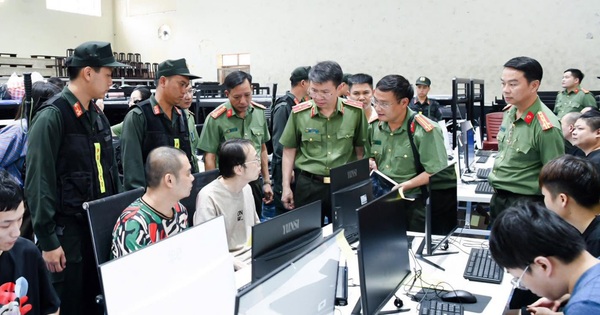
In a recent operation, Vietnamese police raided a local hotel near the Chinese border in the Lao Cai province, arresting 19 Chinese nationals who had slipped into the country via Cambodia’s Moc Bai border gate. Operating under a kingpin named Wang Xiangsheng, the syndicate was caught targeting Chinese citizens through fraudulent loan applications. Authorities seized 23 laptops, 26 smartphones, and 8 advanced 5G signal-broadcasting devices.
Furthermore, Vietnam’s Ministry of National Defense broke up a wider international syndicate attempting to establish long-term cyber bases by leasing luxury resorts and villas across Phu Tho, Hanoi, and Lao Cai.
This raid resulted in the arrest of a Chinese national, Zhao Weizhong, alongside three Vietnamese accomplices, and the confiscation of 73 computers and 134 mobile phones. Similar crackdowns in Ho Chi Minh City and Bac Ninh province resulted in the arrest of 83 and 43 suspects, respectively, signaling Hanoi’s zero-tolerance stance.
Sri Lanka: South Asia’s New Frontier for Cyber Mafias
While Vietnam battles this influx in Southeast Asia, Sri Lanka—the strategic maritime hub of the Indian Ocean—faces an identical, critical security challenge in South Asia. International mafias are expanding their networks directly into Colombo, a city long marketed as an investor’s paradise, targeting the ultra-modern Colombo Port City Special Economic Zone as their prime operational hub.
The gravity of the situation is reflected in recent data from Sri Lanka’s Criminal Investigation Department (CID). Raids on luxury residential complexes in Kadugannawa, Aluthgama, and Colombo have led to the arrest of over 1,000 foreign nationals this year alone. Security experts point to a convergence of strategic and socio-economic vulnerabilities drawing these syndicates to the island nation.
As Sri Lanka slowly recovers from its recent catastrophic economic collapse, real estate owners and local brokers eagerly welcome any foreign capital arriving under the guise of foreign direct investment. With premium rental rates on offer, few ask questions about the backgrounds of their tenants.
Furthermore, the Colombo Port City operates under a unique legislative framework with distinct tax and regulatory incentives. While designed to attract legitimate global business, these lax oversight mechanisms provide a convenient smokescreen for criminal networks to mask illicit financial transactions.
Sri Lanka also boasts one of the best internet architectures in South Asia, providing these syndicates with the high-speed connectivity needed to hack into European and American banking systems and execute global phishing scams. Because Sri Lankans are accustomed to large groups of foreign tourists renting properties, these syndicates blend effortlessly into local communities by leasing luxury villas and high-rise apartments.
Finally, the long-standing usage of the Undiyal system—a traditional, informal trust-based money transfer mechanism operating outside the formal banking sector—allows these cybercriminals to launder and move their illicit wealth globally without leaving a paper trail.
The Risk of the FATF “Grey List”
Opening the doors to international syndicates without stringent vetting risks decimating local, legitimate IT enterprises and inflicting severe long-term damage on Sri Lanka’s global reputation. Economists warn that if billions in cyber-scam proceeds infiltrate the domestic banking system, the Financial Action Task Force (FATF) could re-list Sri Lanka on its “Grey List,” crippling the country’s broader financial credibility.
Furthermore, if the island gains a reputation as a safe haven for cybercriminals, global tech giants like Google and Microsoft will pull back on investments. Ultimately, the digital employment opportunities and tech-driven future envisioned for Sri Lanka’s educated youth could be entirely compromised.
CID intelligence also reveals that these hubs are rarely limited to financial fraud; they routinely double as encrypted communication command centers for human trafficking and narcotics smuggling rings.
A Roadmap for Counter-Measures
To neutralize this brewing national security crisis, Sri Lanka must deploy immediate, systemic interventions. An immediate, comprehensive forensic audit must be conducted on all foreign and Chinese entities registered within the Colombo Port City, including a thorough verification of their beneficial ownership, employee credentials, and capital sources.
Alongside this, the Ministry of Digital Technology, the Telecommunications Regulatory Commission (TRCSL), and the Department of Immigration and Emigration must coordinate a real-time tracking system to monitor foreign nationals arriving on commercial and business visas to ensure compliance with their declared activities.
To solidify these defenses, Sri Lankan law enforcement must deepen intelligence-sharing pipelines with the Chinese government, Interpol, and regional partners to blacklist and deport individuals with known criminal records.
Sri Lanka has a narrow window of opportunity to nip this crisis in the bud before these syndicates embed themselves into the local political and corporate landscape—a collusion that currently paralyzes cleanup efforts in Cambodia.
Under the current National People’s Power (NPP) administration, the political insulation typically enjoyed by such criminal syndicates is low. With law enforcement agencies granted the autonomy to act independently, Sri Lanka holds a distinct strategic advantage to eliminate this transnational threat before it takes permanent root.