A Broken Shoe Is Never a Reason to Stop Walking
"The dreams of the poor are not merely big; they are the most powerful force on earth".

By Nasir Aijaz
The AsiaN Representative
ISLAMABAD: In the shimmering heat of Tharparkar, a desert district of Sindh province of Pakistan, bordering India, where the wind carries more sand than moisture, fourteen-year-old Noor Bano lived in a world defined by scarcity.
Her home was a small hut that held no electricity, and her days were measured by the three-kilometer trek she made to fetch water.
Her father spent his days grazing camels under a punishing sun, while her mother scrubbed floors in the homes of others in a nearby town.
One afternoon, the strap of Noor’s only pair of sandals (slippers) snapped, forcing her to walk to school with the burning desert path pressing against her bare skin.
When her teacher asked the class about their future ambitions, Noor raised her dusty hands and declared that she would one day be a Commissioner (An administrative/bureaucratic office filled by competitive examinations) someone with the power to listen and the authority to help.
The room erupted in laughter. Even the teacher sighed, gently telling her that the children of the poor should not burden themselves with dreams so heavy.
But Noor’s resolve was harder than the parched earth of Sindh. She topped her district in her matriculation exams and secured the second position in the entire province for her intermediate studies.
To fund her dreams, her father sold the camels that were his livelihood, and her mother surrendered her only silver bangles.
Once Noor reached the University of Karachi, the struggle only intensified. Without money for a hostel, she spent her days teaching three different tuitions and her nights hunched over books.
When the winter chill numbed her fingers or the summer heat became suffocating, her friends would warn her that the civil service was a game for the elite, played in expensive academies and English-medium schools. Noor simply told them that while poverty was her current reality, it would never be her identity.
The road to the bureaucracy was paved with heartbreak. Noor failed the CSS exams two times. The first time, a single essay stood in her way; the second, current affairs.
Back in the village, the whispers turned into open mockery. Relatives urged her mother to marry her off, joking that the “Commissioner” should stick to making tea.
Her mother wept, fearing the weight of public shame, but Noor would press her mother’s feet and promise that the same people talking now would one day tell a different story.
In her third and final attempt, Noor became a ghost of the library. She studied eighteen hours a day, scouring old newspapers and huddled under streetlights to finalize her notes when she couldn’t afford a lamp.
When the 2025 results were finally released, the name Noor Bano sat at the seventh position in all of Pakistan. She had earned her place in the prestigious Pakistan Administrative Service.
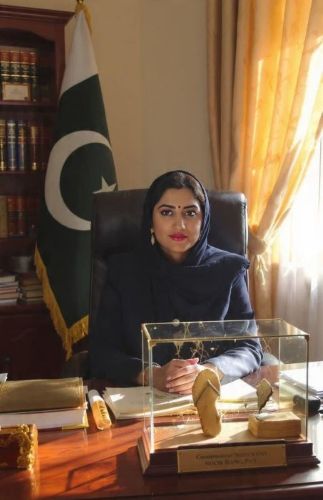
On her first day in office, she did not bring a trophy or a photograph of her success. Instead, she brought the broken sandals she had worn as a schoolgirl. She placed them in a glass case on her mahogany desk with a simple note: “To remind me where I came from.”
Now, as the Assistant Commissioner, Noor Bano’s office is a place where the barrier between the state and the citizen has dissolved, as reported by the social media.
Her very first executive order was to ensure that every school in the desert of Thar was equipped with fans and clean water, decreeing that no child should ever have to walk to their lessons barefoot.
When a girl from a humble background enters her office today, Noor does not let her stand in the corner. She seats the girl in her own high-backed chair, serves her tea, and tells her that a broken shoe is never a reason to stop walking.
At a recent ceremony, Noor presented an award to the teacher who had once laughed at her. As the retired woman wept with pride and regret, Noor leaned in and whispered that she was right—the dreams of the poor are not merely big; they are the most powerful force on earth.
(The article is based on social media reports)