One Month Into the Iran War: The Illusion of Control
wars do not unfold in PowerPoint presentations. They evolve in reaction

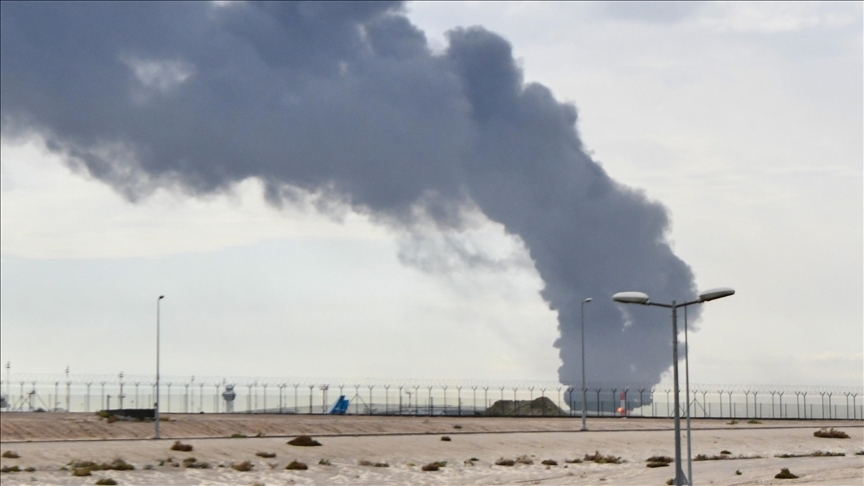
KUWAIT: One month into the war with Iran, a dangerous illusion persists: that this conflict is being carefully managed. It is not. What we are going through is not a calibrated military campaign with set goals and clear limits, but rather the rapid unraveling of regional order under the weight of escalation, miscalculation, and competing political agendas.
The scale of the opening strikes by the United States and Israel was designed to project dominance. More than 1,500 airstrikes in a matter of four weeks targeted Iran’s military infrastructure, energy facilities, and nuclear sites. The aim was unmistakable: degrade Iran’s capabilities, decapitate its leadership, and reset the strategic balance of the Middle East.
But wars do not unfold in PowerPoint presentations. They evolve in reaction.
Iran’s response has been both swift and deliberately expansive. By launching over a thousand strikes not just at Israel but also across the six nations of the Gulf, Tehran has reframed the conflict from a bilateral confrontation into a regional crisis.
This is not simply retaliation; it is strategy. By widening the battlefield, Iran ensured that any attempt to isolate it militarily became politically and economically costly for everyone involved.
And that cost is already visible.
The near paralysis of the Strait of Hormuz, a narrow passage that carries roughly a fifth of the world’s oil and gas, has exposed the fragility of global energy security.
Within days, shipping traffic collapsed, fuel prices surged, and markets reacted with predictable anxiety. The war has made clear what policymakers often ignore: in an interconnected world, regional wars do not stay regional.
Yet the most troubling dimension of this conflict is not economic—it is human.
The death toll continues to climb across multiple countries, from Iran to Lebanon to Iraq. Millions have been displaced, entire communities uprooted, and critical infrastructure damaged or destroyed. Behind the statistics lies a more uncomfortable truth: the war’s human consequences are not an unintended byproduct. They are structurally embedded in the way this conflict is being fought.
Strikes on urban areas, energy infrastructure, and symbolic civilian targets suggest that both deterrence and spectacle are at play. This is warfare designed not only to weaken the enemy, but also to send messages to populations, to allies, and to global audiences.
If that is the case, then the war is succeeding on its own terms. But that success comes at a cost that no side seems willing to fully acknowledge.
Politically, the conflict is being shaped as much by domestic calculations as by strategic necessity. In Washington, hesitation reflects a public wary of another prolonged war. In Israel, the opposite dynamic is at work: strong domestic support encourages continued escalation. Between these two positions lies a widening gap in objectives, one that risks undermining any coherent endgame.
Meanwhile, diplomacy appears less like a pathway to peace and more like a tactical pause. Announcements of plans, deadlines, and backchannel negotiations create the impression of movement, but little clarity exists about what a sustainable resolution would actually look like. Reopening shipping lanes is not a peace strategy. It is damage control.
And even that remains uncertain.
The deeper problem is that no actor in this conflict is truly pursuing de-escalation as a primary objective. Each is instead seeking military, political, or symbolic leverage before coming to the table. This logic guarantees that the war will continue, because every escalation is framed as a prerequisite for negotiation rather than a failure of it.
The result is a region caught in a familiar but increasingly dangerous cycle: strike, retaliate, expand, repeat.
What makes this moment particularly volatile is the number of actors now involved. From Lebanon to the Gulf to Yemen, the conflict is no longer contained. Each new front introduces its own dynamics, its own risks, and its own potential for miscalculation. The entry of additional actors, whether state or non-state, does not just widen the war; it ominously multiplies the chances of it spiraling beyond anyone’s control.
That is the real lesson of this first month.
The war with Iran was perhaps intended as a demonstration of strength. Instead, it has become a demonstration of limits – of military power, of deterrence, and of the belief that complex regional realities can be reshaped through force alone.
There is still talk of “endgames,” of “decisive outcomes,” of “strategic victories.” But after one month, the only certainty is uncertainty. And in the Middle East, uncertainty is rarely a stable condition.