The Silent Danger: How Climate Change Threatens Our Health
In countries without comprehensive healthcare, heatwaves and droughts lead to massive malnutrition due to crop failures


By Dr. Hassan Humeida
Kiel, Germany: When we talk about climate change, we usually think of melting glaciers, rising sea levels, or burning forests. Yet the most fatal consequence of global warming affects us much more directly: our physical and mental health. Heatwaves and rising temperatures are radically altering the global map of diseases. Climate change has long ceased to be just an ecological crisis; it is the greatest medical challenge of our time.
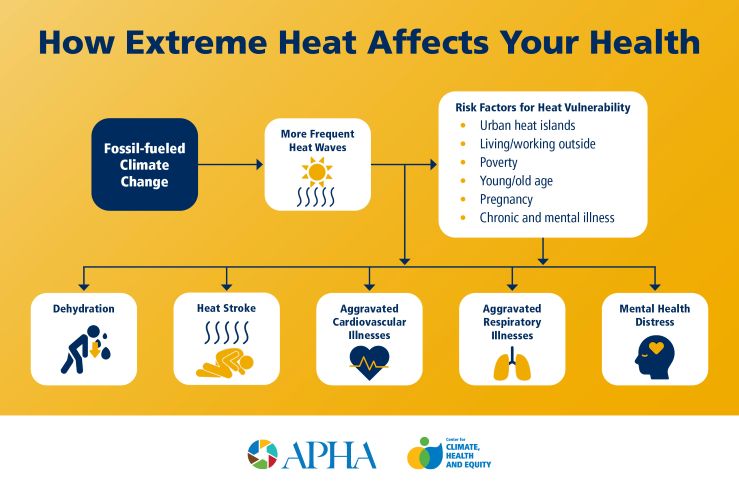
Heat as a Direct Aggressor: Heart, Kidneys, and the Psyche: Extreme heat is hard labor for the human body. To keep the core temperature stable at around 37°C, the heart has to pump massively faster and blood vessels must dilate.
Cardiovascular System: During prolonged heatwaves, this cooling system reaches its limits. The results are circulatory collapses, heart attacks, and strokes. Older people, the chronically ill, and toddlers are particularly at risk.
Dehydration and Kidney Failure: Due to heavy sweating, the body loses a high number of fluids and electrolytes. If this is not quickly balanced, acute kidney failure looms.
Mental Strain: Recent studies show that extreme heat also attacks the psyche. The number of anxiety disorders, depression, and aggressive behavior increases measurably on hot days. Furthermore, nighttime heat robs people of restful sleep, further weakening the body’s resistance to stress.
The Invasion of Pathogens: Tropical Diseases on the Rise: Climate change is shifting the habitats of animals and parasites. Higher average temperatures and milder winters mean that disease carriers (vectors) such as mosquitoes and ticks are spreading to regions where they would previously never have survived.
The Phenomenon of Vector Spreading: The Asian tiger mosquito, once native only to the tropics, now feels perfectly at home in southwestern Europe and parts of Germany. It transmits dangerous viruses such as Dengue fever, Chikungunya, or Zika. The West Nile virus, transmitted by native mosquitoes, is also spreading further and further in Europe.
Ticks and Waterborne Risks: At the same time, the warmth extends the season for ticks, increasing the risk of Lyme disease and tick-borne encephalitis (TBE). Dangers also lurk in the water: in warmer bodies of water—such as the heating Baltic Sea—vibrio bacteria multiply. These bacteria can enter the body through tiny skin injuries and trigger severe, sometimes life-threatening infections.
Global Inequality and Collapsing Systems: The health consequences hit the world’s population unequally. While wealthy nations can still cushion the collapse of their healthcare systems through air conditioning, disaster warnings, and good medical infrastructure, the Global South is hit incomparably harder.
In countries without comprehensive healthcare, heatwaves and droughts lead to massive malnutrition due to crop failures. Furthermore, water scarcity often forces people to drink contaminated water, fueling cholera and typhoid epidemics. When livelihoods are destroyed by heat and disease, gigantic migratory movements inevitably arise.
The Future: Prevention and “One Health”: If we do not drastically reduce greenhouse gas emissions, we are heading toward a future where tropical infectious diseases are part of everyday life in Europe and summers outdoors become life-threatening for vulnerable people.
The medicine of the future must pursue the “One Health” principle: the recognition that the health of humans, animals, and the environment is inextricably linked. Hospitals must be made heat-resistant, early warning systems for heatwaves must be optimized, and cities must be redesigned to provide cooling shade instead of oppressive concrete heat. Only if we heal the planet can we protect ourselves.