By Dr. Hassan Humeida
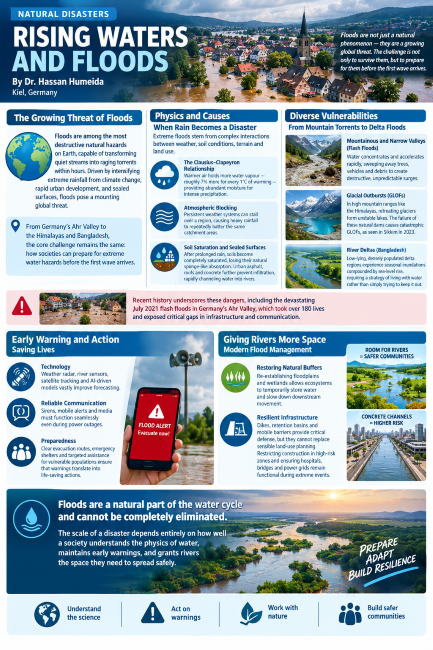
Kiel, Germany: The Growing Threat of Floods: Understanding Causes and Protection: Floods are among the most destructive natural hazards on Earth, capable of transforming quiet streams into raging torrents within hours. Driven by intensifying extreme rainfall from climate change, rapid urban development, and sealed surfaces, floods pose a mounting global threat. From Germany’s Ahr Valley to the Himalayas and Bangladesh, the core challenge remains the same: how societies can prepare for extreme water hazards before the first wave arrives.
Physics and Causes: When Rain Becomes a Disaster – Extreme floods stem from complex interactions between weather, soil conditions, terrain, and land use:
- The Clausius–Clapeyron Relationship: Warmer air holds more water vapour—roughly 7 percent more for every degree Celsius of warming—providing abundant moisture for intense precipitation.
- Atmospheric Blocking: Persistent weather systems can stall over a region, causing heavy rainfall to repeatedly batter the same catchment areas.
- Soil Saturation and Sealed Surfaces: After prolonged rain, soils become completely saturated, losing their natural sponge-like absorption. Urban asphalt, roofs, and concrete further prevent infiltration, rapidly channeling water into rivers.
Diverse Vulnerabilities: From Mountain Torrents to Delta Floods – Topography drastically dictates flood behavior and danger profiles:
- Mountainous and Narrow Valleys (Flash Floods): Water concentrates and accelerates rapidly, sweeping away trees, vehicles, and debris to create destructive, unpredictable surges.
- Glacial Outbursts (GLOFs): In high mountain ranges like the Himalayas, retreating glaciers form unstable lakes. The failure of these natural dams causes catastrophic Glacial Lake Outburst Floods, as seen in Sikkim in 2023.
- River Deltas (Bangladesh): Low-lying, densely populated delta regions experience seasonal inundations compounded by sea-level rise, requiring a strategy of living with water rather than simply trying to keep it out.
Recent history underscores these dangers, including the devastating July 2021 flash floods in Germany’s Ahr Valley, which took over 180 lives and exposed critical gaps in infrastructure and communication.
Early Warning and Action: Saving Lives: Technology has vastly improved forecasting through weather radar, river sensors, satellite tracking, and AI-driven models. However, technology is only effective if warnings reach people in time:
- Reliable Communication: Sirens, mobile alerts, and media must function seamlessly even during power outages.
- Preparedness: Clear evacuation routes, emergency shelters, and targeted assistance for vulnerable populations ensure that warnings translate into life-saving actions.
Giving Rivers More Space: Modern Flood Management – Physical structures like dikes, retention basins, and mobile barriers provide critical defense, but they cannot replace sensible land-use planning:
- Restoring Natural Buffers: Re-establishing floodplains and wetlands allows ecosystems to temporarily store water and slow down downstream movement.
- Resilient Infrastructure: Restricting construction in high-risk zones and ensuring hospitals, bridges, and power grids remain functional during extreme events.
Floods are a natural part of the water cycle and cannot be completely eliminated. The scale of a disaster depends entirely on how well a society understands the physics of water, maintains early warnings, and grants rivers the space they need to spread safely.