By Dr. Hassan Humeida
KIEL, GERMANY: The warming of our planet is not only changing the weather, but also shifting the biological rules of life. While extreme heatwaves dominate the headlines, a far more sinister transformation is taking place in the shadow of rising temperatures: climate change is acting as a global accelerant for “new,” atypical, and long-forgotten diseases. Where the climate warms, ecosystems mutate into ideal breeding grounds for pathogens.
Exotic Invasion: When Tropical Germs Become Endemic: In Europe, the term “new diseases” rarely refers to viruses completely engineered in a laboratory, but primarily to pathogens that were previously biologically impossible in our latitudes. Due to mild winters and prolonged summer heatwaves, invasive insects are spreading rapidly, serving as biological taxis (vectors) for dangerous viruses.
The most prominent example is the Asian tiger mosquito (Aedes albopictus). Originally native to the hot, humid regions of Southeast Asia, it now finds permanent living conditions in Southern Europe and large parts of Germany due to rising average temperatures. Along with it come diseases that local physicians previously only encountered in travel medicine:
Dengue Fever: Causes an extreme “bone-breaking” sensation and high fever. Local infections without prior travel abroad are occurring with increasing frequency in Europe.
West Nile Virus: Is increasingly transmitted by native mosquitoes, which multiply in massive numbers during hot summers. It can cause severe neurological damage and meningitis.
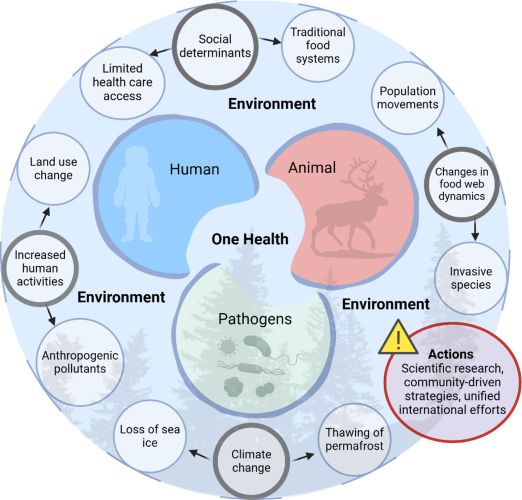
The Awakening of “Zombie Viruses” From the Ice: A completely different, potentially devastating category of new threats slumbers in the Arctic permafrost. Due to the extreme warming of the polar regions, this eternal ice is melting rapidly, exposing organic layers that have been deep-frozen for millennia.
Scientists warn of so-called Methuselah pathogens or “zombie viruses.” In the thawing soil, millennia-old bacteria and viruses can be reactivated. A real-world event has already occurred in Siberia: there, a decades-old reindeer that had died of anthrax thawed out during a warm summer.
The released spores infected surrounding herds and humans—a disease believed to have been long conquered suddenly returned. Researchers are particularly concerned about prehistoric giant viruses against which the human immune system has no defenses whatsoever.
Fungi and Super-Yeast: Adapting to the Heat: Climate change is also forcing microorganisms to evolve. Normally, our high body temperature of around 37°C protects us from most fungal infections, as many fungi cannot tolerate this level of heat. However, due to steadily rising ambient temperatures and heatwaves, fungi are adapting to a warmer environment.
A prime example of this new threat is the extremely resistant yeast fungus Candida auris. It has spread rapidly in clinics worldwide over recent years. Because it is highly resistant to common medications (antifungals) and survives on hot surfaces, the WHO classifies it as one of the most dangerous new hospital threats.
The Future: A Race Against Biology: If global temperatures continue to rise unchecked, the medicine of the future will have to be entirely different. Clinical pictures will become more unpredictable, and epidemiological hotspots will permanently shift northward.
To face this medical future, only global prevention will help. This includes the development of digital early-warning systems, the continuous monitoring of vector populations at borders, and increased research into broad-spectrum vaccines. The fight against climate change has covertly become the most important contribution to modern infectious disease medicine.