Oil Exploration Project: France Casts a New Strategic Net Over Sri Lankan Waters


By Leo Nirosha Darshan
COLOMBO — Situated at the very heart of the Indian Ocean, the island nation of Sri Lanka has long been an indispensable pivot along international maritime trade routes and a crucial piece on the geopolitical chessboard of global superpowers.
Amidst the ongoing tug-of-war for regional dominance among the United States, China, and India, France—a major European power—is now executing an aggressive new maneuver in this theater.
A leading French energy fund is planning to launch oil and gas exploration operations in the maritime zones adjacent to Sri Lankan waters. This move is emerging as a critical turning point that could fundamentally alter the region’s maritime and geopolitical equations.
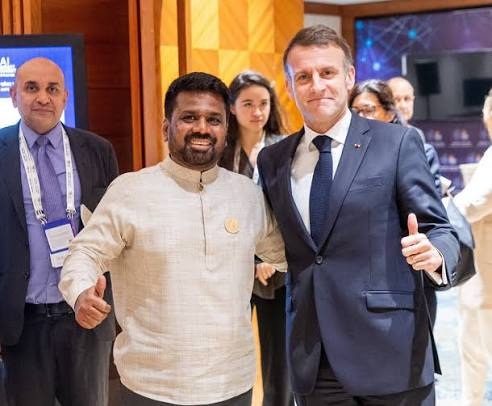
Against this extraordinary political and economic backdrop, Sri Lankan President Anura Kumara Dissanayake’s upcoming official visit to France on July 16 has drawn intense international attention.
Accompanied by Foreign Minister Vijitha Herath and a high-level delegation, the President’s visit represents a historic juncture that could define Sri Lanka’s future economic recovery and maritime trade aspirations.
Napoleon’s Prophecy and the Ghost of Trincomalee
The current French Ambassador to Sri Lanka, Jean-François Pactet, holding advanced academic credentials in history and geography, undoubtedly understands the profound historical context of his nation’s ties to the island. He would be well-versed in the famous geopolitical axiom attributed to French Emperor Napoleon Bonaparte regarding the strategic value of Trincomalee’s natural harbor: “He who controls Trincomalee controls the Indian Ocean.”
During the Napoleonic Wars, this magnificent, naturally fortified harbor served as a vital supply and defensive outpost for the British Royal Navy.
However, even before the Napoleonic era, this region was a primary theater of military confrontation between France and Great Britain. In 1782, as an extension of the American Revolutionary War, the famous Battle of Trincomalee saw French Admiral Suffren fiercely clash with the British Royal Navy.
During that historic campaign, French forces temporarily seized full control of Trincomalee harbor, leveraging it as a critical maritime supply base to aid their regional allies in India. France’s engagement with Sri Lanka and its maritime boundaries is not a modern phenomenon; it is a centuries-old relationship rooted in strategic history—a legacy that the current French diplomatic maneuvers vividly recall.
Modern Geopolitics and Macron’s Indo-Pacific Vision
In the arena of contemporary global politics, French President Emmanuel Macron has accurately calculated Sri Lanka’s geopolitical weight within the Indo-Pacific framework and is positioning his assets accordingly.
During Sri Lanka’s unprecedented economic crisis, President Macron intervened personally through the Paris Club to expedite the island’s sovereign debt restructuring. This crucial intervention paved the way for Sri Lanka to secure its vital International Monetary Fund (IMF) bailout agreement.
At that critical juncture, Paris extended an official invitation to then-President Ranil Wickremesinghe to attend the New Global Financing Pact Summit.
Following this, President Macron made a historic, short-notice stopover at Colombo International Airport during a broader Pacific tour to hold high-level discussions on bilateral relations and maritime security cooperation.
This momentum was sustained when Rear Admiral Emmanuel Slaars, Joint Commander of the French Forces deployed in the Indian Ocean (ALINDIEN), paid an official visit to Colombo to hold strategic talks with Sri Lanka’s top defense brass.
These engagements underscore the extent to which Paris views Sri Lanka’s geographical location as a cornerstone for its future maritime security and economic calculus in the region.
French Investment Shifts into High Gear at Colombo Port
Last week, coinciding with a visit by the Commander of the U.S. Pacific Air Forces to Sri Lanka, the French Ambassador met with Foreign Minister Vijitha Herath to deliver an important message: French investors and leading conglomerates are keenly interested in investing in the development of the Colombo Port’s Eastern Container Terminal (ECT).
Days later, Ambassador Pactet mobilized a delegation of prominent French business leaders to hold extensive discussions with the Minister of Ports, Shipping, and Aviation, Anura Karunathilake, alongside the Chairman of the Sri Lanka Ports Authority (SLPA).
This high-powered investment delegation was led by the Executive Vice President of the world-renowned French shipping giant, CMA CGM. Operating container terminals across more than 65 major international ports, the company is eager to leverage Colombo’s strategic location.
Through joint-venture investments, CMA CGM aims to scale up transshipment and container volumes to the next level. Furthermore, the French side disclosed that it has already initiated deep feasibility studies into Phase II investment opportunities for the Colombo Port’s West Container Terminal.
In this context, President Dissanayake’s upcoming state visit to France is far more than a routine diplomatic exercise; it is a decisive economic mission.
During the visit, the President is expected to hold direct talks with Rodolphe Saadé, the global Chairman and CEO of CMA CGM, to finalize these massive port infrastructure investments.
Simultaneously, the bilateral talks will address critical trade relations with the broader European Union. A primary focus will be securing and maximizing the GSP+ tariff concessions, which are vital to the future of Sri Lanka’s apparel industry and export sectors.
President Dissanayake and Foreign Minister Herath aim to reach concrete agreements with the French government to expand market access for Sri Lankan exporters, thereby stabilizing the nation’s fragile economic recovery.
Global Benchmarks and the Geopolitical Balance
This flurry of diplomatic and economic activity follows a recent, critical evaluation report published by the World Bank concerning the Port of Colombo. The report explicitly highlighted the port’s regional significance and stressed the urgent need to upgrade its infrastructure to meet international standards.
The recent high-level visits of international financial and shipping figures, coupled with the sudden investment appetite of France’s premier shipping line and the World Bank’s positive assessment, confirm that Sri Lanka’s maritime economy is under intense global scrutiny.
Against this backdrop of heightened international focus, the news that a French energy fund intends to initiate new oil and gas exploration near Sri Lankan waters has piqued the interest of other global energy conglomerates.
Consequently, the President’s visit to Paris is poised to transcend port development and European investments, potentially reshaping Sri Lanka’s future energy policy and maritime security architecture.
France’s assertive entry into the Indian Ocean landscape and its planned big-ticket investments in Sri Lanka’s port and energy sectors have inevitably sent ripples through regional powers. How the United States, India, and China—nations already locked in a fierce contest for influence over Sri Lanka’s maritime domain—will react to France’s bold entry onto the board remains to be seen.
Nevertheless, navigating the rivalries of global superpowers requires astute diplomacy. By leveraging the investments and diplomatic backing of a European power like France, President Dissanayake’s visit could prove to be the definitive turning point in securing Sri Lanka’s economic recovery, infrastructure modernization, energy security, and the extension of vital EU trade privileges.